Skip to content

The question

How close have you come to dying?

Originally asked

The Guardian, to a different person each week, The Q&A

A recurring Guardian Q&A prompt asked directly across respondents and years.

You answer as yourself. Nobody on FLAPSS answers as anybody else.

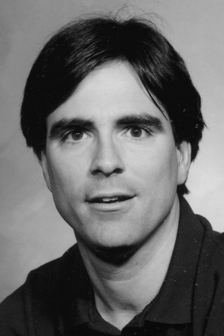
Randy Pausch

Professor of computer science, human-computer interaction and design

Recorded said elsewhere, not written here
Today is a pretty important day. It was August 15th, 2007, when I was told I likely had "three to six months of good health left." Today is six months from that day. Just to prove I'm still alive, here I am, holding today's New York Times! I rode my bike today; the cumulative effects of the chemotherapy are hurting my stamina some, but I bet I can still run a quarter mile faster than most Americans. The doctors weren't wrong; they always said that if the palliative chemo worked, I'd buy more time, but that it was a long shot. And the doctors have done a brilliant job of tweaking my regimen to help my odds. How much longer this will work is hard to know, but I'm going to keep having fun every day I have left, no matter how many or how few of them I get.

Pausch's own update page on his Carnegie Mellon faculty site, Carnegie Mellon University, School of Computer Science, 15 February 2008 source ↗

Others on this question

View all 209 →
Cory Taylor Novelist and screenwriter
How many times I could have died before now, and in how many different ways. And yet I came close only once: a speeding sedan ran a red light, hit three other vehicles, and jack-knifed into my rear wheel split second after I’d stepped out of my parked car. A bystander described the scene to me later. “You were a millimetre away from losing your legs,” he said.
Recorded Edited extract from Dying: A Memoir, Text Publishing, The Guardian, 17 May 2016 source ↗
Julian Sands British actor
In the early 90s, in the Andes, caught in an atrocious storm above 20,000ft with three others. We were all in a very bad way. Some guys close to us perished; we were lucky.
Recorded The Guardian, The Q&A, The Guardian, 9 May 2020 source ↗
David Arquette American actor, producer, & former professional wrestler
I got stabbed in the neck with a light tube during a wrestling “death match” two years ago. It was scary. I thought I was dying: your life does flash before your eyes.
Recorded The Guardian, The Q&A, The Guardian, 23 January 2021 source ↗

More from Randy Pausch

View profile →
Question How would you want people to remember you? Death & what remains
I am flattered and embarassed by all the recent attention to my "Last Lecture." I am told that, including abridged versions, over six million people have viewed the lecture online. The lecture really was for my kids, but if others are finding value in it, that is wonderful. But rest assured; I'm hardly unique. Send your kids to Carnegie Mellon and the other professors here will teach them valuable life lessons long after I'm gone.
Recorded Pausch's Carnegie Mellon faculty homepage, Carnegie Mellon University, School of Computer Science, 2008 source ↗
Question Has knowing you will die changed how you live? Death & what remains
This is obviously not how I wanted things to turn out, but my wife and I have no regrets; we did everything I could to maximize my odds. And we want to thank everyone who has so graciously helped us. The really weird part of all this is that I'm not depressed. I'm not in denial (I assure you, I am fully aware of what is going to happen), nor am I whistling in the dark, but after having felt crappy and sick for 11 months, to finally be fully healthy again is so exhilarating that it's a wonderful emotional buoy. So I am going to enjoy each day very fully, and play hard with my kids until I can't.
Recorded Pausch's own update page on his Carnegie Mellon faculty site, Carnegie Mellon University, School of Computer Science, 26 August 2007 source ↗
Question What would you most want to leave your children? Death & what remains
Shortly after my terminal diagnosis, I knew that one of my biggest priorities was to create memories for my children. Chloe and Logan are both so young that it's likely they'll have no direct memories of me. Dylan is the oldest, and at 5 (turns 6 in December), his memories are likely to be fuzzy. Hence the engineering question: What would make for the sharpest, most visceral memory, esp. for a kid who loves animals? Answer: go for a Dolphin Swim!
Recorded Pausch's own update page on his Carnegie Mellon faculty site, Carnegie Mellon University, School of Computer Science, 4 September 2007 source ↗
Question What are you still hoping to finish? Death & what remains
When Jeff Zaslow's column appeared in the Wall Street Journal (WSJ), about a dozen publishers emailed me, asked if I would be willing to write a book based on it. (I found this laughable, since at the time the palliative chemo was not yet working, and I thought I was down to about 6 weeks of good health). When the palliative chemo started working and we had some breathing room, I mentioned this to Jai, and she told me she wanted to do it. She was, in fact, quite emphatic. We had always talked about my "writing the manual" for her and the kids in my remaining time, and Jai felt that if it were a "real" project, I might take it much more seriously.
Recorded Pausch's own update page on his Carnegie Mellon faculty site, Carnegie Mellon University, School of Computer Science, 27 November 2007 source ↗

More on death & what remains

Also answered this

Eve Ensler, David Arquette, Michael Stipe, Mo Farah, Carl Barât, Cory Taylor

Search the directory for somebody in particular.

Explore further

Report this answer