Skip to content
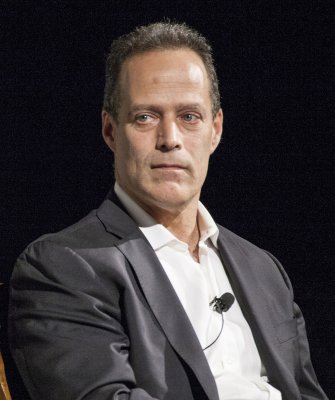
Sebastian Junger

War correspondent and author; co-director of the documentary Restrepo

Recorded said elsewhere, not written here
At Play in the Fields of the Lord by Peter Matheson. I also recently read Sapiens by a guy named Harari. And I’m going to give that thing over and over again to everyone I know.

Tim Ferriss, The Tim Ferriss Show podcast, 1 January 2018 source ↗

Others on this question

View all 82 →
Sue Flood Wildlife photographer and filmmaker
Oh, what a great question. I actually gifted one recently. So a friend of mine, Ian Dawson, he trains mountain rescue people, mountain rescuers in Scotland. He was working with me at the North Pole and he’d never seen a polar bear before. He absolutely fell in love with the environment and I gifted him a book called Arctic Dreams by Barry Lopez. Have you read that? Tim Ferriss: This is on my to-read list, Of Wolves And Men by Barry Lopez is one of my favorite nonfiction books I’ve read in the last 10 years. Sue Flood: Oh, it would be. Tim Ferriss: And Arctic Dreams , I was just saying on the way here in the airplane that I wished I had Arctic Dreams , so I haven’t read it yet. Sue Flood: It is a magical book and yeah, I gifted that to Ian and I know he loved it and yeah, that is a great read. You have to immediately dash off, well perhaps not now, but when you get back to civilization. Yeah, that’s a really beautiful book and I’ve bought that for quite a few people.
Recorded Tim Ferriss, The Tim Ferriss Show podcast, 30 January 2022 source ↗
Chris Dixon American tech entrepreneur, investor
I really like history and I particularly like the era of the Victorian industrial age of like 1850 to 1920 or something. It’s an amazing period where you, I think of it as a period. We had like a hundred Elon Musks. So you had Westinghouse and Edison and Ford and the Wright brothers and Bell and just goes on and on. And you had that period where just the number of incredible inventions during that period. This was in that 50-year period. I mean, the airplane, the car, the photograph, the light bulb, for God’s sake, this amazing book called Empires of Light . It’s the battle between Westinghouse and Edison. It’s really fascinating. It was enterprise sales. They invent the light bulb. Westinghouse has AC, Edison has DC. And just went town to town, selling them and like “Use my system.” And there was this awesome moment at the end. The coup de grâce was Westinghouse built, because the key benefit of AC is it goes farther without losing power. He built this giant plant up at Niagara Falls and then turned the lights on in Buffalo. And it was like this magic act. They all like, like borrowed tons of money. And the other thing that’s cool about them is they were all engineers. It reminds me a lot — and they all started off in the telegraph business, which at the time was sort of the internet of that era. So that was cool. There’s another book. I’m sorry, I have crypto on my brain. I can’t help it. There’s a book I really like called [
Recorded Tim Ferriss, The Tim Ferriss Show podcast, 28 October 2021 source ↗
Ricardo Semler Chief executive and later chairman of Semco Partners, Brazil
You know, the one that you mentioned, the Seven-Day Weekend , as with many other books, is a good place to poke around also inside your own head and to look for some insights. When I wrote the book originally, Brazil was still a relatively closed, elite environment for businesspeople, etc. Obviously because the book has sold a good quantity, most people had read it and I kept giving autographs to taxi drivers and so on so it was a very small microcosm I was living in. I remember the second occasion this happened to me, which was being stopped on the street and somebody saying, “You know, I read your book and it changed my life.” And they would go off and quote somebody else’s book entirely. When this happened the second time, I said shit, this is not about me at all. So, let me stop right here. And of course at that point there were all kinds of campaigns for me to run for mayor, and for president, and become Brazil’s Trump. Because people get lost along the way and they start believing in their own bullshit. The interesting thing here, going back to the issue of the book, was it’s when you come across an insight which was already yours and you see it in writing, that’s when you say this book changed my life. But real insight is where you go there and you say geez, I never thought of that, and there is some of that; it has to add to something that you believe in or that jives with your moment. So, I think putting too much weight and too much importance on something that you got out of someone doesn’t remind us that this intuition and this insight was growing inside you already; you were just waiting for some clarification of it. But that kind of answers the second bit. I had talked for several years at the Sloane School at MIT and I had a group of MBAs. This was always a very fun group and I used to go there in the fall quarter. I’d tell them: look, this is what you have to read to understand business and organizations. I was obliged to make this available on the MIT site and the books that were there were Marco Polo’s Travel, one book, a Kafka parable, a Jung book on synchronicity and so forth. These kinds of books – and Kafka I think is extraordinary – give you an enormous insight into the people who are doing things and why they’re doing things, rather than the whole set of how-tos. When you run away from the how-tos into the issue of how do you get to real wisdom, we’ve been at this for a long time. We’ve been in this agricultural era, then we were in the industrial era, then we were in the information age and we were in the knowledge age. But we don’t get any closer to the age of wisdom, and something is terribly wrong for a population and the humanity that has been around for so long and doesn’t get closer to wisdom. When you think about organizations and I ask you to show me one democratic organization or business environment in the world, or to find one wise company as a company, these are all almost impossible to find. So, to answer your question, I would say the books that stop to think about why the heck do we do the things that we do which are in Kafka and Freud or in Jung or in Thoreau; I think those will answer the business world much closer than people think. When they say oh, great, that’s all good and well but that’s all philosophy and all airy-fairy and touchy-feely but I need to get down to answer this: how come, which people, how, and so forth. But this process I think is much, much stronger from a philosophical point of what makes you want to get up in the morning and how you let the other people around you do what they want to do how they want to do it, and get out of their way. That is a philosophical issue that I think would solve a lot more issues if people went from that filter onwards, you know?
Recorded Tim Ferriss, The Tim Ferriss Show podcast, 5 June 2018 source ↗
Amartya Sen Economist and philosopher; laureate of the Sveriges Riksbank Prize in Economic Sciences, 1998
It was not long after Kenneth Arrow's path-breaking study of social choice, Social Choice and Individual Values, was published in New York in 1951, that my brilliant co-student Sukhamoy Chakravarty drew my attention to the book and to Arrow's stunning "impossibility theorem" (this must have been in the early months of 1952). Sukhamoy too was broadly attracted by the left, but also worried about political authoritarianism, and we discussed the implications of Arrow's demonstration that no non-dictatorial social choice mechanism may yield consistent social decisions.
Recorded Laureate-written autobiography for Les Prix Nobel, Nobel Prize Outreach, 1 December 1998 source ↗

More from Sebastian Junger

View profile →

More on taste & recommendation

Also answered this

Malcolm Gladwell, Larry King, Mohamed ElBaradei, Andrew Huberman, Katie Kitamura, Bob Metcalfe

Search the directory for somebody in particular.

Explore further

Report this answer