Skip to content

The question

What fills you with the most pride?

Originally asked

Vogue, to one guest at a time, on camera, 73 Questions

Vogue's 73 Questions repeatedly asks respondents to select the work, relationship, or achievement that makes them proudest.

You answer as yourself. Nobody on FLAPSS answers as anybody else.

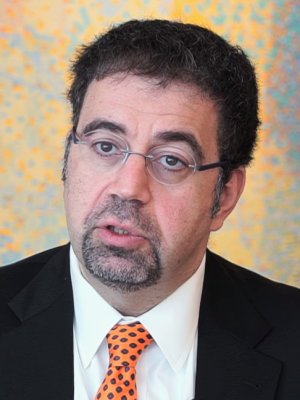
Daron Acemoglu

Economist; Nobel laureate in economic sciences for work on institutions and prosperity

Recorded said elsewhere, not written here
I’m proud of all my heritages, and I’m delighted that I have been able to learn from many different experiences.

Adam Smith, Telephone interview following the announcement of the 2024 Nobel Prize in Economic Sciences, The Nobel Prize, October 2024 source ↗

Others on this question

View all 103 →
Cathy Freeman Australian sprinter, 1990–2003
But I was not really planning to create what seems to be a lasting impact. I was just always about personal expression and pride in who I was as an Australian Indigenous girl. It was more about me sharing all of me with the world. But, certainly after all these years, it makes me really proud.
Recorded Euan Crumley, Interview marking 25 years since the Sydney 2000 400m final, Athletics Weekly, 22 September 2025 source ↗
Stéphane Lambiel Swiss former competitive figure skater, now a coach and choreographer
Stepping onto an Olympic podium was such a unique moment, and I guess it would be one of the proudest of my career. I had dreamed about it since I was a kid.
Recorded Written Q&A in the IOC's Athlete Role Model series before Lillehammer 2016, Olympics.com (International Olympic Committee), 2016 source ↗
Robert J. Lefkowitz Physician and biochemist; Nobel laureate in chemistry for work on G protein-coupled receptors
That’s easy, my trainees. In my field, receptor biology, the field is dominated by people that I trained. Kobilka is one example. I would say I have, for years — in all due modesty — I led the field. I passed that mantle to Kobilka. He has the newest technologies and this and that. But he’s just the limit case. There are dozens and dozens of people who trained with me that, if you go to any meeting on receptor biology and you look at the program, I don’t know, 30 to 40 percent of all the speakers will have either trained with me or trained with people who trained with me. They’re in the lineage. So that’s what I’m most proud of.
Recorded Academy of Achievement interview, San Francisco, California, 13 September 2014 source ↗
Martinus Veltman Theoretical physicist; Nobel laureate in physics for the quantum structure of electroweak interactions
It will continue and it is due to something which I am very proud to say I invented. ... In 1975 I was asked to become a member of CERN’s scientific policy committee, that committee advises the council of CERN as to what they should do in the future concerning physics. ... we cannot go all the times through the traumatising experience of fighting for a new accelerator, making it and then fall back and so on, so I came to the concept of a constant budget.
Recorded Per Carlson and Jasmina Cirgic, Nobelprize.org interview, The Nobel Prize, December 1999 source ↗

More from Daron Acemoglu

View profile →
Question What does everyone in your world seem to agree on that you think is wrong? Values & belief
It is simplistic in the following sense that you cannot institute democracy from above. It’s a very difficult process. And democracy is not the only dimension of institutions that matters. Although my work does emphasise that democracy by itself matters as well. But the problem is really alive today in the industrialised world, where you would think, and many political scientists have claimed that democracy is safe and secure and would never be under threat. It is under threat. Support for democracy is at an all time low, not just in the US, although really jarringly in the US but not just in the US, throughout the western world. So democracy is not easy to make work because democracy is about democratic citizenship. It’s about consensus, it’s about communication. It’s about accepting defeat, making compromises, talking and understanding the other side. All of those things are always difficult. They become more difficult during times of turbulence, which, you know, we are living through and they become harder when the infrastructure, for example, the communication infrastructure, makes this sort of democratic citizenship harder, which I think is not the only factor. But social media has certainly played that role.
Recorded Adam Smith, Telephone interview recorded shortly after the prize announcement, Nobel Prize Outreach, 1 October 2026 source ↗

More on identity & self

Also answered this

Robert B. Wilson, Jean Tirole, Ted Turner, Mellody Hobson, Chun Lee-kyung, Cathy Freeman

Search the directory for somebody in particular.

Explore further

Report this answer