The question

What is the most important lesson life has taught you?

Originally asked

The Guardian, to a different person each week, The Q&A

Verbatim recurring item in The Guardian Q&A; two fully readable publisher-hosted respondent pages establish institutional recurrence.

You answer as yourself. Nobody on FLAPSS answers as anybody else.

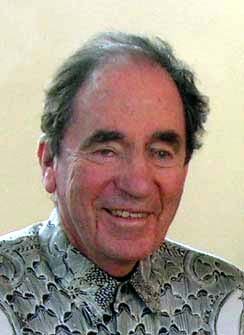
Albie Sachs

Anti-apartheid lawyer; Justice of the Constitutional Court of South Africa

Recorded said elsewhere, not written here
But there’s nothing like that quality of leading a decent, dignified life, meeting up with other people who have similar ideals, expressing kindness and love and curiosity and challenging and argument and the excitement of ideas. Ideas can be marvelous.

Interview, Cape Town, South Africa, American Academy of Achievement, 3 July 2009 source ↗

Others on this question

View all 155 →
Desmond Tutu Anglican Archbishop of Cape Town; chair of South Africa’s Truth and Reconciliation Commission; Nobel Peace Prize, 1984
It is that you know that you are standing out in this crowd because you are being carried on the shoulders of others. You know, you may have the capacity to articulate their aspirations. That is maybe something special you might have. But what is a leader without followers? I mean you would have all of these interviews and people will not — would not necessarily want to follow. No, I am a great believer in the fact that everything is corporate. Everything is corporate and you — as a leader you are one who can coax the best out of others.
Recorded Academy of Achievement interview source ↗
If somebody doesn’t want to understand or see you that’s on them. You don’t have to carry that with you.
Recorded The Q&A, The Guardian, 25 October 2025 source ↗
Mohamed ElBaradei Director General of the International Atomic Energy Agency, 1997-2009; Nobel Peace Prize 2005
I think that is the most important lesson you learn in life, that you have to be ready to make a compromise. You do not compromise your principles, but you have to be ready to compromise. You have to understand that you cannot get your way 100 percent. Life is too complicated. You are not an island, and you work in a social setting, and you need to understand that you work always — at the family level, at the society level — to work out the compromise that is perceived to be fair. You don’t get 100 percent of what you want, but at least you will get the basic minimum that you require.
Recorded Academy of Achievement interview, 2006 source ↗
Christopher Hitchens Essayist, critic and journalist
Before I was diagnosed with esophageal cancer a year and a half ago, I rather jauntily told the readers of my memoirs that when faced with extinction I wanted to be fully conscious and awake, in order to “do” death in the active and not the passive sense. And I do, still, try to nurture that little flame of curiosity and defiance: willing to play out the string to the end and wishing to be spared nothing that properly belongs to a life span. However, one thing that grave illness does is to make you examine familiar principles and seemingly reliable sayings. And there’s one that I find I am not saying with quite the same conviction as I once used to: In particular, I have slightly stopped issuing the announcement that “Whatever doesn’t kill me makes me stronger.”
Recorded Vanity Fair, January 2012 source ↗

More from Albie Sachs

View profile →
Question What problem are you still trying to solve? Craft & work
We haven’t crossed the frontier of unemployment, of poverty, of dispossession, of landlessness, of homelessness, of lack of access to health, to education, all those different things. We just have to keep going steadily, steadily, to plan well, to involve the people and not simply deliver things from the top and hope that people will be grateful, and get upset when they’re not grateful.
Recorded Interview, Cape Town, South Africa, American Academy of Achievement, 3 July 2009 source ↗
Question Which book changed the way you think, and what did it change? Taste & recommendation
I’d been introduced to Freud through all this because I couldn’t understand why is it so difficult to be brave. There was something inside me that wanted to collaborate all the time with the people who wanted to destroy me, and I was searching for it, and I found there was a thing called the unconscious that everybody has. And you’ve got to be in touch with the unconscious to understand a lot of your behavior. And I read through volume after volume after volume of the collected works of Sigmund Freud.
Recorded Academy of Achievement recorded interview, American Academy of Achievement, 3 July 2009 source ↗

More on time & hindsight

Also answered this

Bill Clinton, Caroline Lucas, George H. W. Bush, Barack Obama, Desmond Tutu, Simon Boas

Search the directory for somebody in particular.

Explore further

Report this answer