Skip to content

The question

What kind of death would you consider a good one?

Originally asked

Vanity Fair, to its interview subject, The Proust Questionnaire

A fixed final question in Vanity Fair's Proust Questionnaire, repeated verbatim across respondent pages.

You answer as yourself. Nobody on FLAPSS answers as anybody else.

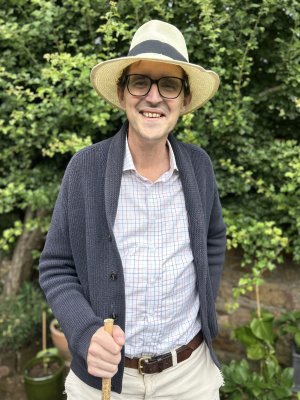
Simon Boas

Aid worker; executive director of Jersey Overseas Aid

Recorded said elsewhere, not written here
My pain is under control and I'm terribly happy - it sounds weird to say, but I'm as happy as I've ever been in my life. I used to think I'd rather be hit by the proverbial bus, but having a couple of months knowing this is coming has really helped me both do the boring 'death-min', but also get my thoughts and prepare myself, and feel so accepting of what's to come. It's been such a great bonus, actually.

Emma Barnett, BBC Radio 4, Today, as published by BBC News, 4 July 2024 source ↗

Others on this question

View all 43 →
How doesn’t matter—it’s when that matters. When I’m ready!
Recorded Vanity Fair, The Proust Questionnaire, Vanity Fair, 24 June 2014 source ↗
At the right time, and like my father—utterly without fear or pain, at home, with all whom I love. It was his last lesson as a parent to me.
Recorded Vanity Fair, The Proust Questionnaire, Vanity Fair, 28 April 2020 source ↗
Christopher Hitchens Essayist, critic and journalist
And even if my voice goes before I do, I shall continue to write polemics against religious delusions, at least until it’s hello darkness my old friend. In which case, why not cancer of the brain? As a terrified, half-aware imbecile, I might even scream for a priest at the close of business, though I hereby state while I am still lucid that the entity thus humiliating itself would not in fact be “me.” (Bear this in mind, in case of any later rumors or fabrications.)
Recorded Vanity Fair, 2 September 2010 source ↗

More from Simon Boas

View profile →
Question How would you want people to remember you? Death & what remains
All our lives are little books - but they're not someone else's complete book. You're a chapter or a page or a footnote in someone else's life and they are going to keep writing beautiful chapters when you are gone. And those green shoots can grow around grief and put it in perspective. I hope people will think, "I'm glad I read that - Simon's story". And just because it's over, doesn't mean it's gone.
Recorded Emma Barnett, BBC Radio 4, Today, as published by BBC News, 4 July 2024 source ↗

More on death & what remains

Also answered this

John Lewis, Al Franken, Gloria Steinem, Alice Waters, Bonnie Raitt, Danielle Steel

Search the directory for somebody in particular.

Explore further

Report this answer