Skip to content

The question

Does the thought of dying frighten you?

Originally asked

The Talks, to its interviewees, its interview series

The Talks asks this directly or through an equivalent risk-and-mortality formulation across interviews.

You answer as yourself. Nobody on FLAPSS answers as anybody else.

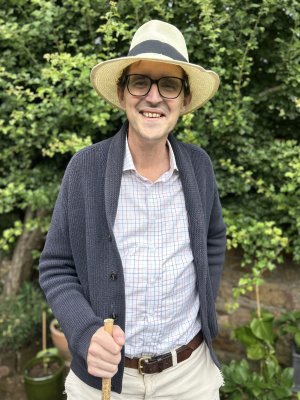
Simon Boas

Aid worker; executive director of Jersey Overseas Aid

Recorded said elsewhere, not written here
I'm sort of - not looking forward to my final day - of course that's the wrong way to see it. But I'm kind of curious about it, and I'm happy and I'm ready. As Julian of Norwich said: "All shall be well, and all shall be well and all manner of things shall be well.

Emma Barnett, BBC Radio 4, Today, as published by BBC News, 4 July 2024 source ↗

Others on this question

View all 18 →
Jenny Diski Novelist and essayist
Missing a few months of feeling awful, being dead, versus not missing those months of feeling awful. Dead, at least theoretically, is the less painful of the two options, assuming that dead equals not being at all. Whatever terror there is lies in the present fear of dying, not so much of death. The stoics tell me that I’ve been ‘dead’ before, prior to my birth, and that was no hardship, was it? Back to Beckett, I think.
Recorded London Review of Books, 19 November 2015 source ↗
Roger Ebert Film critic
I know it is coming, and I do not fear it, because I believe there is nothing on the other side of death to fear. I hope to be spared as much pain as possible on the approach path. I was perfectly content before I was born, and I think of death as the same state. I am grateful for the gifts of intelligence, love, wonder and laughter. You can’t say it wasn’t interesting. My lifetime’s memories are what I have brought home from the trip. I will require them for eternity no more than that little souvenir of the Eiffel Tower I brought home from Paris.
Recorded Salon, excerpted from Life Itself: A Memoir, 15 September 2011 source ↗
Jimmy Carter 39th President of the United States, 1977–1981; Governor of Georgia 1971–1975
At first I - I felt that it was confined to my liver and that they had - the operation had completely removed it. And so I felt quite relieved. And then that same afternoon we had an MRI of my head and neck and it showed up that it was already in four places in my brain. So I would say that night and the next day, until I came back up to Emory, I just thought I had a few weeks left. But I was surprisingly at ease. You know, I've had a wonderful life. I've had thousands of friends and I've had an exciting and adventurous and gratifying existence. So I was surprisingly at ease, much more so than my wife was.
Recorded News conference at the Carter Center, Atlanta, as transcribed by CNN, 20 August 2015 source ↗
Tony Judt Historian and essayist
But if I was sitting in an armchair with bits and pieces of rubber sticking out of me and my son came over and said, you know, would you like a banana? Wink once for yes, wink twice for no, I dont think the interest of the conversation would get me past the sense that this is horrible. It's horrible for me but above all, horrible for them. There are things worse than death.
Recorded Terry Gross, Fresh Air, NPR, 29 March 2010 source ↗

More from Simon Boas

View profile →
Question What kind of death would you consider a good one? Death & what remains
My pain is under control and I'm terribly happy - it sounds weird to say, but I'm as happy as I've ever been in my life. I used to think I'd rather be hit by the proverbial bus, but having a couple of months knowing this is coming has really helped me both do the boring 'death-min', but also get my thoughts and prepare myself, and feel so accepting of what's to come. It's been such a great bonus, actually.
Recorded Emma Barnett, BBC Radio 4, Today, as published by BBC News, 4 July 2024 source ↗
Question How would you want people to remember you? Death & what remains
All our lives are little books - but they're not someone else's complete book. You're a chapter or a page or a footnote in someone else's life and they are going to keep writing beautiful chapters when you are gone. And those green shoots can grow around grief and put it in perspective. I hope people will think, "I'm glad I read that - Simon's story". And just because it's over, doesn't mean it's gone.
Recorded Emma Barnett, BBC Radio 4, Today, as published by BBC News, 4 July 2024 source ↗

More on death & what remains

Also answered this

Philip Gould, Jimmy Carter, Oliver Sacks, Alex Honnold, Jack Nicholson, Maurice Sendak

Search the directory for somebody in particular.

Explore further

Report this answer