The question

Which writers or artists most influenced your work?

Originally asked

The Paris Review, to novelists and poets, The Art of Fiction

A durable Art of Fiction question asked through named literary influences and artistic models.

You answer as yourself. Nobody on FLAPSS answers as anybody else.

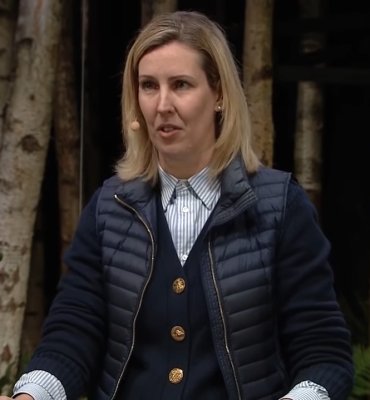
Clare Smyth

Chef-patron of Core, London; first British woman to hold three Michelin stars

Recorded said elsewhere, not written here
I think that I followed the influences of the people whose style and cooking I admired. When I went to Restaurant Gordon Ramsay in the early days, it was the best and the most exciting cooking in the UK at that time. Later on I worked with Thomas Keller and Alain Ducasse and eventually I chose to go to work in Le Louis XV because when I set foot in the kitchen, I just knew it was for me. I think you can see all of those influences in the techniques and the flavors that I use: there’s a real purity to the way that we cook and a real natural process here at my restaurant, Core, that always stayed with me from my time at Alain Ducasse.

The Talks, published interview, 27 December 2017 source ↗

Others on this question

View all 71 →
David Lynch Film director, screenwriter and painter
I don’t know if that is true. There have been 110 or more years of cinema, and it’s impossible for any one of us to make a film that can’t be compared to something that has come before. To me Blue Velvet is Blue Velvet and Rear Window is Rear Window. You could say that Sunset Boulevard or Rear Window has conjured an idea for me, but even though I love them or am inspired by them, life is a 24/7 movie. Ideas come out of that all the time. It’s hard to say it’s cinema that conjures ideas. It’s altogether.
Recorded The Talks, published interview, 15 October 2014 source ↗
Kazuo Ishiguro Novelist and screenwriter; Nobel laureate in Literature, 2017
I always suspected that she was the biggest influence on me. It seems unlikely, but I always suspected that. I used to say that in interviews, and people would think I was just being smart and evasive. But I reread Jane Eyre recently, and also Villette , her other great novel. I just came across episode after episode where I thought “Oh my goodness, I just ripped that off from this book!” Perhaps you wouldn’t recognize it, but I did. Certain kinds of techniques, certain moments when you understand that the narrator is crying, not because she tells you, but because somebody watching her makes a remark. All these little things that I thought, “Oh, I used that in that book,” or “Oh, that trick.” I think Charlotte Brontë had an enormous influence on me, and I think it’s something to do with that use of first-person and the evasiveness, the indirectness, of her first-person narrative. I mean this phrase, “the unreliable narrator,” has become very popular in creative writing. So it’s not quite that, but a very subtle use of the relationship between the writer and the book and the reader — something I tuned in on, I homed in on instantly, when I started to read Charlotte Brontë. But I’ll tell you, my favorite author — novelist — is somebody who you probably wouldn’t think had any relationship to me, which is Dostoyevsky. I’ve always loved Dostoyevsky, ever since I first read him. I think he’s one of the reasons I started to read, you know, when I read Crime and Punishment when I was about 17 or 18. Dostoyevsky and Chekhov for me remain like two poles in terms of a way to approach things. I love the messiness of Dostoyevsky, the improvised — I mean a lot of it is a mess, but I like the way that strange, unexpected things have obviously come tumbling out of him that he didn’t want to necessarily have come tumbling out. On the other hand, you know, Chekhov, another great Russian writer, exemplifies the calm, controlled, very carefully structured, understated kind of work. I aspire to them both. They’re two of my great heroes.
Recorded Academy of Achievement interview, London, England, 18 October 2017 source ↗
Well, there were, you know, several poses that was known for everybody, that is known for certain poses. And to me it was the three-quarter back pose. And it was a very difficult pose to do, to twist your body and to show the small waist and to show at the same time your wide shoulders, your back. And you also see the front and you see the abs and you see the calf and the thighs and all of those things. But it was a difficult pose to do. Very few bodybuilders could master it. I copied basically Reg Park, who was my idol and who won three times the Mr. Universe competition. And he was known for that pose in a kneeling position and in a standing position. And so because he was my idol, I was, you know, absolutely fanatic to copy his poses and then to kind of improve on that. And that's exactly what I did.
Recorded David Greene, Talk of the Nation, NPR, 2 October 2012 source ↗
adrienne maree brown Writer and facilitator; author of Emergent Strategy and Pleasure Activism
And then Octavia, I open up her books and the protagonist is a Black girl. And both the Blackness and the youth matter here, that it was like, she was writing people who were 15 years old and who already had a sense of destiny and a sense of, the world needs to change, and I’m going to shape that. I’m going to be a part of that. And she was very solution-oriented in her writing, she was very practical in her writing, so everything is very clear. You’re not going to read Octavia and come away confused.
Recorded On Being, interviewed by Krista Tippett, 3 July 2024 source ↗

More on taste & recommendation

Also answered this

Adam Gopnik, Kazuo Ishiguro, Noah Baumbach, Alessia Cara, Marco Brambilla, Rashid Johnson

Search the directory for somebody in particular.

Explore further

Report this answer