Skip to content

The question

Do you rely more on inspiration or discipline to make your work?

Originally asked

The Creative Independent, to working artists, its interview series

A repeated Creative Independent tension, asked as inspiration, muse, discipline, ritual, or the requirement to show up.

You answer as yourself. Nobody on FLAPSS answers as anybody else.

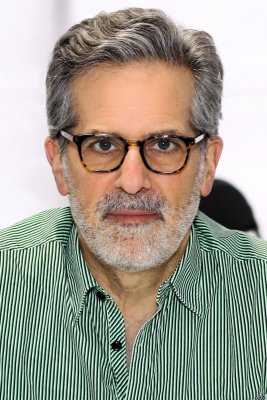
Jonathan Lethem

Novelist and essayist; National Book Critics Circle Award winner

Recorded said elsewhere, not written here
So, yes, it is very hard work, and there are days where there’s something I have to do in the book, something I have to learn or put myself and the characters through that I am… That makes me fearful or sorrowful. But I do think also that this aspect of writing is over reported at the expense of the pleasurable aspect as well. If writers didn’t love to be in this space between themselves and their language, they probably wouldn’t do it. You’d give up.

The Talks, published interview, 27 March 2019 source ↗

Others on this question

View all 27 →
Frank O. Gehry Architect; winner of the 1989 Pritzker Prize
It comes out of an intuition, or a learned intuition, I guess. You study a long time ’til you can do it. But it’s from looking around you, it’s from understanding what’s happening in the culture, what’s happening in the world.
Recorded Academy of Achievement interview, Los Angeles, California, 27 September 2016 source ↗
Edward O. Wilson, Ph.D. Biologist and entomologist; founder of the field of sociobiology
Yes, that’s right. I saw what I could succeed in. I never considered myself very bright, and I always thought of myself as mathematically mediocre. So I figured that probably, like your college runner who has difficulty breaking a ten-second hundred — well, breaking an 11-second, shall we say, 100-meter — realizes that their best shot is to rely less on strength and speed and more on self-discipline, planning, and long hard work. Yes. That’s the way I do science.
Recorded Academy of Achievement interview, Cambridge, Massachusetts, 5 April 2001 source ↗
Gore Vidal Novelist, essayist and playwright
It’s best to start writing when you wake up in the morning, or afternoon, or whenever it is you wake up. Just start then, because you are closer to the dream state than at any other time in the day, which means the imagination is really working on all cylinders, and it means that whatever it is that manufactures sentences in your head is very fresh, and you have all kinds of slants on things that by the end of the day you won’t have, or you will just lose along the way. Further advice I have not.
Recorded Academy of Achievement interview, Los Angeles, California, 3 June 2006 source ↗
László Krasznahorkai Novelist; Nobel laureate in literature
The bitterness. I am very sad if I think of the status of the world now. This is my deepest inspiration. This could be also an inspiration for the next generation or generations in literature. Inspiration to give something for the next generation, somehow to survive this time because these are very, very dark times and we need much more power in us to survive this time than before.
Recorded Nobel Prize telephone interview with Jenny Rydén, published by Nobel Prize Outreach, The Nobel Prize, 9 October 2025 source ↗

More on craft & work

Also answered this

John Updike, Athol Fugard, John Banville, Louise Glück, Suzan-Lori Parks, Gore Vidal

Search the directory for somebody in particular.

Explore further

Report this answer