Skip to content

The question

How do you tell when a piece of work is done?

Originally asked

The Creative Independent, to working artists, its interview series

A repeated process question in The Creative Independent, asked across visual art, music, writing, performance, and mixed media.

You answer as yourself. Nobody on FLAPSS answers as anybody else.

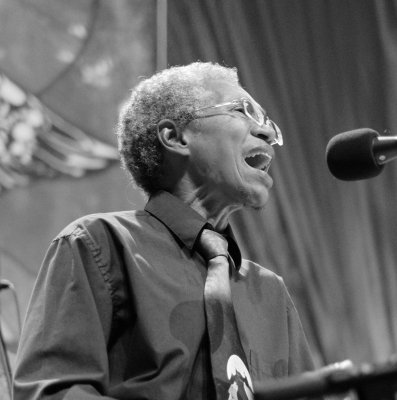
Beverly Glenn-Copeland

Singer, songwriter and composer

Recorded said elsewhere, not written here
I can tell you exactly and this is a really good lesson that I had to learn. The song gets sent in some format or another, and I add to it what I think is mine to add to flesh out what was being sent. At a certain point what I’ve noticed is if I get into this space where I think “Oh and I need to add this and then I need to add that,” which is not really coming from the song, but from my own ego. I don’t mean that in a negative way, but just it’s just coming from me, it’s not the impulse of the music itself, then inevitably it starts sounding terrible to my ears. I’ve lost a couple pieces because of that. My motto is to try to stay very sensitive to when the piece is expressing what it came to express, and that I have augmented to make sure that it can be understood, but that I haven’t taken it off some place that it had no intention of going.

Max Mertens, The Creative Independent, 24 January 2023 source ↗

Others on this question

View all 67 →
Hanif Abdurraqib American poet and essayist
I move back and forth. The Tribe book is easier. I have a proposal and a plan for that, so it’s easier to know when that’s done because there’s a hard end. There’s a certain amount of chapters, and that whole thing. But poetry books, at least in my experience, those tell you when they’re done. My first book told me when it was done. It told me when I had mined everything I could out of the emotional landscape I was trying to create, and it pointed me to an exit strategy. With poetry books, I have been lucky to have my poems do that. My poems tell me how they want to live in the world, when they want to live in the world, and when they’re done being played with… Sometimes, it’s over the course of a month with one poem, or sometimes it takes a little longer than that. I think the hard work is knowing when to pull yourself back so you don’t overextend or let your projects blend together.
Recorded Brandon Stosuy, The Creative Independent interview source ↗
David Ostrowski Abstract painter
A piece is finished when I don’t have anything more to say. My works are suggestions and I tend to create series of works to avoid routine. Of course I test every painting for its legitimacy. Worst case the canvas gets torn, painted or pasted over.
Recorded Julian Brimmers, The Creative Independent, 15 March 2018 source ↗
Kevin Shields Irish musician
My mind is nearly like an infinite tunnel of potential ideas, but the ideas are all a part of what is already there. In my imagination, I always think there are more parts to record. Then when I work it through, I make it to a certain point and I’m like, “Actually, that’s enough.” Some of the extra bits that I’m thinking of are suggested anyway by interaction with what is already there, and it gets to a point where to add anything more would just be too much. I often imagine recording parts that people actually do hear, but are not actually there. By the time I’m done with the main guitar and other elements, [more parts] don’t capture anything else with all those suggested things. If I try to realize them, it’s less effective. I think that’s why people have often said they hear different things depending on how they listen to [our music].
Recorded Gary Canino, The Creative Independent interview source ↗

More on craft & work

Also answered this

Taja Cheek, Madi Diaz, Sam Amidon, Laurel Halo, Natalie Mering, Loraine James

Search the directory for somebody in particular.

Explore further

Report this answer