The question

What do you do when you feel creatively blocked or stuck?

Originally asked

The Creative Independent, to working artists, its interview series

A recurring Creative Independent question whose wording distinguishes a lasting block from a temporary impasse.

You answer as yourself. Nobody on FLAPSS answers as anybody else.

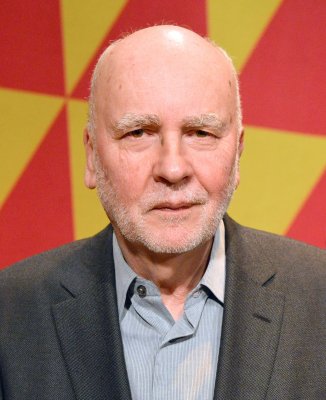
Adam Zagajewski

Poet and essayist

Recorded said elsewhere, not written here
This is a French expression, silence radio, which is used in the navy, for example—when you cannot use the radio because the enemy is near. It’s not an expression I use regularly; I used it once, maybe, to describe my period of inner silence, which mostly happens when I’m back home, coming from Houston. The long weeks or months of silence. So it’s the opposite of inspiration; it’s the time of doing other things. Waiting.

Todd Samuelson, AGNI Online, 25 April 2003 source ↗

Others on this question

View all 82 →
Brian Jungen Canadian artist
You can move on, or if something gets overworked and you can put it down, cover it up, or something, and then come back to it and take it back to a place where you were still excited about it. I’m excited about having that opportunity again. I’m probably going to buy some land, but I don’t want to have agriculture be such a huge part of my life. As much as I believe in agriculture—and I think it’s very important that people know how to grow their own food—it’s another thing to take it on as another business and try do that at the same time as having an art career. I would not recommend it.
Recorded Brandon Stosuy, The Creative Independent interview source ↗
William Villalongo American visual artist
I don’t. The process of trying to get to something is part of it. Sometimes I don’t have much of an idea initially. For me, studio time is also about reading and looking at things. I might spend a couple weeks just reading something or looking through images or doing image searches or going to museums and thinking in front of great paintings. And then at some point I start to get back to my own ideas and how they can form into something that has meaning for me.
Recorded Brandon Stosuy, The Creative Independent interview source ↗
Jorge Drexler Singer-songwriter and physician
I know what you mean, but there are two kinds of voids, the one that you work with and the one that you bear. I work with and try to generate a void. I pick up the guitar and I let my mind wander until it gets distracted and suddenly it lost its purpose. It’s just wondering between one chord and the other, one subject or the other, or maybe I would just be distracted watching a film and something moves me, or the light in the window and then I let that feeling guide me. I always use this metaphor. It’s like getting into a garden at night and suddenly perceiving a perfume of a tree or a flower. You don’t know exactly where it’s coming from, but you know there’s something there, so you start sniffing around until you find it. You get closer and closer to the source until you identify it. That’s the way I write. What I mean is that suddenly something crosses my mind and I just follow that. I try not to lead at the beginning. I try to follow and then whenever I find that I take, I use reason and I organize. I say, “Wait, I need a second part with the same structure. I need a bridge. I need a chorus. Let’s go. Let’s move to this place. Let’s change this rationally,” but the core has to be subconscious.
Recorded Miriam Garcia, The Creative Independent, 26 July 2022 source ↗
Jensen Huang Co-founder, president and chief executive of NVIDIA
So problem meetings or idea meetings or brainstorming meetings or creation meetings or whatever it is. Those are the meetings I go to.
Recorded Patrick Collison, Stripe Sessions 2024, 2024 source ↗

More from Adam Zagajewski

View profile →
Question What are you unwilling to optimise? Values & belief
Well, that’s the optimistic reading of it, which you are never able to apply when it happens. You can read it this way when it’s over. Rationally speaking, it’s a period that’s needed, because the danger for every poet, I think, is to write too much. So these are the blessed moments of silence, protecting you from writing too many poems, diluting you and what you have to say in a stream of banal poems. It’s necessary, but still very painful, because I just don’t know what to do if I don’t write poems. I still survive, but it is painful.
Recorded Brian Barker and Todd Samuelson, AGNI Online (Boston University), 25 April 2003 source ↗
Question What advice would you give your twenty-year-old self, and what should they ignore? Time & hindsight
And now, advice for beginning mystics. Be sober, be intelligent, be educated, rely on the tangible reality as long as you can. Remember that the act of writing is a tiny part of a bigger something. Defend the value of the spiritual experience and if somebody tells you it’s an old fashioned notion, laugh loudly and serenely. Don’t trust priests of the postmodern religion of absolute playfulness.
Recorded Anna Maria Hong, Poets & Writers, 13 August 2004 source ↗

More on craft & work

Also answered this

Penny Goring, Justin Chon, Melissa Febos, Margaret Atwood, Matthew Zapruder, Sophie Strand

Search the directory for somebody in particular.

Explore further

Report this answer