Skip to content

The question

How close have you come to dying?

Originally asked

The Guardian, to a different person each week, The Q&A

A recurring Guardian Q&A prompt asked directly across respondents and years.

You answer as yourself. Nobody on FLAPSS answers as anybody else.

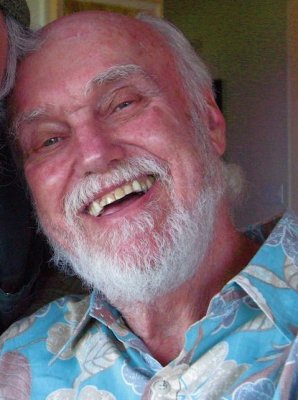
Ram Dass

Spiritual teacher and author

Recorded said elsewhere, not written here
I was close to death, and I didn't rush into my spirit. I spent the time in the hospital just looking at the pipes on the ceiling. ... I failed because this was a trauma, a trauma, and I'm not reacting to it spiritually.

Ross Simonini, The Believer, issue 115, by Skype from Hawaii, 20 November 2017 source ↗

Others on this question

View all 209 →
Roger Ebert Film critic
One of these days I will encounter what Henry James called on his deathbed “the distinguished thing.” I will not be conscious of the moment of passing. In this life I have already been declared dead. It wasn’t so bad. After the first ruptured artery, the doctors thought I was finished. My wife, Chaz, said she sensed that I was still alive and was communicating to her that I wasn’t finished yet. She said our hearts were beating in unison, although my heartbeat couldn’t be discovered. She told the doctors I was alive, they did what doctors do, and here I am, alive.
Recorded Salon, excerpted from Life Itself: A Memoir, 15 September 2011 source ↗
Desmond Tutu Anglican Archbishop of Cape Town; chair of South Africa’s Truth and Reconciliation Commission; Nobel Peace Prize, 1984
And actually now having had the advantage of the Truth and Reconciliation Commission and being able to look at some of the records of what the apartheid government was doing, the thing that is surprising to me is why so many of us survived. I mean, how is it that they did not assassinate more of us?
Recorded Academy of Achievement interview source ↗
Joss Stone English singer, songwriter, and actress
Maybe the night we drove a Hummer in Kabul and went to a cafe that Osama bin Laden supposedly used to frequent.
Recorded The Guardian, The Q&A, The Guardian, 24 April 2021 source ↗
Judy Murray Scottish tennis coach
On a flight, last February, from Atlanta to Rio. We went through a storm and I was convinced that the plane was going down. The overhead cabins were opening, everything was falling out, people were screaming and I was hanging on to my seat.
Recorded The Guardian, The Q&A, The Guardian, 12 December 2020 source ↗

More from Ram Dass

View profile →
Question What lesson has mattered most in your life? Time & hindsight
Well, I—I've experienced that the stroke was grace. It was grace, for me, to play, to get inside, grace. I was dependent. These are things that I—those, those were graceful things. You know, pushed. And just go inside, to be—you're a quote "author" and it's a cultural thing, that role, to get into your head. But it's a head game. It's a head game. And I wanted to get down to my spiritual identity. And the stroke placed me at the spiritual identity.
Recorded Ross Simonini, The Believer, issue 115, by Skype from Hawaii, 20 November 2017 source ↗
Question What has life taught you about being human? Values & belief
The stroke cut out a lot of my external trips: my sports car and golf and my cello. This [ points to hand ] is just not much use with a cello, and I was—forced inside, and finding myself living in my inside. And that has made me be part of my soul. And that's perceiving my incarnation from here [ points to heart ], rather than from here [ points to head ]. And since this is words, I start from here, go over there.
Recorded Ross Simonini, The Believer, issue 115, by Skype from Hawaii, 20 November 2017 source ↗
Question What is the hardest thing that has happened to you, and what did you carry out of it? Failure & regret
everyone saw me as a victim of a terrible illness. But what happened to my body was far less frightening than what happened to my soul. The stroke wiped out my faith. It took me so far from my guru that I felt my oxygen cord had been cut. ... I couldn't put the two together. Then I thought, maybe the stroke is a form of grace, and I hunted for that: how could the stroke be seen as grace? ... The stroke was giving me lessons, advanced lessons. ... It brought me into my soul, and that's grace.
Recorded Sara Davidson, Keynote talk at a conference on body and soul, Hyatt Regency, San Francisco, reported in the New York Times Magazine, The New York Times Magazine, 21 May 2000 source ↗

More on death & what remains

Also answered this

Ian McEwan, Christopher Hitchens, Sara Pascoe, Jo Nesbø, Cory Taylor, Eve Ensler

Search the directory for somebody in particular.

Explore further

Report this answer