Skip to content

The question

Who alive today do you admire most, and what draws you to them?

Originally asked

The Guardian, to a different person each week, The Q&A

The Guardian's Q&A repeatedly uses this prompt, sometimes dropping 'living' while retaining the same comparative judgment.

You answer as yourself. Nobody on FLAPSS answers as anybody else.

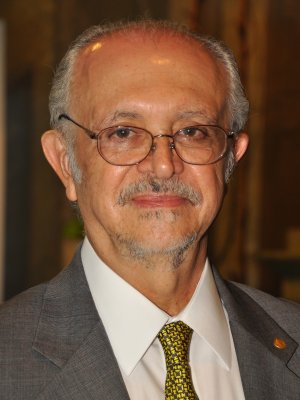
Mario Molina

Atmospheric chemist; Nobel laureate in Chemistry, 1995

Recorded said elsewhere, not written here
there are really very many. Again, as a child, it was obviously those scientists which had lived in the past that had made such an important mark in science history.

Academy of Achievement interviewer, Academy of Achievement interview, 1996, 1996 source ↗

Mentioned in this answer

Others on this question

View all 407 →
Abi Morgan Welsh playwright and screenwriter
Malala Yousafzai, Gloria Steinem, Meryl Streep – all suffragettes, in their own way.
Recorded The Guardian, The Q&A, The Guardian, 10 October 2015 source ↗
My president, a heroic figure—also good- humored, pretty smart, elegant; and if the rest of the world thinks he typifies America, I don’t mind at all.
Recorded Vanity Fair, The Proust Questionnaire, Vanity Fair, September 2009 source ↗
Brian May, because of his love of wildlife and love of music. He’s a kind, gentle soul.
Recorded The Q&A, The Guardian, 26 August 2023 source ↗
Ricky Gervais. I’m saying that so he might read this and cast me in something.
Recorded Vanity Fair, The Proust Questionnaire, Vanity Fair, April 2022 source ↗

More from Mario Molina

View profile →
Question What part of your job would surprise outsiders because it takes up so much of your time? Craft & work
Although my years at Irvine were very productive, I missed not doing experiments myself because of the many responsibilities associated with a faculty position: teaching courses, supervising graduate students, meetings, etc. After spending seven years at Irvine as Assistant and then Associate Professor, I decided to move to a non-academic position. I joined the Molecular Physics and Chemistry Section at the Jet Propulsion Laboratory in 1982. I had a smaller group – only a few postdoctoral fellows – but I also had the luxury of conducting experiments with my own hands, which I enjoyed very much.
Recorded Laureate-written autobiography, provided by the laureate in November 2007, Nobel Prize Outreach, 1 November 2007 source ↗
Question How has a setback or failure set you up for later success? Failure & regret
At first the research did not seem to be particularly interesting – I carried out a systematic search for processes that might destroy the CFCs in the lower atmosphere, but nothing appeared to affect them. We knew, however, that they would eventually drift to sufficiently high altitudes to be destroyed by solar radiation. The question was not only what destroys them, but more importantly, what the consequences are.
Recorded Laureate-written autobiography, provided by the laureate in November 2007, Nobel Prize Outreach, 1 November 2007 source ↗
Question What is one of the best investments you have made — of money, time, or energy? Money & investment
Sherry offered me a list of research options: the one project that intrigued me the most consisted of finding out the environmental fate of certain very inert industrial chemicals – the chlorofluorocarbons (CFCs) – which had been accumulating in the atmosphere and which at that time were thought to have no significant effects on the environment. This project offered me the opportunity to learn a new field – atmospheric chemistry – about which I knew very little; trying to solve a challenging problem appeared to be an excellent way to plunge into a new research area.
Recorded Laureate-written autobiography, provided by the laureate in November 2007, Nobel Prize Outreach, 1 November 2007 source ↗
Question What is the biggest professional obstacle you have faced? Craft & work
In terms of this issue of these industrial gases affecting the environment, at the beginning the road was not easy, because we were suggesting that society had to change, that industries had to do something different than they were doing at that time. And of course, initially we did not meet with a good reception to these ideas from industry. And even from the scientific community — even though our ideas were well received in the small group of specialists in what we were doing — it was not necessarily well received by the scientific community at large. So we really had to continue doing as good a science as we could, and at the same time trying to well communicate our conviction that it was something important, something that had to change in the way society was functioning.
Recorded Academy of Achievement interview, Sun Valley, Idaho, 29 June 1996 source ↗

More on values & belief

Also answered this

Susan Greenfield, Christy Turlington Burns, Billy Ocean, Patricia Hodge, Maxine Peake, Danny Alexander

Search the directory for somebody in particular.

Explore further

Report this answer