The question

What are you most proud of?

Originally asked

Vogue, to one guest at a time, on camera, 73 Questions

Vogue's 73 Questions repeatedly asks respondents to select the work, relationship, or achievement that makes them proudest.

You answer as yourself. Nobody on FLAPSS answers as anybody else.

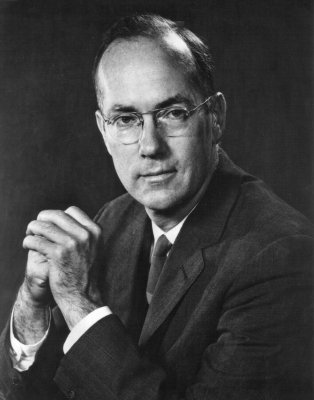
Charles H. Townes

Physicist; Nobel laureate in physics for the invention of the maser and laser

Recorded said elsewhere, not written here
I suppose it’s easy to say, and it may be true, that my role in the development of the laser is perhaps the most important to society. Certainly in terms of applications, and the direct effects on humans, that has been quite important. On the other hand, there are other things which most people don’t know about, and in the scientific area, that I could argue are really quite important, the discoveries there.

Academy of Achievement interview, Berkeley, California, 18 March 1991 source ↗

Others on this question

View all 119 →
Andy Serkis English actor
It’s hard because I’m attached to so many of my roles for so many different reasons,” he says. “But I do have a special affinity with the role of Gollum because, not only was it an amazing character to play, but it spawned a huge change in direction of where I was going as an actor: working in the digital realm.
Recorded Joe Rosengarten, Careers and Education source ↗
Alex Honnold Rock climber; first person to free solo El Capitan
I think I’m most proud of the speed record on Moonlight, because I broke a team record by myself by climbing it in a different style. It feels more “new” to me than simply climbing a route a little quicker, which is what all my other speed records are.
Recorded Alpinist, 2011 source ↗
Bill Clinton 42nd President of the United States, 1993–2001
I’m most proud of the fact that we produced broad-based prosperity, where the incomes of the bottom 20% rose more percentage-wise than the incomes of the top 20%, about the same as the incomes of the top 5%. That was across all racial groups, all regional groups, and all income groups, and that we did it while eliminating 600 billion dollars in national debt. And I put America on a path to be debt free so that we’d be able to embrace the challenges of the 21st century, and I think that at a time of yawning inequality, having inclusive prosperity is very important to building support for inclusive societies.
Recorded Academy of Achievement interview, London, England, 18 October 2017 source ↗
David Trimble First Minister of Northern Ireland 1998–2002; leader of the Ulster Unionist Party
One does have to point to the fact that we did achieve an agreement, that we had that agreement endorsed by a majority of the people of Northern Ireland; that despite very considerable political difficulties since then, we have actually managed to implement the greater part of the political agenda of that agreement, and we have restored local parliamentary institutions in Northern Ireland, that we have a local administration in place which is working, maybe not working ideally, but is still actually there. Those are the significant political developments that one’s had a hand in and obviously, one would point to that as being the things that one looks back at with most satisfaction, but I realize that it’s still work in progress.
Recorded Academy of Achievement interview, Dublin, Ireland, 8 June 2002 source ↗

More from Charles H. Townes

View profile →
Question Which writers or artists most influenced your work? Taste & recommendation
Most scientists do. Of course there are the classical figures. I might talk about Einstein a little bit, for example. Now, when I was in college, I was taking my second course in physics, I remember very well, and it had a chapter on relativity. And I took this relativity on a vacation in the mountains; my family went with me. And I remember very well sitting on a rock up in the hills there overlooking a stream, reading this relativity derivation. And it was just very exciting and interesting. It was a strange new world, relativity. I even thought I had found where Einstein made a mistake. And I went back for lunch, and I thought about it, came back. And I said, “No, he was right after all,” but it was still very exciting. To see a completely different kind of idea and world from what one’s normal intuition shows. Of course, Einstein was one of the great scientists; I’ve always admired him. I fortunately had a chance to talk with him and interact with him a little bit as well.
Recorded Academy of Achievement interview, Berkeley, California, 18 March 1991 source ↗
Question Do you rely on inspiration or discipline to make work? Craft & work
People tell me that I work hard. I never feel that I do particularly, because it’s fun. I always say, “Well, I’ve never worked hard in my life.” I’m busy, but most of what I do is enjoyable. It isn’t that it’s not tedious to some people, and so on, and of course I have routine to do, but I don’t mind it. I just don’t feel that I’m put upon. I spend a lot of time, but it’s fun. It’s a very intensive hobby. I would say it’s my most serious hobby. I have lots of hobbies, but the one permanent one is science, physics. So yes, I spend a lot of time, and I would agree with Edison, you have to work very hard and intensively.
Recorded Academy of Achievement interview, Berkeley, California, 18 March 1991 source ↗

More on identity & self

Also answered this

Jocelyn Bell Burnell, Robert Ballard, Yury Gogotsi, Arthur Ashkin, Ernst Mayr, Harold Kroto

Search the directory for somebody in particular.

Explore further

Report this answer