Skip to content

The question

How does a new piece of work usually begin for you?

Originally asked

The Paris Review, to novelists and poets, The Art of Fiction

A recurrent craft question in The Paris Review's Art of Fiction interviews; wording varies between character, theme, first sentence, image, and idea.

You answer as yourself. Nobody on FLAPSS answers as anybody else.

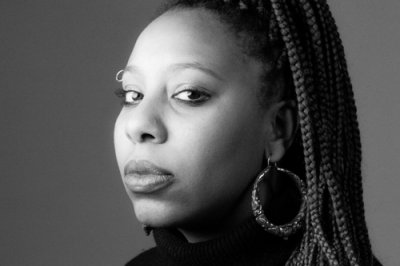
Morgan Parker

author

Recorded said elsewhere, not written here
A little of both. Sometimes I have a skeleton of something. For both essays and poems, the conception process is very similar. So there definitely were some essays that started as poems. It’s just about realizing what the best container is for the thought. Sometimes I need more of an argument, even if it’s an argument with myself, but what’s cool is that I can think about utilizing those techniques no matter what form. It’s about exercising, learning how an essay thinks, and then being able to apply that to a poem if I need to or want to.

Arriel Vinson, The Creative Independent interview, 6 January 2025 source ↗

Others on this question

View all 60 →
Clare Sestanovich American writer
I start with the first sentence. A maddening answer, and, for my own sake, I wish I had a better one. But it’s the only way I know how: one sentence on top of the other, one foot in front of the other. In that way, writing does feel exploratory to me. I never start with a map in my head or even a destination. All I have is a sense that I’m heading in an interesting direction.
Recorded Shy Watson, The Creative Independent interview source ↗
Bells Larsen Canadian singer-songwriter
Concepts can be really freeing in their limitations. I really enjoy when I make rules for myself in my creative practice. Whether that means I’m going to try and write a song without the use of the word “I,” I like having rules in my songs. Even if I don’t follow them exactly, it’s kind of nice to have a very loose guideline. And then when I try to create that universe for myself, I at least can visualize the path that I’m trying to follow.
Recorded Laura Brown, The Creative Independent interview source ↗
Norman Foster Architect; founder of Foster + Partners and winner of the Pritzker Prize
I think it’s a combination of being a good listener, trying to understand what lies beneath the surface. And I mean that in the most literal sense.  It could be a cultural institution. It could be an enterprise. It could be a site. It could be the culture of feng shui in an Asian society. The things that you can measure and the things that you can’t measure. And it’s about drawing on the best of diverse skills, the reality that an architect cannot design and realize a building independent of engineers, skilled engineers, structural engineers, environmental engineers. So for me, it’s about harnessing the creative energies. It’s not about designing a building and handing it out and saying, “You make it stand up. You make it warm. You make it cool.” It’s about getting those skills in unison.  The analogy is perhaps a round table, which is non-hierarchical. That doesn’t mean to say that you don’t have strong leadership. Obviously, you have to have that; otherwise, it’s designed by committee. So it’s answering the material needs and providing an element of surprise, something that perhaps nobody believed might be possible to add. And it’s not about money. Quality is an attitude of mind. It’s not about how much you spend. It’s about how wisely you spend. You’ve really got three ingredients. You’ve got material resources, money; you’ve got time, and in many cases, time is money; and you’ve got creative energy. And it’s the creative energy that is going to make the difference in terms of those other ingredients.
Recorded Academy of Achievement interview, 2017 source ↗
We never enter into new recording projects thinking, “Yeah we’re gonna write something great here!” A lot of the time it’s a feeling like, can we write anything else? Is there anything else to say? You know what I mean? There’ll always be things to say, but if we can’t dress it up right, then it’s game over. It feels like a pretty honest place to start from: What is there to say?
Recorded T. Cole Rachel, The Creative Independent interview, 13 March 2017 source ↗

More on craft & work

Also answered this

Claudia Dey, Precious Okoyomon, Duncan Hannah, John Banville, Sigrid Nunez, Helen Phillips

Search the directory for somebody in particular.

Explore further

Report this answer