Most scientists do. Of course there are the classical figures. I might talk about Einstein a little bit, for example. Now, when I was in college, I was taking my second course in physics, I remember very well, and it had a chapter on relativity. And I took this relativity on a vacation in the mountains; my family went with me. And I remember very well sitting on a rock up in the hills there overlooking a stream, reading this relativity derivation. And it was just very exciting and interesting. It was a strange new world, relativity. I even thought I had found where Einstein made a mistake. And I went back for lunch, and I thought about it, came back. And I said, “No, he was right after all,” but it was still very exciting. To see a completely different kind of idea and world from what one’s normal intuition shows. Of course, Einstein was one of the great scientists; I’ve always admired him. I fortunately had a chance to talk with him and interact with him a little bit as well.
Managed profile
Not claimed by Charles H. Townes
Charles H. Townes has not joined FLAPSS and has not endorsed it. This page is a reference record assembled from published interviews and public remarks. Every answer below is a direct quotation with the source and date shown next to it.
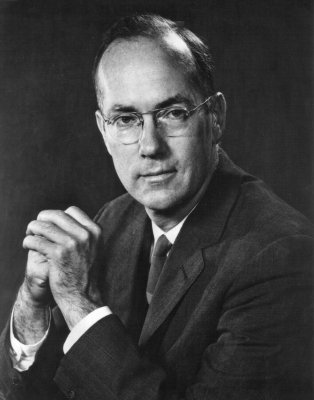
Charles H. Townes
Physicist; Nobel laureate in physics for the invention of the maser and laser
United States · 1915–2015
Science and medicine
About
Physicist who conceived the maser at Columbia University in 1951 and shared the 1964 Nobel Prize in Physics for the underlying principle. Later worked in radio and infrared astronomy at Berkeley.
3 answers
Every quotation above is reproduced from the source shown beside it and has not been edited. Charles H. Townes did not write these answers for FLAPSS. Request a correction or removal.