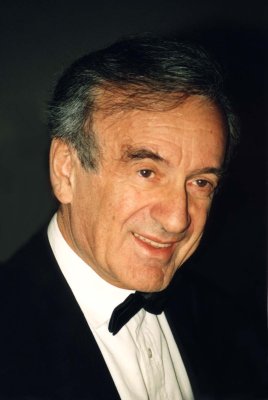
After the war — I was 15 when I entered the camp, I was 16 when I left it, and all of a sudden you become an orphan and you have no one. I had a little sister and I knew, with my mother the first night, that they were swept away by fire. My older sisters I discovered by accident after the war in Paris, where I was in an orphanage. But to be an orphan — you can become an orphan at 50, you are still an orphan. Very often I think of my father and my mother. At any important moment in my life, they are there, thinking, “What an injustice.”
Elie Wiesel has not joined FLAPSS and has not endorsed it. This page is a reference record assembled from published interviews and public remarks. Every answer below is a direct quotation with the source and date shown next to it.
Elie Wiesel
Writer and human rights advocate; Nobel Peace Prize laureate, 1986
United States · 1928–2016
Politics and public life
About
Elie Wiesel was a Romanian-born American writer, professor and political activist who survived Auschwitz and Buchenwald as a teenager. He wrote fifty-seven books, including the memoir Night, and received the Nobel Peace Prize in 1986.
5 answers
Every quotation above is reproduced from the source shown beside it and has not been edited. Elie Wiesel did not write these answers for FLAPSS. Request a correction or removal.