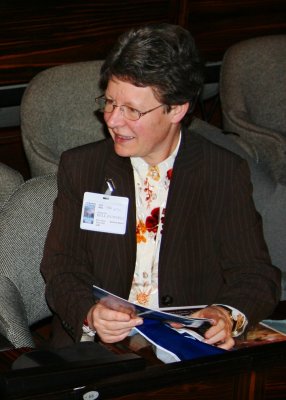
The next generation of telescopes will see millions of events per night with computers that sift through huge amounts of data. If we had had access to a computer, we would never have programmed it to look for something so unexpected. How do you pick up the things you don't know exist, the things you can't tell it to look for? My project was to study quasars, and then we accidentally stumble over these things called pulsars. They were totally unexpected, totally unknown – and it's been huge fun.
Jocelyn Bell Burnell has not joined FLAPSS and has not endorsed it. This page is a reference record assembled from published interviews and public remarks. Every answer below is a direct quotation with the source and date shown next to it.
Jocelyn Bell Burnell
Radio astronomer; discoverer of pulsars
United Kingdom · b. 1943
Science and medicine
About
Astrophysicist from Northern Ireland who identified the first radio pulsars in 1967 as a doctoral student at the University of Cambridge. The 1974 Nobel Prize in Physics for the discovery went to her supervisor Antony Hewish and to Martin Ryle. She received the Special Breakthrough Prize in Fundamental Physics in 2018 and the Royal Society's Copley Medal in 2021.
10 answers
Every quotation above is reproduced from the source shown beside it and has not been edited. Jocelyn Bell Burnell did not write these answers for FLAPSS. Request a correction or removal.