It is not the critic who counts; not the man who points out how the strong man stumbles or where the doer of deeds could have done them better. The credit belongs to the man who is actually in the arena, whose face is marred by dust and sweat and blood; who strives valiantly; who errs, and comes short again and again, because there is no effort without error and shortcoming; but who does actually strive to do the deeds; who knows the great enthusiasms, the great devotions; who spends himself in a worthy cause; who at the best knows in the end the triumph of high achievement, and who at the worst, if he fails, at least fails while daring greatly, so that his place shall never be with those cold and timid souls who know neither victory nor defeat.
Theodore Roosevelt has not joined FLAPSS and has not endorsed it. This page is a reference record assembled from published interviews and public remarks. Every answer below is a direct quotation with the source and date shown next to it.
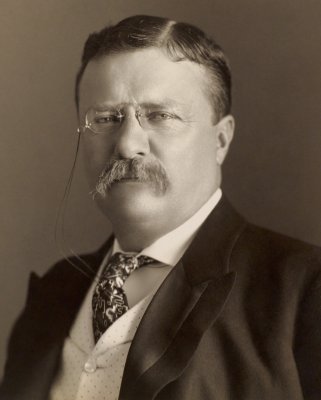
Theodore Roosevelt
26th President of the United States, 1901–1909; Governor of New York 1899–1900; Assistant Secretary of the Navy 1897–1898
United States · 1858–1919
Politics and public life
About
Served as President of the United States from 1901 to 1909, having become President on the assassination of William McKinley. Previously Governor of New York and Assistant Secretary of the Navy. Awarded the Nobel Peace Prize in 1906 for mediating the end of the Russo-Japanese War, and ran unsuccessfully as the Progressive Party candidate in 1912.
2 answers
Shame on the man of cultivated taste who permits refinement to develop into a fastidiousness that unfits him for doing the rough work of a workaday world!
Every quotation above is reproduced from the source shown beside it and has not been edited. Theodore Roosevelt did not write these answers for FLAPSS. Request a correction or removal.