You called it vision, I call it analyzing what my strengths were. It just so happened there was no market whatsoever for my strength, unless I was interested in becoming a show dancer, for which I tried, but I’m not tall enough. Also, when I auditioned for the Radio City Rockettes, they said, “We love your fouettés, but can’t you smile?” And things of that nature transpired between me and a commercial future. So, I managed to find a way of subsisting in the beginning by doing odd jobs, Kelly Girl temp work, selling perfume at Macy’s, and any and everything to be able to sustain studying and beginning a career with a group of dancers who were willing to devote five years, really, of their lives to me, working very seriously, with complete commitment, for not a penny.
Managed profile
Not claimed by Twyla Tharp
Twyla Tharp has not joined FLAPSS and has not endorsed it. This page is a reference record assembled from published interviews and public remarks. Every answer below is a direct quotation with the source and date shown next to it.
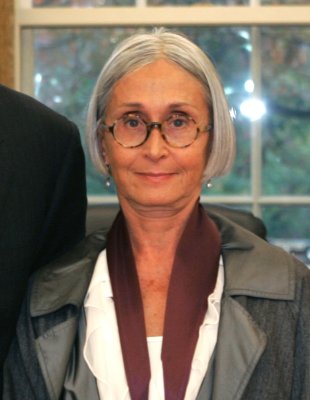
Twyla Tharp
Choreographer, dancer and author
United States · b. 1941
Arts and letters
About
American choreographer who founded Twyla Tharp Dance in 1965, initially an all-female company that rehearsed for five years while performing rarely. She went on to make work for the Joffrey Ballet, American Ballet Theatre and Broadway, and to choreograph for Miloš Forman’s films Hair, Ragtime and Amadeus. She received the National Medal of Arts in 2004 and the Kennedy Center Honor in 2008.
3 answers
We thought that there were certain possibilities, in terms of physical movement, in terms of community, and in terms of what dance could address in our society. And those were the issues that we went after. And we worked with a great deal of rigor. Which is to say, we were very, very dedicated. We worked six days a week, we worked at least six hours every day. We did not perform much at all. It was really about the experience of learning and exploring and growing, for five years.
I already knew this, because I had been studying classical ballet for a long time. But a lot of people insisted on a wall between modern dance and ballet, that the two disciplines were totally separate, and if you did one, you couldn’t do the other. I’m beginning to think that walls are very unhealthy things.
Every quotation above is reproduced from the source shown beside it and has not been edited. Twyla Tharp did not write these answers for FLAPSS. Request a correction or removal.