Skip to content

The question

Whose work do you read even when you disagree with them?

Originally asked

Vox, to writers and thinkers, 9 Questions, 2017

Vox used this as one of nine fixed questions in its 2017 series on intellectual habits.

You answer as yourself. Nobody on FLAPSS answers as anybody else.

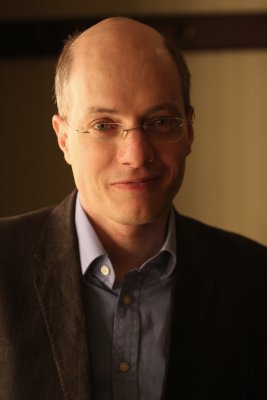
Alain de Botton

Writer and philosopher; founder of The School of Life

Recorded said elsewhere, not written here
It’s very gratifying to grow utterly incensed by the Mail Online and come away from it full of fury and absolute outrage at its prejudice and xenophobia — and support for Brexit.

Sean Illing, Vox, “9 questions” series, 29 April 2017 source ↗

Others on this question

View all 26 →
Richard White Margaret Byrne Professor of American History, Emeritus, Stanford University
But Wiebe didn’t have the evidence to sustain many of the assertions that fed his thesis. Many of the things which he said happened in the Gilded Age had happened earlier and other things didn’t happen at all. Nonetheless, it’s a great feat of storytelling to fit so many disparate details into a simple framework. Even though I disagree with Wiebe, I always keep my eye on The Search for Order as a model of historical writing.
Recorded Eve Gerber, Five Books interview, published transcript, 26 March 2021 source ↗
The Sun/Daily Mail/other various rags. It’s not that I go out of my way to read them, but back in England any fish and chip shop worth their salt delivers your food wrapped in newspaper. Tabloids are cheapest. You can’t help but catch the headlines.
Recorded Sean Illing, Vox, “9 questions” series, 6 May 2017 source ↗
John Gray Political philosopher; emeritus professor at the London School of Economics
I would include among philosophical writings some liberals. For example, John Stuart Mill, even though I disagree with him profoundly — a very resourceful and intelligent thinker.
Recorded Tyler Cowen, Conversations with Tyler podcast, published transcript source ↗
David Nasaw Arthur M. Schlesinger Jr. Professor of History at the CUNY Graduate Center
Hamilton – I disagree with him much more than I agree with him. This book is very much a book about a father and a son. The father is painted as the bad guy, and the son is the good guy, struggling to break free. I don’t accept that interpretation, or that framework of analysis. Nonetheless, Hamilton writes with a verve, an electricity, a passion, that’s rare among academic historians. As a researcher, he’s extraordinary.
Recorded Emma Mustich, Five Books interview, published transcript, 27 April 2011 source ↗

More from Alain de Botton

View profile →

More on attention & the world

Also answered this

Skye C. Cleary, Adam Gopnik, Chimamanda Ngozi Adichie, Harry Sidebottom, Celeste Ng, Henry Rollins

Search the directory for somebody in particular.

Explore further

Report this answer