Skip to content
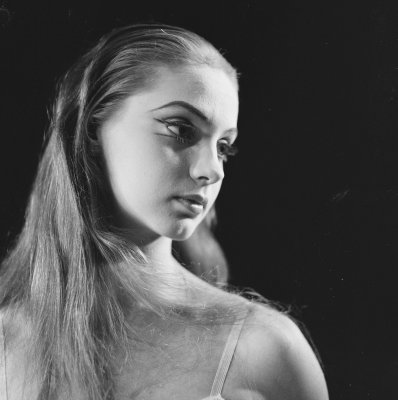
Suzanne Farrell

Ballerina and ballet master; répétiteur for the Balanchine Trust

Recorded said elsewhere, not written here
I think he was a great philosopher. He had a wonderful theory that you live in the “now,” which I think is important. Along with living in the moment, you also have to assume the responsibility that goes along with it, and you don’t take your position lightly. But it also means that you get the full value of the moment that you are living, so you don’t look back on your life and say, “If only I hadn’t wasted time, if only I had done this.” You do the best you can. It was wonderful to be able to go home after a performance, and think, well it wasn’t maybe so good, but it was the best I could be at that time.

Academy of Achievement (achievement.org) source ↗

Others on this question

View all 23 →
Susan Butcher Dog musher; four-time winner of the Iditarod Trail Sled Dog Race
One of my favorite lessons is best summed up in the words of an old Athabascan Indian who told me, “There are many hard things in life, but there is only one sad thing, and that is giving up.”
Recorded Academy of Achievement interview, 29 June 1991 source ↗
Neil Sheehan War correspondent and author; Pulitzer Prize winner, 1989
One of my editors once said to me, “If you get invited to the White House, take your notebook with you,” and he meant it. It’s something one has to always remember because when you stray off the path, you do a disservice to the American public.
Recorded Academy of Achievement recorded interview, American Academy of Achievement, 19 June 2007 source ↗
Sachin Tendulkar India Test and one-day international cricketer, 1989–2013
He gave me freedom at the age of 11, and told me that [I should] chase my dreams, but make sure you do not find short cuts. The path might be difficult, but don't give up, and I have simply followed his instructions. […] Every time I have done something special [and] showed my bat, it was [for] my father.
Recorded Farewell address, Wankhede Stadium, Mumbai, The Hindu, 16 November 2013 source ↗
August Wilson Playwright; two Pulitzer Prizes for Drama
I think he was expecting someone with a more strident tone and antagonistic demeanor. I think he was surprised to find out that I’m a pretty likable person, and that despite out different views I conducted myself with a civility and grace of manners my mother always demanded of me. For myself, I found him to be a more likable person than I had imagined. And I certainly value and respect the contributions that he has made to the theater; our differences of opinion on black theater do not dampen my respect and appreciation, nor in any way invalidate the considerable contributions that he has made.
Recorded Bonnie Lyons and George Plimpton, Interview conducted over lunch at the Sheraton Hotel’s Fourteenth Street Bar, Atlanta, The Paris Review, Issue 153, Winter 1999, 1999 source ↗

More from Suzanne Farrell

View profile →
Question What is the hardest thing that has happened to you, and what did you carry out of it? Failure & regret
Well, I’ve had injuries, but I’d always get out on stage because I think the body is a wonderful thing, and you have to treat it with respect. We haven’t even reached our potential for what we can do as human beings. I went through a period where I had hip trouble. I thought it was just a typical pulled muscle, so I used liniment, and warmed up more than I thought was necessary, all the things we learn to do when you have a typical dance-related injury or sore muscle. Over the months, it didn’t go away. In fact, it got worse. Eventually I realized that I had a very serious problem, and it was the first time that dance had let me down. What had been my salvation and my security with my body was abandoning me. This was emotionally and physically devastating.
Recorded Academy of Achievement (achievement.org) source ↗
Question Which writers or artists have most influenced your work? Taste & recommendation
That’s an easy question. It was, of course, George Balanchine. He came from Russia via Europe and settled in America in 1933. He started a little company which was not very successful, so he had to start over and over again. Ultimately, he founded the New York City Ballet. I happened to be born at the right time, came to the right place, and had the fortune to audition for him, and work with him, because he is the genius of the century of ballet. I learned how to dance with him.
Recorded Academy of Achievement interview, New York City, 16 December 1990 source ↗
Question Do you rely more on inspiration or discipline to make your work? Craft & work
No, never. Strangely enough, being such a tomboy, and being so—as my mother says—spoiled as a child, once I started dancing and in a way growing up, I was not the spoiled brat or the rebellious child that I was when I really had no reason to be as a child. When you work, it’s a laboratory. The dance studio, when we were working together, was the place where you experiment. I’m not intimidated by failure or making a mistake, because you learn from those situations. You don’t learn from a situation where you do something well. You enjoy it and you give yourself credit, but you don’t really learn from that. You learn from trial and error, trial and error, all the time. When you fail, maybe you failed in that particular instance, but you have discovered something else. A lot of the ballets that we went on to do were built around mistakes that we had made in the classroom. So you never throw anything out. Rebelling takes up energy. As a dancer, you don’t have that kind of energy to throw away.
Recorded Academy of Achievement interview, New York City, 16 December 1990 source ↗
Question What made you stop something you were known for, and how did you know it was time? Time & hindsight
By the time I admitted that I needed a hip operation, I had denied it for so long that it was a breakthrough to suddenly say, “I need this.” I knew I would probably never dance again, but I had no choice. By that time, I just wanted to be normal. I wanted to walk down the street without limping. I couldn’t tie my shoes. I couldn’t put slacks on. I was the farthest thing from a person who ever could dance and do all those extremely incredible extensions and contortions that we do.
Recorded Academy of Achievement (achievement.org) source ↗

More on time & hindsight

Also answered this

Chuck Jones, Susan Butcher, August Wilson, Sachin Tendulkar, Gustavo Dudamel, Bill Clinton

Search the directory for somebody in particular.

Explore further

Report this answer