Skip to content
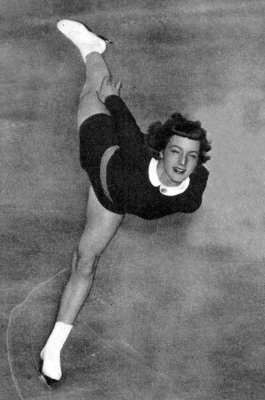
Tenley Albright

Surgeon; Olympic figure-skating champion, 1956

Recorded said elsewhere, not written here
But I couldn’t let myself feel that way until it was all right to. And that’s part of the surgical mind too, addressing what you need to, and you know you can do, and postponing how you feel about it, thinking only of the patient and what you need to do.

Academy of Achievement recorded interview, American Academy of Achievement, 21 June 1991 source ↗

Others on this question

View all 26 →
Gustavo Dudamel Conductor; Music and Artistic Director of the Los Angeles Philharmonic
I will say it’s very in a way looks very physical. You know, it’s like a dance. At the end, you are moving your hands in front of an orchestra, your arms, but it’s like a choreography, and that is, that is a dance part of, of conducting. … But at the end, yes, is something that starts from that, but then it gets very deep in a very, I will say philosophical, metaphysical, psychological thing, conducting—more than. Spiritual. It’s more than moving your hands in front of an orchestra and the people watching you jump or move or do these kind of things, it’s something very spiritual, that is right.
Recorded Academy of Achievement (achievement.org) source ↗
Tom Stoppard Playwright and screenwriter
The look of the thing is one thing. The sound of it is more important. … When you write a play, it makes a certain kind of noise in your head, and for me rehearsals are largely a process of trying to reproduce that noise. It is not always wise to reproduce it in every instance, but that’s another question.
Recorded Shusha Guppy, The Paris Review, Issue 109, Winter 1988, 1988 source ↗
Fei-Fei Li Professor of computer science at Stanford University; creator of ImageNet
Being a scientist is about resilience because science is exploring the unknown, just as an immigrant is exploring the unknown. In both, you are on an uncertain journey and you have to find your own North Star.
Recorded Stanford HAI interview marking publication of The Worlds I See, Stanford Institute for Human-Centered Artificial Intelligence (Stanford HAI) source ↗
Brian Eno Composer, record producer and visual artist
I find that you’re a completely different person as a maker than you are as a listener. That’s one of the reasons I so often leave the studio to listen to things. A lot of people never leave the studio when they’re making something, so they’re always in that maker mode, screwdriving things in - adding, adding, adding. Because it seems like the right thing to be doing in that room. But it’s when you come out that you start to hear what you like.
Recorded Pitchfork, Eno's London studio, February 2017, Pitchfork, reproduced in the More Dark Than Shark archive, 1 February 2017 source ↗

More from Tenley Albright

View profile →
Question What line from a parent, teacher, or mentor do you still repeat to yourself? Time & hindsight
And I said, “You know, it does sound silly, and it does sound as if I’m doing it just for my own fun.” And she said, “You have an obligation to do the best you can with whatever you’ve got. And if you like to do a sport, and you can do part of it well, that’s a way of expressing what God gave you.”
Recorded Academy of Achievement recorded interview, American Academy of Achievement, 21 June 1991 source ↗

More on craft & work

Also answered this

Roger Penrose, Jocelyn Bell Burnell, Terence Tao, Keith Black, Jamie Dimon, Haruki Murakami

Search the directory for somebody in particular.

Explore further

Report this answer