Skip to content

The question

Whose work do you read even when you disagree with them?

Originally asked

Vox, to writers and thinkers, 9 Questions, 2017

Vox used this as one of nine fixed questions in its 2017 series on intellectual habits.

You answer as yourself. Nobody on FLAPSS answers as anybody else.

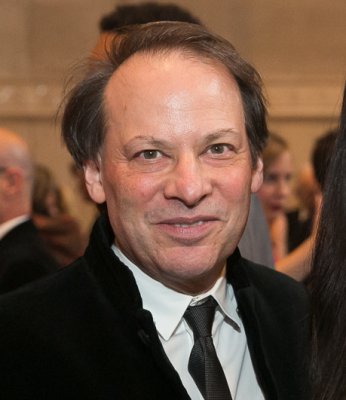
Adam Gopnik

Staff writer at The New Yorker; essayist

Recorded said elsewhere, not written here
Writers we think are all wrong and want to read anyway come in two kinds: those who are good writers and bad thinkers — Christopher Hitchens, Norman Podhoretz, and Gore Vidal, each in his terribly different way, are instances of that — and those who may not be original stylists but who we admire for trying to be better thinkers than they were before, stumbling toward truth from a starting place very different from the one we happened to inherit. I disagree, for instance, with David Frum about almost everything, from Iraq to the legacy of Pierre Trudeau in our native Canada, but never doubt his integrity or desire to tell the truth about the world.

Sean Illing, Vox, “9 questions” series, 16 September 2017 source ↗

Others on this question

View all 26 →
Martha Nussbaum Ernst Freund Distinguished Service Professor of Law and Ethics, University of Chicago
This strikes me as the most hilarious question, given that I’m a philosopher. Philosophy is all about respectful disagreement, and learning from disagreement. No decent philosopher simply parrots some other philosopher, so there must be disagreements somewhere in every case. I disagree less with J.S. Mill than with any other major philosopher, but I still disagree with Mill a good deal. Aristotle is insightful on some matters, not so insightful on others. As for Plato, Kant, Bentham, Sidgwick, and Rawls, my disagreements are larger, but still compatible with thinking that in some very major ways they were on the right track. I would not say that about Lord Devlin or James Fitzjames Stephen, but I still teach both, in order to learn from their arguments. If I didn’t disagree with a philosopher it would hardly be worth engaging with him or her, because there would be nothing to learn.
Recorded Sean Illing, Vox, “9 questions” series, 23 April 2017 source ↗
Massimo Pigliucci K.D. Irani Professor of Philosophy at the City College of New York
Even though I’m not a utilitarian, and so I tend to disagree with Singer in terms of the general framework, this book literally changed my life. I read it many years ago, in the 1990s, when I was in Knoxville, Tennessee.
Recorded Nigel Warburton, Five Books interview, published transcript, 2 October 2022 source ↗
Richard Wolfson Benjamin F. Wissler Professor of Physics at Middlebury College
I chose this book because it’s written by a physicist, very elderly now, who has spent all his life working in controlled fusion. The title is a take on Al Gore’s An Inconvenient Truth . The first part of the book is Chen claiming that fusion is indispensable for our future, and why. He has a very readable section on climate change, a section on fossil fueled energy and a section on renewables—in which I disagree with him strongly, because he denigrates solar energy—and then goes on to say that we need fusion.
Recorded Sophie Roell, Five Books interview, published transcript, 24 May 2021 source ↗
Harry Sidebottom Ancient historian and novelist; teaches ancient history at Oxford University
This is an odd choice because I disagree with almost all his conclusions. He argues that the reign of Augustus sees the Roman élite finally dealing with the problems of the Greek culture that they love and the nasty Greeks they rule. He’s just wrong. They don’t. They carry on loving the culture and despising Greeks. I don’t agree with his methods. He doesn’t argue things. He just tells you stuff.
Recorded Anna Blundy, Five Books interview, published transcript, 4 October 2010 source ↗

More from Adam Gopnik

View profile →
Question Which thinking habit do you wish you could break? Craft & work
My very wise and politically savvy 17-year-old daughter says I get too emotional about political issues. I think she’s right. She knows that if she sees me race across a room, I have just read something about Trump. Turning ideas into feelings is the thing an essayist is supposed to do, but political punditry should probably be more detached.
Recorded Sean Illing, Vox, “9 questions” series, 16 September 2017 source ↗

More on attention & the world

Also answered this

Alain de Botton, Skye C. Cleary, Harry Sidebottom, Chimamanda Ngozi Adichie, Celeste Ng, Henry Rollins

Search the directory for somebody in particular.

Explore further

Report this answer