Skip to content

The question

Which thinking habit do you wish you could break?

Originally asked

Vox, to writers and thinkers, 9 Questions, 2017

Vox's fixed 9 Questions format asks this verbatim across respondents.

You answer as yourself. Nobody on FLAPSS answers as anybody else.

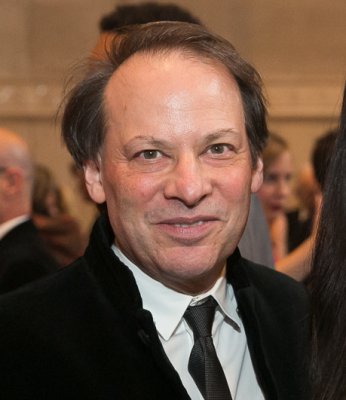
Adam Gopnik

Staff writer at The New Yorker; essayist

Recorded said elsewhere, not written here
My very wise and politically savvy 17-year-old daughter says I get too emotional about political issues. I think she’s right. She knows that if she sees me race across a room, I have just read something about Trump. Turning ideas into feelings is the thing an essayist is supposed to do, but political punditry should probably be more detached.

Sean Illing, Vox, “9 questions” series, 16 September 2017 source ↗

Others on this question

View all 21 →
Whitney Cummings Comedian and writer; co-creator of 2 Broke Girls
Overthinking. I tend to conflate the amount of time spent on something with how good it is. Sometimes intuition is better than proof, and gut instinct better than hours of “work.”
Recorded Sean Illing, Vox, “9 questions” series, 15 April 2017 source ↗
Zeynep Tufekci Professor of sociology and public affairs at Princeton University
I have the same academic disease that any academic will understand, that I get focused on the interesting because that’s appealing to me. Most of the time, most answers are boring. “It’s a respiratory disease. Wear a mask.” That’s a boring example. Trying to be too clever, too smart, almost too contrarian sometimes — I would say that is something that I fight in myself because, like a lot of academics and a lot of intellectual people, I like the answers that surprise me.
Recorded Tyler Cowen, Conversations with Tyler podcast, published transcript source ↗
Charlie Munger Vice chairman of Berkshire Hathaway, 1978–2023
inversion frequently will solve problems which nothing else will solve. And in life, unless you’re more gifted than Einstein, inversion will help you solve problems that you can't solve in other ways.
Recorded USC Gould School of Law commencement, 2007, Speakola, 2007 source ↗

More from Adam Gopnik

View profile →
Question Whose work do you read even when you disagree with them? Attention & the world
Writers we think are all wrong and want to read anyway come in two kinds: those who are good writers and bad thinkers — Christopher Hitchens, Norman Podhoretz, and Gore Vidal, each in his terribly different way, are instances of that — and those who may not be original stylists but who we admire for trying to be better thinkers than they were before, stumbling toward truth from a starting place very different from the one we happened to inherit. I disagree, for instance, with David Frum about almost everything, from Iraq to the legacy of Pierre Trudeau in our native Canada, but never doubt his integrity or desire to tell the truth about the world.
Recorded Sean Illing, Vox, “9 questions” series, 16 September 2017 source ↗

More on craft & work

Also answered this

Alain de Botton, Courtney Maum, Chimamanda Ngozi Adichie, Celeste Ng, Henry Rollins, Whitney Cummings

Search the directory for somebody in particular.

Explore further

Report this answer