Skip to content
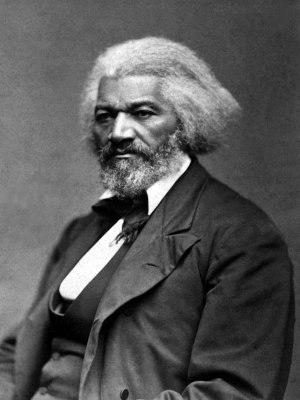
Frederick Douglass

Abolitionist, orator, newspaper editor and U.S. diplomat; U.S. Marshal for the District of Columbia 1877–1881; U.S. Minister Resident to Haiti 1889–1891

Recorded said elsewhere, not written here
I do not think much of the accident or good luck theory of self-made men. It is worth but little attention and has no practical value. An apple carelessly flung into a crowd may hit one person, or it may hit another, or it may hit nobody. The probabilities are precisely the same in this accident theory of self-made men. It divorces a man from his own achievements, contemplates him as a being of chance and leaves him without will, motive, ambition and aspiration. Yet the accident theory is among the most popular theories of individual success.

Lecture, delivered repeatedly 1859–1893, Teaching American History, reproducing Frederick Douglass Papers, Library of Congress Manuscript Division source ↗

Others on this question

View all 80 →
Jessye Norman Operatic soprano and recitalist
I went to the opera practically every night. I went to something practically every night, just learning and seeing and absorbing, and what I noticed is that there were singers that were only sort of slightly older than I whose voices sounded as though they were many decades older than that, and didn’t sound pretty, and I needed to understand what was happening. I mean there were singers that were 28 or 30 years old or something, and I would speak to them afterwards to say, “Was your voice tired tonight? Tell me what’s happening,” because I didn’t understand it. Their voices should have sounded fresh and blooming and wonderful, but instead they sounded different, and it was because they were singing a different opera every night, and singing whatever was offered, and I didn’t understand and needed to understand — because no one was telling me these things — why they just didn’t say no. Why didn’t they just say, “Oh no, I don’t think I should.”
Recorded Academy of Achievement (achievement.org) source ↗
Willem Kolff Physician and inventor; builder of the first practical artificial kidney
I’ve been mortally opposed to the so-called life-and-death committees that were instituted. When there were many more patients that needed to be dialyzed, and not enough artificial kidneys available, you had the institution of the life-and-death committees. ... Depending on the answer to these questions, he could be dialyzed. Otherwise, he could go to hell. I’ve been mortally opposed to that. When I set up a dialysis center here with a grant from some government agency, I was forced to put in a life-and-death committee, but it never met.
Recorded Academy of Achievement recorded interview, American Academy of Achievement source ↗
Bill Clinton 42nd President of the United States, 1993–2001
If I had to make the welfare decision again tomorrow, I’d sign it again tomorrow. We had a 60 percent reduction in the welfare rolls. We had an enormous percentage of poor people move into the workforce, start middle-class lifestyles, and when we had a brief tech recession of six months in 2001, after I left office, people who had moved from welfare to work were less likely to be laid off than the general working population. So I would do it again.
Recorded Academy of Achievement interview source ↗
Lee Berger Palaeoanthropologist; University of the Witwatersrand
There was very much a real feel that we probably pretty much discovered every major fossil field in Africa. And in fact, some scientists even wrote that down at the turn of the millennia. It wasn’t a great time to be proposing to explore and push new, because we hadn’t succeeded, theoretically, being given the chance. All the big discoveries were in old sites. ... I was still an extraordinary believer in that there was more out there to be discovered. I just wasn’t demonstrating.
Recorded Academy of Achievement recorded interview, American Academy of Achievement, 25 October 2012 source ↗

More from Frederick Douglass

View profile →
Question What is one of the best investments you have made — of money, time, or energy? Money & investment
From these remarks it will be evident that, allowing only ordinary ability and opportunity, we may explain success mainly by one word and that word is WORK! WORK!! WORK!!! WORK!!!! Not transient and fitful effort, but patient, enduring, honest, unremitting and indefatigable work, into which the whole heart is put, and which, in both temporal and spiritual affairs, is the true miracle worker. Every one may avail himself of this marvellous power, if he will. There is no royal road to perfection.
Recorded Lecture, delivered repeatedly 1859–1893, Teaching American History, reproducing Frederick Douglass Papers, Library of Congress Manuscript Division source ↗

More on values & belief

Also answered this

Barack Obama, Edmund Hillary, Bill Clinton, Sonia Sotomayor, Mohamed ElBaradei, Corazon Aquino

Search the directory for somebody in particular.

Explore further

Report this answer