Skip to content

The question

Do you rely more on inspiration or discipline to make your work?

Originally asked

The Creative Independent, to working artists, its interview series

A repeated Creative Independent tension, asked as inspiration, muse, discipline, ritual, or the requirement to show up.

You answer as yourself. Nobody on FLAPSS answers as anybody else.

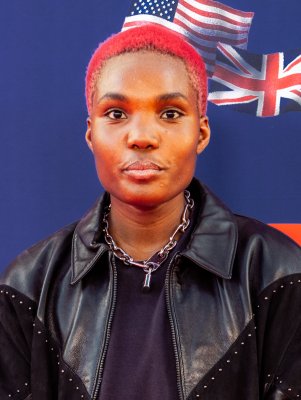
Arlo Parks

Singer-songwriter and poet; Mercury Prize winner

Recorded said elsewhere, not written here
I do, but I never force it out of myself. I’m kind of trying to explore writing as a practice, so you know, I journal every day, I try and do kind of something for the art every day whether that’s reading or watching film or practicing guitar… It kind of ebbs and flows, but I do try and do something creative every day. When it comes to writing poetry or songs, I really have to have an idea or have that desire to get something down. I feel like the best art comes from a sense of necessity and urgency, like I can’t help but talk about this. I can only be in that creative space when I really want to and when internally it feels right.

The Talks, published interview, 18 September 2021 source ↗

Others on this question

View all 27 →
Chris Cole Professional skateboarder; twice Thrasher Skater of the Year
I did it because that’s what it was going to take. I really wanted it. I had an older brother, and he was bigger and smarter, and when you’re a kid, you’re trying to catch up all the time. I think that that’s where it kind of came from, just that little brother syndrome. I was just trying to be something, trying to make myself worth something. It was proving it to other people and proving it to myself at the same time. I needed that.
Recorded The Talks, published interview, 11 November 2015 source ↗
Denton Cooley Cardiothoracic surgeon; founder of the Texas Heart Institute
I think so. I really do. With your own effort, you can improve yourself, but people find they can’t improve beyond a certain point. I like to play golf, but I know that no matter how much I practice, I will never get above a certain level. I think that’s also true of surgery. Some people are born with the gifts and the mind for surgery, and they may go on to great heights. Others may try and try, only to reach a certain plateau.
Recorded Academy of Achievement interview, Houston, Texas, 11 April 1991 source ↗
Suzan-Lori Parks Playwright, screenwriter and novelist; Pulitzer Prize for Drama, 2002
It’s just a devotion to the greater beautiful thing that allows us all to be here. It sounds a little “woo-woo,” but basically, it’s manifested in me because I’m a writer. I get up every morning, and I write. I sit. As Paul knows, I sit. I have my notebook. I’m scribbling. “Don’t talk to me right now, honey. I’m writing.” That’s my thing. That’s how I manifest it. Someone who runs the hurdles, or a tennis player, would manifest it daily, going out there and hitting balls or whatever they do.
Recorded Academy of Achievement interview, Washington, D.C., 22 June 2007 source ↗
Suzanne Farrell Ballerina and ballet master; répétiteur for the Balanchine Trust
No, never. Strangely enough, being such a tomboy, and being so—as my mother says—spoiled as a child, once I started dancing and in a way growing up, I was not the spoiled brat or the rebellious child that I was when I really had no reason to be as a child. When you work, it’s a laboratory. The dance studio, when we were working together, was the place where you experiment. I’m not intimidated by failure or making a mistake, because you learn from those situations. You don’t learn from a situation where you do something well. You enjoy it and you give yourself credit, but you don’t really learn from that. You learn from trial and error, trial and error, all the time. When you fail, maybe you failed in that particular instance, but you have discovered something else. A lot of the ballets that we went on to do were built around mistakes that we had made in the classroom. So you never throw anything out. Rebelling takes up energy. As a dancer, you don’t have that kind of energy to throw away.
Recorded Academy of Achievement interview, New York City, 16 December 1990 source ↗

More on craft & work

Also answered this

Louise Glück, John Updike, László Krasznahorkai, Athol Fugard, Suzan-Lori Parks, John Banville

Search the directory for somebody in particular.

Explore further

Report this answer