Skip to content

The question

Do you rely more on inspiration or discipline to make your work?

Originally asked

The Creative Independent, to working artists, its interview series

A repeated Creative Independent tension, asked as inspiration, muse, discipline, ritual, or the requirement to show up.

You answer as yourself. Nobody on FLAPSS answers as anybody else.

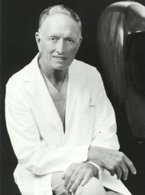
Denton Cooley

Cardiothoracic surgeon; founder of the Texas Heart Institute

Recorded said elsewhere, not written here
I think so. I really do. With your own effort, you can improve yourself, but people find they can’t improve beyond a certain point. I like to play golf, but I know that no matter how much I practice, I will never get above a certain level. I think that’s also true of surgery. Some people are born with the gifts and the mind for surgery, and they may go on to great heights. Others may try and try, only to reach a certain plateau.

Academy of Achievement interview, Houston, Texas, 11 April 1991 source ↗

Others on this question

View all 27 →
Spencer Bailey Journalist and editor; co-founder of The Slowdown; host of Time Sensitive
And that’s a fine balance. It’s something I’ve really struggled with: slowing down and letting go of that urgent feeling of creative energy that’s bubbling up within me at all times; this urge I have to create, this endless urge. When I let go of that, it’s almost like a form of peace washes over me, where I’m so much more relaxed and at ease with whatever project it is I’m doing. If you become too all-consumed by a project, it becomes hard to actually see beyond that.
Recorded The Talks, published interview, 1 January 2025 source ↗
John Banville Novelist; winner of the Booker Prize, 2005
I keep office hours. I work from 9:30 to 6:00. It’s curious. In the morning, I could just about tie my shoelaces before noon, but I can write. It’s obviously a different part of my brain that’s working.
Recorded Academy of Achievement interview, London, England, 18 October 2017 source ↗
Donald C. Johanson, Ph.D. Palaeoanthropologist; discovered the Lucy skeleton in Ethiopia
I agree with him, essentially, 100 percent. One has to devote oneself to a particular pursuit. To be successful at anything, you have to make a total commitment to it. We so often see students who would love to play baseball like one of their heroes, or would love to be on the basketball court or the football field. They don’t see the 99 percent effort that went into practicing making baskets, or practicing hitting the baseball, or practicing catching a pass on the football field. It takes a tremendous amount of perspiration, a tremendous amount of hard work that you don’t always see or appreciate in the end result. You will find this over and over. Most achievers I know are people who have made a strong and deep dedication to pursuing a particular goal. That dedication took a tremendous amount of effort. That is certainly true in my case. It took a tremendous amount of work to get from point A to point B.
Recorded Academy of Achievement interview, Berkeley, California, 25 January 1991 source ↗
Suzanne Farrell Ballerina and ballet master; répétiteur for the Balanchine Trust
No, never. Strangely enough, being such a tomboy, and being so—as my mother says—spoiled as a child, once I started dancing and in a way growing up, I was not the spoiled brat or the rebellious child that I was when I really had no reason to be as a child. When you work, it’s a laboratory. The dance studio, when we were working together, was the place where you experiment. I’m not intimidated by failure or making a mistake, because you learn from those situations. You don’t learn from a situation where you do something well. You enjoy it and you give yourself credit, but you don’t really learn from that. You learn from trial and error, trial and error, all the time. When you fail, maybe you failed in that particular instance, but you have discovered something else. A lot of the ballets that we went on to do were built around mistakes that we had made in the classroom. So you never throw anything out. Rebelling takes up energy. As a dancer, you don’t have that kind of energy to throw away.
Recorded Academy of Achievement interview, New York City, 16 December 1990 source ↗

More from Denton Cooley

View profile →
Question What is an unusual habit or small pleasure you are oddly fond of? Daily life
I don’t lead by force, I lead by example. And if I can, set a good example. If I can set an example to my staff and my group, by being punctual, I come to work every morning, walk onto the hospital floor within two or three minutes of the same time every day, and they can depend upon it.
Recorded Academy of Achievement recorded interview, American Academy of Achievement, 11 April 1991 source ↗
Question Which teacher, parent, coach, or friend most made you who you are, and what did you learn from them? Relationships
The man who inspired me most, I think, was Dr. Alfred Blalock, who was professor of surgery at Johns Hopkins. He was a rather simple man with a burning curiosity. It was through his curiosity that he made many real contributions to medical science. I didn’t think he was an especially brilliant man, I just admired him for his curiosity, and for his perseverance.
Recorded Academy of Achievement interview source ↗

More on craft & work

Also answered this

Donald C. Johanson, Ph.D., General Chuck Yeager, USAF, Richard Feynman, Charles H. Townes, Stephen Jay Gould, Ph.D., Edward O. Wilson, Ph.D.

Search the directory for somebody in particular.

Explore further

Report this answer