Skip to content
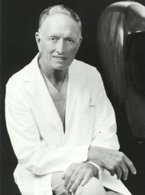
Denton Cooley

Cardiothoracic surgeon; founder of the Texas Heart Institute

Recorded said elsewhere, not written here
I don’t lead by force, I lead by example. And if I can, set a good example. If I can set an example to my staff and my group, by being punctual, I come to work every morning, walk onto the hospital floor within two or three minutes of the same time every day, and they can depend upon it.

Academy of Achievement recorded interview, American Academy of Achievement, 11 April 1991 source ↗

Others on this question

View all 31 →
Richard Feynman Theoretical physicist; Nobel laureate in Physics, 1965
one of my diseases, one of my things in life, is that anything that is secret I try to undo. And so the locks to those filing cabinets represented a challenge to me. How the hell to open them? So I worked and worked on them. There are all kinds of stories about how you can feel the numbers and listen to things and so on. That's true; I understand it very well - for old- 19 fashioned safes. But these had a new design so that nothing would be pushing against the wheels while you were trying them, and none of the old methods would work. I read books by locksmiths, which always say in the beginning how they opened the locks when the safe is under water and the woman in it is drowning or some-thing, and the great locksmith opened the safe. And then in the back they tell you how they do it, and they don't tell you anything sensible. It doesn't sound like they could really open safes that way — like guess the combination on the basis of the psychology of the person who owns it! So I always figured they were keeping the method a secret, and like a kind of disease, I kept working on these things until I found out a few things. First, I found out how big a range you need to open the combination, how close you have to be. And then I invented a system by which you could try all the necessary combinations - 8,000, as it turned out, because the woman DROWNING عزه Books are always telling how the great locksmith opens the safe under water when the woman in it is drowning. 20 you could be within two of every number. And then I worked out a scheme by which I could try numbers without altering a number that I had already set, by correctly moving the wheels, so that I could try all the combinations in eight hours. And then finally I discovered (this took me about two years of researching) that it's easy to take the last two numbers of the combination off the safe if the safe is open. If the drawer was pulled out, you could turn the number and see the bolt go up and play around and find out what number it comes back at, and stuff like that. With a little trickery, you can get the combination off. So I used to practice it like a cardsharp practices cards, you know - all the time. Quicker and quicker and more and more unobtrusively I would come in and talk to some guy. I'd sort of lean against his filing cabinet, and you wouldn't even notice I'm doing any-thing. I'm not doing anything— just playing with the dial, that's all, just playing with the dial. But all the time I was taking the two numbers off! And then I would go back to my office and write the two numbers down, the last two numbers of the three. Now, if you have the last two numbers, it takes just a minute to try for the first number; there's only 20 possibilities, and it's open. OK? It takes about three minutes to open a safe if you know the last two numbers. So I got an excellent reputation for safe-cracking.
Recorded Engineering and Science / Caltech Magazine, 1976 source ↗
Tanni Grey-Thompson British wheelchair racer, 1988–2007; member of the House of Lords
One thing that I did was race against the British men a lot and they used to push me round the road; they used to make my life really hard but then when I was racing against the best women in the world, I'd been through just about every experience you could imagine. I remember this one race – a half marathon – where my husband literally pushed me into every kerb he could find, he pushed me into every corner, you know, messed around and tried to drop me out the back of the pack. Then when you're in a race that really matters, if that happens, you've got the skills to deal with it… you need to have practised everything you possibly could in the lead up to it.
Recorded Bernardo Moya, The Best You Magazine, 21 August 2015 source ↗
Alice Waters Chef, restaurateur and food activist
And what happens for me is that I make a pot of beans on Sunday. And I also make some greens with chard, whatever I have available. And when I come to cook a meal or even to make myself breakfast, I may warm up some of those beans. I put a little tortilla right on the fire. I fill it up with the beans, maybe a little hot pepper, and I eat it. And that takes me exactly two minutes, three minutes, maybe. But it’s knowing how to cook. Those basic things have been taken away from us.
Recorded Scott Simon, NPR, Weekend Edition, NPR (Weekend Edition), 29 May 2021 source ↗
Brian Eno Composer, record producer and visual artist
I call it “stolen time”—there’s nothing more valuable than stolen time. It happens to me sometimes when I’ve set up a meeting at my studio at a certain time and it gets cancelled on short notice. When it happens, I’m like a giddy child. I think, “Wow, I’ve stolen half an hour. It’s so exciting—I can do whatever I want!”
Recorded Max Dax, Eno's London studio, 2011, Telekom Electronic Beats, 1 January 2011 source ↗

More from Denton Cooley

View profile →
Question Which teacher, parent, coach, or friend most made you who you are, and what did you learn from them? Relationships
The man who inspired me most, I think, was Dr. Alfred Blalock, who was professor of surgery at Johns Hopkins. He was a rather simple man with a burning curiosity. It was through his curiosity that he made many real contributions to medical science. I didn’t think he was an especially brilliant man, I just admired him for his curiosity, and for his perseverance.
Recorded Academy of Achievement interview source ↗
Question Do you rely more on inspiration or discipline to make your work? Craft & work
I think so. I really do. With your own effort, you can improve yourself, but people find they can’t improve beyond a certain point. I like to play golf, but I know that no matter how much I practice, I will never get above a certain level. I think that’s also true of surgery. Some people are born with the gifts and the mind for surgery, and they may go on to great heights. Others may try and try, only to reach a certain plateau.
Recorded Academy of Achievement interview, Houston, Texas, 11 April 1991 source ↗

More on daily life

Also answered this

Jocelyn Bell Burnell, Richard Feynman, Ahmed Zewail, Peter Doherty, Christiane Nüsslein-Volhard, Mario Molina

Search the directory for somebody in particular.

Explore further

Report this answer