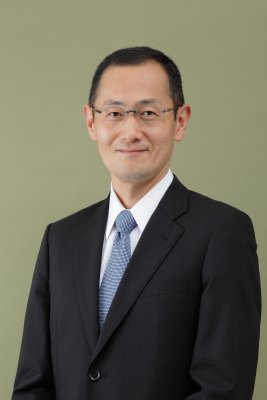
Working at the hospital, I found that my surgical skills were not as good as I expected. One time it took me two hours to do a surgical operation which could have been completed in 30 minutes by other surgeons. My supervisors were very tough on new residents like me, and I lost confidence in my ability.
Shinya Yamanaka has not joined FLAPSS and has not endorsed it. This page is a reference record assembled from published interviews and public remarks. Every answer below is a direct quotation with the source and date shown next to it.
Shinya Yamanaka
Stem cell biologist; Nobel laureate in Physiology or Medicine, 2012
Japan · b. 1962
Science and medicine
About
Physician and stem cell biologist, director of the Center for iPS Cell Research and Application at Kyoto University. Trained as an orthopaedic surgeon before turning to basic research, and shared the 2012 Nobel Prize in Physiology or Medicine with John Gurdon for the discovery that mature cells can be reprogrammed to become pluripotent.
13 answers
Running CiRA with some 250 staff, I have come to spend less time discussing their data with my colleagues and students, and have been absorbed by my duties as the "chief executive officer" of CiRA, including devising strategies to advance both basic and applied research and to obtain sufficient funding. Anxious about the lack of financial resources for the future to allow us to continue hiring research support staffers, I even ran the full Kyoto Marathon in 2012 to raise online donations from the public. It was hard but helped us raise more than 10 million yen.
However, it was very natural that a failed surgeon with little experience in molecular biology had a hard time finding a position. A turning point came when I got a fax from Thomas Innerarity at the Gladstone Institute of Cardiovascular Diseases in San Francisco. After a short telephone conversation, Tom was brave enough to give me a postdoctoral position in his lab! Working at Gladstone was one of the best decisions I ever made in my life.
A book also pushed me to become a medical doctor. I was deeply inspired by Torao Tokuda, a physician who founded a hospital group in the 1970s that tried to revolutionize the Japanese medical care system.
In Japan, however, I found myself suffering from Post America Depression or PAD. The environment for researchers in Japan was quite different in many ways from that in the U.S. At the medical school, very few scientists showed interest in the basic biology of mouse ES cells, and there was little thought-provoking discussion with my colleagues. Some of my colleagues advised me to work on something more related to medicine. Furthermore, I could not get enough funding and had to change the cages of the numerous mice by myself every week. What was worse, the Nat1 work was being rejected by many journals. I felt lonely and depressed, and I was about to give up my career as a scientist and return to the path of physician.
Well, I will bring this technology to clinics. I really want to help as many patients as possible. As you may know, I started my career as a surgeon 25 years ago. But it turned out that I am not talented as a surgeon
I strongly feel that this is, that I am able to receive this award because of John Gurdon and also many other researchers in the field. This field has a long history, starting with John Gurdon. So I feel very lucky. I may have played some important role in this long history, but it was not myself who initiated this field. So that’s my feeling right now.
Well actually I was at home. I was doing some housework. So I was very surprised.
I was born in Osaka, Japan. It was 45 years ago. My father has a small factory in Osaka, and we lived next to his factory
my second failure in my career. But that second failure got me interested in knockout mice, mouse technology. So I think failure is important in my career
I got very interested in so-called “knockout mouse” technology. Knockout mouse is a way to study the function of genes. You know, both human and mouse have approximately 20,000 genes. With knockout mouse technology, we can select one gene out of those 20,000 genes, and completely destroy that one particular gene so that we can understand the function of that particular gene. I got very interested in that technology. It was 1992 or 1993 when I graduated from my Ph.D. school. So I decided to study — I decided to learn about knockout mouse technology. But at that time in Japan, only a few scientists were working on knockout mouse technology. That’s why I decided to move to the States, San Francisco
So I think failure is important in my career.
we can select one gene out of those 20,000 genes, and completely destroy that one particular gene so that we can understand the function of that particular gene. I got very interested in that technology. It was 1992 or 1993 when I graduated from my Ph.D. school. So I decided to study — I decided to learn about knockout mouse technology. But at that time in Japan, only a few scientists were working on knockout mouse technology
Every quotation above is reproduced from the source shown beside it and has not been edited. Shinya Yamanaka did not write these answers for FLAPSS. Request a correction or removal.