Skip to content
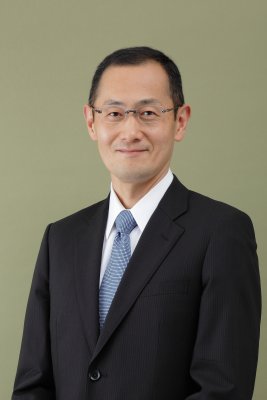
Shinya Yamanaka

Stem cell biologist; Nobel laureate in Physiology or Medicine, 2012

Recorded said elsewhere, not written here
However, it was very natural that a failed surgeon with little experience in molecular biology had a hard time finding a position. A turning point came when I got a fax from Thomas Innerarity at the Gladstone Institute of Cardiovascular Diseases in San Francisco. After a short telephone conversation, Tom was brave enough to give me a postdoctoral position in his lab! Working at Gladstone was one of the best decisions I ever made in my life.

Laureate-written autobiography for Les Prix Nobel, Nobel Prize Outreach, 1 December 2012 source ↗

Others on this question

View all 42 →
Mario Molina Atmospheric chemist; Nobel laureate in Chemistry, 1995
Sherry offered me a list of research options: the one project that intrigued me the most consisted of finding out the environmental fate of certain very inert industrial chemicals – the chlorofluorocarbons (CFCs) – which had been accumulating in the atmosphere and which at that time were thought to have no significant effects on the environment. This project offered me the opportunity to learn a new field – atmospheric chemistry – about which I knew very little; trying to solve a challenging problem appeared to be an excellent way to plunge into a new research area.
Recorded Laureate-written autobiography, provided by the laureate in November 2007, Nobel Prize Outreach, 1 November 2007 source ↗
Malala Yousafzai Education campaigner; co-founder of the Malala Fund; United Nations Messenger of Peace
Her story is why I dedicate the Nobel Peace Prize money to the Malala Fund, to help give girls quality education, everywhere, anywhere in the world and to raise their voices. The first place this funding will go to is where my heart is, to build schools in Pakistan—especially in my home of Swat and Shangla.
Recorded Oslo City Hall, The Nobel Foundation, 10 December 2014 source ↗
Mellody Hobson Co-chief executive and president of Ariel Investments
Our business everyday is to make money for people. And I take it as seriously as doctors who are trying to cure cancer, because by giving people financial freedom, we allow them to do great things in their lives - from retire to send their kids to college, to buy their first house, to fund a business that they might want to start.
Recorded Farai Chideya, News & Notes, Leading Ladies series, NPR, 22 March 2007 source ↗
David Vélez Co-founder and chief executive of Nubank
we should invest the majority of our wealth the same way we are investing the majority of our time- by helping to improve people's lives.
Recorded pledge letter, The Giving Pledge, 11 August 2021 source ↗

More from Shinya Yamanaka

View profile →
Question What counsel would you give your twenty-year-old self — and what should they ignore? Time & hindsight
Well, I will bring this technology to clinics. I really want to help as many patients as possible. As you may know, I started my career as a surgeon 25 years ago. But it turned out that I am not talented as a surgeon
Recorded Adam Smith, Telephone interview recorded shortly after the prize announcement, October 2012, Nobel Prize Outreach, 1 October 2012 source ↗
Question Which problem are you still chipping away at? Craft & work
we can select one gene out of those 20,000 genes, and completely destroy that one particular gene so that we can understand the function of that particular gene. I got very interested in that technology. It was 1992 or 1993 when I graduated from my Ph.D. school. So I decided to study — I decided to learn about knockout mouse technology. But at that time in Japan, only a few scientists were working on knockout mouse technology
Recorded Academy of Achievement interviewer, Academy of Achievement interview, 2008 source ↗
Question How has a setback or failure set you up for later success? Failure & regret
Working at the hospital, I found that my surgical skills were not as good as I expected. One time it took me two hours to do a surgical operation which could have been completed in 30 minutes by other surgeons. My supervisors were very tough on new residents like me, and I lost confidence in my ability.
Recorded Laureate-written autobiography for Les Prix Nobel, Nobel Prize Outreach, 1 December 2012 source ↗
Question What makes you want to keep learning? Attention & the world
I got very interested in so-called “knockout mouse” technology. Knockout mouse is a way to study the function of genes. You know, both human and mouse have approximately 20,000 genes. With knockout mouse technology, we can select one gene out of those 20,000 genes, and completely destroy that one particular gene so that we can understand the function of that particular gene. I got very interested in that technology. It was 1992 or 1993 when I graduated from my Ph.D. school. So I decided to study — I decided to learn about knockout mouse technology. But at that time in Japan, only a few scientists were working on knockout mouse technology. That’s why I decided to move to the States, San Francisco
Recorded Academy of Achievement interviewer, Academy of Achievement interview, 2008 source ↗

More on money & investment

Also answered this

Venkatraman Ramakrishnan, Mario Molina, Svante Pääbo, Ahmed Zewail, Daniel Kahneman, Jocelyn Bell Burnell

Search the directory for somebody in particular.

Explore further

Report this answer