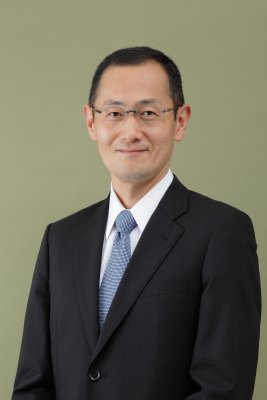
Running CiRA with some 250 staff, I have come to spend less time discussing their data with my colleagues and students, and have been absorbed by my duties as the "chief executive officer" of CiRA, including devising strategies to advance both basic and applied research and to obtain sufficient funding. Anxious about the lack of financial resources for the future to allow us to continue hiring research support staffers, I even ran the full Kyoto Marathon in 2012 to raise online donations from the public. It was hard but helped us raise more than 10 million yen.
Shinya Yamanaka has not joined FLAPSS and has not endorsed it. This page is a reference record assembled from published interviews and public remarks. Every answer below is a direct quotation with the source and date shown next to it.
Shinya Yamanaka
Stem cell biologist; Nobel laureate in Physiology or Medicine, 2012
Japan · b. 1962
Science and medicine
About
Physician and stem cell biologist, director of the Center for iPS Cell Research and Application at Kyoto University. Trained as an orthopaedic surgeon before turning to basic research, and shared the 2012 Nobel Prize in Physiology or Medicine with John Gurdon for the discovery that mature cells can be reprogrammed to become pluripotent.
13 answers
my second failure in my career. But that second failure got me interested in knockout mice, mouse technology. So I think failure is important in my career
we can select one gene out of those 20,000 genes, and completely destroy that one particular gene so that we can understand the function of that particular gene. I got very interested in that technology. It was 1992 or 1993 when I graduated from my Ph.D. school. So I decided to study — I decided to learn about knockout mouse technology. But at that time in Japan, only a few scientists were working on knockout mouse technology
Every quotation above is reproduced from the source shown beside it and has not been edited. Shinya Yamanaka did not write these answers for FLAPSS. Request a correction or removal.