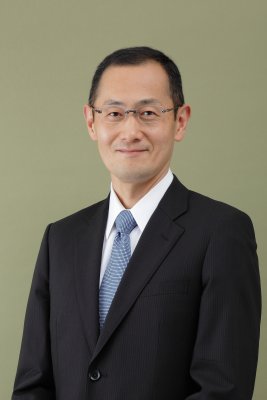
Stem cell biologist; Nobel laureate in Physiology or Medicine, 2012
So I think failure is important in my career.
Academy of Achievement interviewer, Academy of Achievement interview, 2008 source ↗
The question
What lesson has mattered most in your life?Originally asked
The Guardian, to a different person each week, The Q&A
Verbatim recurring item in The Guardian Q&A; two fully readable publisher-hosted respondent pages establish institutional recurrence.
You answer as yourself. Nobody on FLAPSS answers as anybody else.
Stem cell biologist; Nobel laureate in Physiology or Medicine, 2012
So I think failure is important in my career.
Academy of Achievement interviewer, Academy of Achievement interview, 2008 source ↗
Be kind and do unto others as you would have them do unto you.
Choose your friends wisely.
You’ve got to keep trying because you don’t know what amazing things are round the corner. Also, always be grateful – at one point you wished to be where you are today.
That it’s impossible to persuade other people of the value of the lessons that life has taught you.
However, it was very natural that a failed surgeon with little experience in molecular biology had a hard time finding a position. A turning point came when I got a fax from Thomas Innerarity at the Gladstone Institute of Cardiovascular Diseases in San Francisco. After a short telephone conversation, Tom was brave enough to give me a postdoctoral position in his lab! Working at Gladstone was one of the best decisions I ever made in my life.
my second failure in my career. But that second failure got me interested in knockout mice, mouse technology. So I think failure is important in my career
I strongly feel that this is, that I am able to receive this award because of John Gurdon and also many other researchers in the field. This field has a long history, starting with John Gurdon. So I feel very lucky. I may have played some important role in this long history, but it was not myself who initiated this field. So that’s my feeling right now.
we can select one gene out of those 20,000 genes, and completely destroy that one particular gene so that we can understand the function of that particular gene. I got very interested in that technology. It was 1992 or 1993 when I graduated from my Ph.D. school. So I decided to study — I decided to learn about knockout mouse technology. But at that time in Japan, only a few scientists were working on knockout mouse technology
A book also pushed me to become a medical doctor. I was deeply inspired by Torao Tokuda, a physician who founded a hospital group in the 1970s that tried to revolutionize the Japanese medical care system.
Well, I will bring this technology to clinics. I really want to help as many patients as possible. As you may know, I started my career as a surgeon 25 years ago. But it turned out that I am not talented as a surgeon
Mario Molina, Christiane Nüsslein-Volhard, Henry Marsh, Oliver Sacks, Clare Bailey Mosley, Richard Feynman
Search the directory for somebody in particular.