Skip to content

The question

Do you rely more on inspiration or discipline to make your work?

Originally asked

The Creative Independent, to working artists, its interview series

A repeated Creative Independent tension, asked as inspiration, muse, discipline, ritual, or the requirement to show up.

You answer as yourself. Nobody on FLAPSS answers as anybody else.

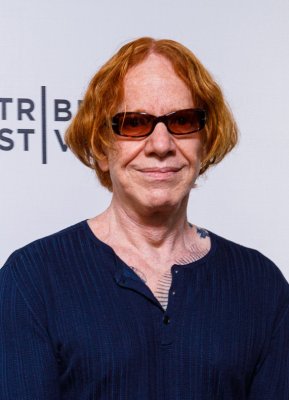
Danny Elfman

Film composer and songwriter; founder of Oingo Boingo

Recorded said elsewhere, not written here
Well, the reason I’ve survived for this long is because any film composer that has an extended career learns to work within deadlines. The deadline becomes the motivating factor in the same way that a pro athlete can do these incredible things with two seconds left in the game. It forces them into their best mode. For film composers, the clock does get us into a higher gear.

The Talks, published interview, 12 August 2022 source ↗

Others on this question

View all 27 →
Chris Cole Professional skateboarder; twice Thrasher Skater of the Year
I did it because that’s what it was going to take. I really wanted it. I had an older brother, and he was bigger and smarter, and when you’re a kid, you’re trying to catch up all the time. I think that that’s where it kind of came from, just that little brother syndrome. I was just trying to be something, trying to make myself worth something. It was proving it to other people and proving it to myself at the same time. I needed that.
Recorded The Talks, published interview, 11 November 2015 source ↗
Louise Glück Poet; winner of the 2020 Nobel Prize in Literature
Well, I hate the word, but it’s true that something sometimes visits and other times doesn’t. I wish I felt otherwise, but I feel as though there has to be some catalyst, some inspiration. All of a sudden there’s a phrase in your head. Where does that thing come from? I don’t know, and because I don’t know, I don’t know how to have more of them.
Recorded Academy of Achievement interview, Washington, D.C., 27 October 2012 source ↗
Arlo Parks Singer-songwriter and poet; Mercury Prize winner
I do, but I never force it out of myself. I’m kind of trying to explore writing as a practice, so you know, I journal every day, I try and do kind of something for the art every day whether that’s reading or watching film or practicing guitar… It kind of ebbs and flows, but I do try and do something creative every day. When it comes to writing poetry or songs, I really have to have an idea or have that desire to get something down. I feel like the best art comes from a sense of necessity and urgency, like I can’t help but talk about this. I can only be in that creative space when I really want to and when internally it feels right.
Recorded The Talks, published interview, 18 September 2021 source ↗
Stephen Jay Gould, Ph.D. Palaeontologist and evolutionary biologist; essayist
I think it’s very different in what I do. Edison’s work was so much tinkering and trying it out and empirical testing. So much of my work is writing. I don’t know what you call the writing, it’s true that the actual inspiration, say for writing an essay, the outlining of it is probably a 15-minute to half-hour procedure, then you may spend about 20 hours writing it. But the writing isn’t perspiration in the same sense. It’s not inspiration, but it’s something in between. Any profession has a vast amount of tedium attached to it. There’s no sense not admitting it. If you’re passionate about it, tedium can be — not exactly a joy — but can be perfectly tolerable. The tedium of a pianist is 10 hours of practice a day or whatever, not all of which is inspirational. The tedium of an experimental scientist is calibrating the machines and doing it over and over again. The tedium of a paleontologist is poring over a microscope, or using a dental pick to chip away the sand grains from the fossil, or looking at the statistical figures in the columns of a computer printout. Every profession has massive tedium, that’s certainly true. You cannot be a successful professional (without it). But I think if you’re committed to it, as they say, it goes with the territory. It’s part of the work.
Recorded Academy of Achievement interview, Cambridge, Massachusetts, 28 June 1991 source ↗

More from Danny Elfman

View profile →
Question How does a new piece of work usually begin for you? Craft & work
No, they are three completely different processes. In film, I try to really blank out my mind when I see the film for the first time so that I have no preconceptions. Early on in my career, I tried to do all this prep or even read the script and write music, but none of it ever survived. And I realized the best way to go at it was to be as blank as I can possibly be. When I’m writing classical music, it’s much more nerve-wracking because I’m starting with nothing! And I don’t have a picture to drive me on. I am wired now, for 38 years, that I see a moving picture, I hear music, you know what I mean? But with classical, I got nothing, and at first that was totally terrifying. But I forced myself into it, and then something develops, and it becomes very liberating. With the rock music, it’s a whole different process. I mean, I can’t do anything until I get the message.
Recorded The Talks interview, 12 August 2022 source ↗

More on craft & work

Also answered this

Arlo Parks, Esperanza Spalding, Jonathan Lethem, Arnold Schwarzenegger, John Updike, Frank O. Gehry

Search the directory for somebody in particular.

Explore further

Report this answer