Skip to content

The question

Do you rely more on inspiration or discipline to make your work?

Originally asked

The Creative Independent, to working artists, its interview series

A repeated Creative Independent tension, asked as inspiration, muse, discipline, ritual, or the requirement to show up.

You answer as yourself. Nobody on FLAPSS answers as anybody else.

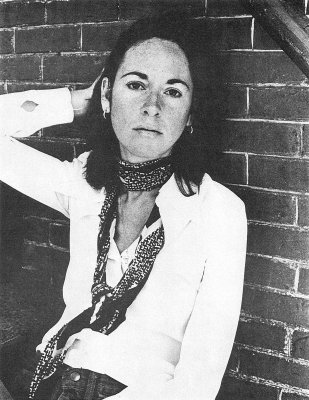
Louise Glück

Poet; winner of the 2020 Nobel Prize in Literature

Recorded said elsewhere, not written here
Well, I hate the word, but it’s true that something sometimes visits and other times doesn’t. I wish I felt otherwise, but I feel as though there has to be some catalyst, some inspiration. All of a sudden there’s a phrase in your head. Where does that thing come from? I don’t know, and because I don’t know, I don’t know how to have more of them.

Academy of Achievement interview, Washington, D.C., 27 October 2012 source ↗

Others on this question

View all 27 →
Gore Vidal Novelist, essayist and playwright
It’s best to start writing when you wake up in the morning, or afternoon, or whenever it is you wake up. Just start then, because you are closer to the dream state than at any other time in the day, which means the imagination is really working on all cylinders, and it means that whatever it is that manufactures sentences in your head is very fresh, and you have all kinds of slants on things that by the end of the day you won’t have, or you will just lose along the way. Further advice I have not.
Recorded Academy of Achievement interview, Los Angeles, California, 3 June 2006 source ↗
Donald C. Johanson, Ph.D. Palaeoanthropologist; discovered the Lucy skeleton in Ethiopia
I agree with him, essentially, 100 percent. One has to devote oneself to a particular pursuit. To be successful at anything, you have to make a total commitment to it. We so often see students who would love to play baseball like one of their heroes, or would love to be on the basketball court or the football field. They don’t see the 99 percent effort that went into practicing making baskets, or practicing hitting the baseball, or practicing catching a pass on the football field. It takes a tremendous amount of perspiration, a tremendous amount of hard work that you don’t always see or appreciate in the end result. You will find this over and over. Most achievers I know are people who have made a strong and deep dedication to pursuing a particular goal. That dedication took a tremendous amount of effort. That is certainly true in my case. It took a tremendous amount of work to get from point A to point B.
Recorded Academy of Achievement interview, Berkeley, California, 25 January 1991 source ↗
Denton Cooley Cardiothoracic surgeon; founder of the Texas Heart Institute
I think so. I really do. With your own effort, you can improve yourself, but people find they can’t improve beyond a certain point. I like to play golf, but I know that no matter how much I practice, I will never get above a certain level. I think that’s also true of surgery. Some people are born with the gifts and the mind for surgery, and they may go on to great heights. Others may try and try, only to reach a certain plateau.
Recorded Academy of Achievement interview, Houston, Texas, 11 April 1991 source ↗
Chris Cole Professional skateboarder; twice Thrasher Skater of the Year
I did it because that’s what it was going to take. I really wanted it. I had an older brother, and he was bigger and smarter, and when you’re a kid, you’re trying to catch up all the time. I think that that’s where it kind of came from, just that little brother syndrome. I was just trying to be something, trying to make myself worth something. It was proving it to other people and proving it to myself at the same time. I needed that.
Recorded The Talks, published interview, 11 November 2015 source ↗

More on craft & work

Also answered this

Suzan-Lori Parks, Gore Vidal, László Krasznahorkai, Arlo Parks, Carlos Fuentes, Jonathan Lethem

Search the directory for somebody in particular.

Explore further

Report this answer