Skip to content

The question

What counsel has proved most valuable to you?

Originally asked

Vogue, to one guest at a time, on camera, 73 Questions

A repeated rapid-fire prompt in Vogue's 73 Questions, verified in separate English- and Korean-language episodes.

You answer as yourself. Nobody on FLAPSS answers as anybody else.

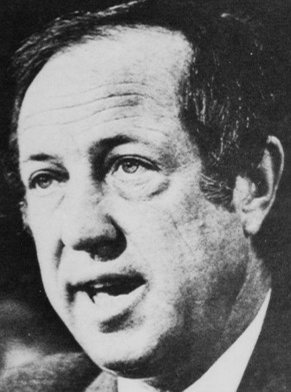
Pete Rozelle

Commissioner of the National Football League, 1960–1989

Recorded said elsewhere, not written here
It was a very simple thing. It was a church camp, I think. I was there about two or three days, very young, and I just remember some counselor telling us that reputation is what people think you are, and your character is what you are. So if you have a bad reputation, you might as well have a bad character, and it pays to have a good reputation and a good character.

Academy of Achievement interview, Rancho Santa Fe, California, 15 May 1991 source ↗

Others on this question

View all 28 →
Charlie Munger Vice chairman of Berkshire Hathaway, 1978–2023
wisdom acquisition is a moral duty. It’s not something you do just to advance in life. Wisdom acquisition is a moral duty.
Recorded USC Gould School of Law commencement, 2007, Speakola, 2007 source ↗
Andrew Lloyd Webber Composer of musical theatre
Harold Prince went to see it and he wrote me a letter saying don’t be discouraged about this because actually there’s some quite good songs in here. But he also said something which stayed with me all my life, which is that you can’t listen to a musical if you can’t look at it, by which he was actually saying that the designs for Jeeves were absolutely hideous.
Recorded Academy of Achievement interview, New York City, 13 September 2019 source ↗
Sonia Sotomayor Associate Justice of the Supreme Court of the United States, 2009–present
He asked me to go through the evidence of the cases, which I did. And at the end of it he said, “Well, you have one thing missing.” I said “What, I thought I covered all of the bases. I made the best arguments that I think the evidence would support.” And he looked at me, and he said, “That may all be true, but you’re missing passion. You related this crime and your evidence in a very impersonal way. How did you make the jury want to convict?” I said “Well, the judge charges them, tells them they have to convict if I prove my case.” And he said, “No, sentencing, not sentencing, finding someone guilty is a huge responsibility. You have to make people believe it’s what they have to do. And you have to make them believe that the evidence that you’ve presented gives them basically no choice.” And so I said, “How do you do that?” And he explained to me that it’s in the manner that you present your case. It’s in the manner that you show how passionately you believe in what you’re doing. And in how much you believe that you’ve actually proven your case and that they must return a verdict of guilty. And his words have led me to believe that that passion is what guarantees success in life.
Recorded Academy of Achievement interview, Washington, D.C., 6 December 2016 source ↗
Lisa Su Chair and chief executive of Advanced Micro Devices
Run toward the hardest problems. At the time, I didn’t fully understand what that meant.  But over time, I realized this was the best advice I ever received. Hard problems teach you what you're capable of.  Fast forward a bit … 12 years ago, I got a chance to put that lesson to the test. I had the opportunity to become CEO of AMD. AMD had enormous potential, but the company had been through some tough years. Some of my mentors thought taking the job was risky. But for me, this was my dream job. This was what I’d been training for all those years. The opportunity to work at the bleeding edge of technology on problems that really mattered. The first thing we had to figure out was what we wante
Recorded MIT OneMIT Commencement, MIT News, 28 May 2026 source ↗

More from Pete Rozelle

View profile →
Question Which teacher, parent, coach, or friend most made you who you are, and what did you learn from them? Relationships
My dad certainly, and coaches I had that I was very close to. They took a big part in my developing an interest in sports, actually. One has passed away I was very close to. His name was Bill Slybaum. He was my coach in junior high school for tennis and then he moved up the ladder academically and went to the high school about the time I got there. He was my high school coach in basketball. I became very close to him. Later on, when I came back after the service, I went to Compton Junior College near Los Angeles, and he was the junior college basketball coach. I was very close to him.
Recorded Academy of Achievement interview source ↗
Question What fills you with the most pride? Identity & self
I have never really studied them very much. I think that I was proud of — not just what I did — but my staff played obviously a major part, did in popularizing the sport, with the early promotional activities of NFL Properties, merchandising, NFL Films, all the work that we put on the Super Bowl to make that a top attraction. All those things, I feel very good about, but I think they played a big part in popularizing the league.
Recorded Academy of Achievement interview, Rancho Santa Fe, California, 15 May 1991 source ↗
Question Which relationships did you tend well, and which did you neglect while other things felt urgent? Relationships
That's important too. Because everyone has to have an outlet. Otherwise you can get so involved in your job, or any one thing, that you're not a very well-balanced person, and you're not happy either, normally. I think it's very important to take up an avocation. Sports — that was mine.
Recorded Academy of Achievement interview, 28 June 1991 source ↗

More on time & hindsight

Also answered this

Peyton Manning, Cal Ripken Jr., Tony Fadell, Richard Feynman, Lisa Su, Patricia Smith

Search the directory for somebody in particular.

Explore further

Report this answer