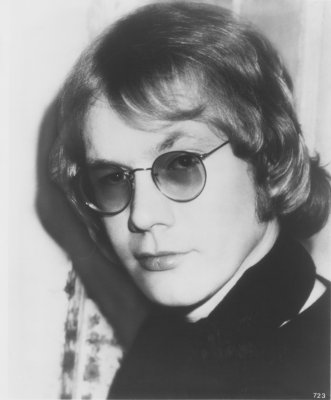
Somebody who won't go to the doctor for a normal checkup is fearful and nervous. ... But once you find out what it's like on the other side, you can go beyond fear.
Jon Pareles, The New York Times Magazine, 26 January 2003 source ↗
The question
Does the thought of dying frighten you?Originally asked
The Talks, to its interviewees, its interview series
The Talks asks this directly or through an equivalent risk-and-mortality formulation across interviews.
You answer as yourself. Nobody on FLAPSS answers as anybody else.
Somebody who won't go to the doctor for a normal checkup is fearful and nervous. ... But once you find out what it's like on the other side, you can go beyond fear.
Jon Pareles, The New York Times Magazine, 26 January 2003 source ↗
I know it is coming, and I do not fear it, because I believe there is nothing on the other side of death to fear. I hope to be spared as much pain as possible on the approach path. I was perfectly content before I was born, and I think of death as the same state. I am grateful for the gifts of intelligence, love, wonder and laughter. You can’t say it wasn’t interesting. My lifetime’s memories are what I have brought home from the trip. I will require them for eternity no more than that little souvenir of the Eiffel Tower I brought home from Paris.
I cannot pretend I am without fear. But my predominant feeling is one of gratitude. I have loved and been loved; I have been given much and I have given something in return; I have read and traveled and thought and written. I have had an intercourse with the world, the special intercourse of writers and readers. Above all, I have been a sentient being, a thinking animal, on this beautiful planet, and that in itself has been an enormous privilege and adventure.
I've always felt that death is the greatest invention of life. I'm sure that life evolved without death at first and found that without death, life didn't work very well because it didn't make room for the young. It didn't know how the world was fifty years ago. It didn't know how the world was twenty years ago. It saw it as it is today, without any preconceptions, and dreamed how it could be based on that. We're not satisfied based on the accomplishment of the last thirty years. We're dissatisfied because the current state didn't live up to their ideals. Without death there would be very little progress.
From the moment I resolved and reconciled things with Gail the fear went. I don't feel I've got any fear now. I think acceptance is the key. If you accept death, fear disappears.
This is a lot harder for you than it is for me. If you had gone to bed as many nights as I did in the old days knowing that you had taken so much stuff that could kill you and not knowing if you would wake up, this is not as shocking as you think.
The songs aren't all written. ... You don't know where they're going to go. That's the fun of the job. There's the usual malarkey, the usual gags, the usual stuff. And also a few songs written by way of kind of being farewells to people, goodbyes to people, gratitude to people. Expressions of, you know, this was a nice deal, life. But I don't think it's exactly weighted with sentimentality.
I just thought right away that I wanted to work. ... This is a good job. It's been a good job. Work is the most effective drug there can possibly be. ... I'm on the periphery of a lot of despair, of course. ... You'd have to be stupid not to be. I have my moments when I'm not too thrilled about this whole deal. But at the same time, the songs have never come like this, so I'd have to feel more gratitude than anything else. I'm probably in the intensest creative period of my life.
I might have made a tactical error in not going to a physician for 20 years. ... It's one of those phobias that didn't pay off. ... How much you're supposed to enjoy every sandwich.
Steve Jobs, Jack Nicholson, Tony Judt, Christopher Hitchens, Diana Athill, Maurice Sendak
Search the directory for somebody in particular.