Skip to content

The question

How does a new piece of work usually begin for you?

Originally asked

The Paris Review, to novelists and poets, The Art of Fiction

A recurrent craft question in The Paris Review's Art of Fiction interviews; wording varies between character, theme, first sentence, image, and idea.

You answer as yourself. Nobody on FLAPSS answers as anybody else.

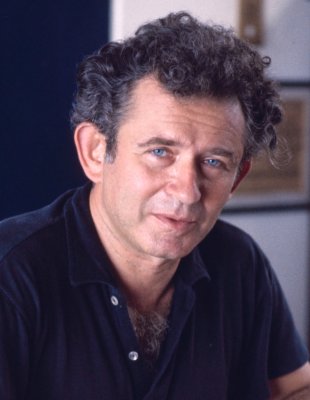
Norman Mailer

American writer

Recorded said elsewhere, not written here
No doubt. I’ve written at times about the spooky element in writing. You go in each morning, and there’s a blank page. Maybe it takes five minutes, maybe it takes an hour. Sooner or later you start writing, and then the words begin to flow. Where does that come from? You can’t pinpoint it. You always wonder, “Will it all stop tomorrow?” In that sense it’s spooky. In other words, you’re relying on a phenomenon that’s not necessarily dependable. That’s a particular kind of fear but there are other fears in writing of an altogether different sort.

Academy of Achievement interview, 2004 source ↗

Others on this question

View all 60 →
I can’t say there’s a specific place to begin when it comes to creating virtual identities, but it’s important to consider them in the longview. What stays here—in web pages, caches, and hard drives—might be the things that people retain of you in the future ahead. Where scholars might spend years studying the journals and letters of our predecessors, these personal accounts are infinitely more robust. Even if it is a private pursuit, an external drive full of personal exploration can be such a gift to those not here yet.
Recorded Willa Köerner, The Creative Independent interview source ↗
Robert S. Langer Biomedical engineer; Institute Professor at MIT
A typical day is probably lots of meetings and stuff. But if it’s an idea that we’re developing, what might happen is I might talk to some of the people in the lab, maybe have them come in the office and brainstorm with them, and say, “Well, here’s a problem that we need to solve,” or need to solve better. So just as an example, when I had this idea that we could create better materials, I got about four or five people together with different backgrounds — chemistry, engineering, safety, toxicology — and we started putting chemical structures on the blackboard and say, “Well, this might work,” or “This might not be safe,” and ended up with certain structures that we thought would be good. And then, one of the guys would go out and try to make those structures, and we’d go from there.
Recorded Academy of Achievement interview, 2003 source ↗
For every painting, I first use the one-quarter inch masking tape to create the grid, dividing the surface across equally. There are four stages of taping. It begins with taping one layer on the whole canvas vertically, then proceeds the same horizontally. The next thing is to apply the selected color with a small brush, then remove the tape. Repeat this same process on the unpainted squares one more time vertically, then horizontally, then apply the last layer of colors. What I love is the degrees of surprise every time; to take each layer of tape off the canvas is to reveal new worlds of optical symphony.
Recorded Phong H. Bui, The Brooklyn Rail, In Conversation, 1 December 2023 source ↗
Dawn Clements American contemporary artist and educator
When I start out to make a panoramic piece, I often work from left to right. But when a small scrap of a drawing turns into a giant drawing the progress is less linear, a more intuitive process. “Untitled (Color Kitchen)” started with the flowers. Mariah Corrigan cut me these beautiful old roses, which I put in a yellow pitcher. The next day I was all packed up and walking out the door to go to my studio when I saw the roses and thought, “Those flowers are going to be gone by tomorrow.” So I stayed home and painted them just to always remember them. Eventually the drawing grew to include the table, the wall, the curtain, and the next wall
Recorded Eve Aschheim, The Brooklyn Rail, In Conversation, 1 October 2007 source ↗

More on craft & work

Also answered this

T.C. Boyle, Ariana Reines, André Aciman, John Banville, Noah Baumbach, Clare Sestanovich

Search the directory for somebody in particular.

Explore further

Report this answer