The question

What keeps you awake at night?

Originally asked

The Guardian, to a different person each week, The Q&A

A long-running fixed question in The Guardian's weekly Q&A questionnaire.

You answer as yourself. Nobody on FLAPSS answers as anybody else.

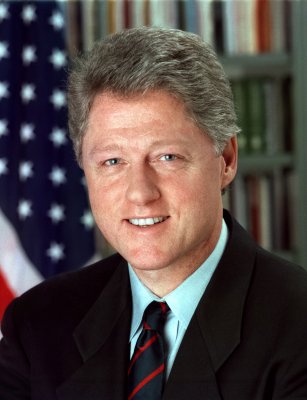
Bill Clinton

42nd President of the United States, 1993–2001

Recorded said elsewhere, not written here
Now that’s what happens when people go crazy, where the only thing that matters is whose camp are you in, whose side are you on, what tribe do you belong to — where facts and discussions become irrelevant. And it made me wonder whether the way I was raised and all the listening and storytelling skills I learned as a boy would even be relevant today. They’d be good if you’re in. They’re still really important to getting anything done, but if you live in an environment where everything is a litmus test and everything is a-hundred-to-nothing, and the only thing that matters is feeding your resentment, and anger blinds you to answers, and being very sanctimonious somehow proves your sincerity and authenticity, it’s really hard to get anything done. It’s a whole new challenge now, and that’s why — and the Russians knew that. You know, that’s when they get in here and start fooling with all these politics. They realize you just sort of load it up because once people take sides based on what tribe they’re in then there’s no difference in facts and fiction. There’s no difference in truth and lies. It’s just, does this confirm what side you’re on? And you can’t run a democracy that way. It is utterly impossible to preserve democracy.

Academy of Achievement interview source ↗

Others on this question

View all 211 →
Ralf Little English actor, writer, former semi-professional footballer
Worry about work: it’s a precarious business being an actor.
Recorded The Guardian, The Q&A, The Guardian, 1 February 2020 source ↗

More from Bill Clinton

View profile →
Question What do you need to believe in order to get through the day? Values & belief
Yeah, there were a lot of brave people who stood up. Then, you know, it cost Martin Luther King and Medgar Evers and the three civil rights workers in Philadelphia, Mississippi, and Viola Liuzza and a lot of the others their lives, but they were on the right side of history, and they believed if they made this sacrifice that it would work out. And whenever I get discouraged about everything they stood against rising up again, I realize there just are no public, or permanent, victories. You have to keep fighting for freedom.
Recorded Academy of Achievement interview source ↗
Question Which trait do you most dislike in yourself? Identity & self
I thought that I had lost for a reason, and I thought that I was a little unseasoned and immature, and I had — the way I made decisions my first term, I got a lot done, but I was better at doing what I wanted to do than listening to other people about what they thought I should be doing or how they thought I ought to be doing it.
Recorded Academy of Achievement interview source ↗
Question Which book changed the way you think, and what did it change? Taste & recommendation
Oh, yeah. I spent a lot of time in the public library. When we moved I was seven years old, and I got a library card, and I used to go to the library all the time, and I loved all the, you know, standard children’s novels. I love those Biblical epics, but my favorite books when I was a child were books about Native Americans: tribal leaders; Osceola, who brought the alphabet to the Seminoles; Chief Joseph of the Nez Perce; and the standard ones that were heroes in all the Western movies. But I was fascinated. The Cherokee had moved across my state on the Trail of Tears when they were expelled from the East and then moved over to the reservation lands. I became fascinated with what happened to the Native Americans and the struggle that many were undertaking then — and they still try to preserve their traditions and their way of life, their ties to the land, and still provide education and participate in the life of the country. I was interested in it then. I’m interested in it now. The Native Americans in our country who don’t have casinos on their tribal lands still have the lowest per capita income of any ethnic group in America. It’s a disgrace, and when I became president I was the first president since James Monroe in the 1820s to invite all the tribal leaders to the White House, and it was fascinating. Some of the ones who came from lands that had casinos flew in on their private jets. A lot of the others had to pass the hat in the reservation to raise enough money to pay for a plane ticket, and they all came, and we began to meet, and I learned a lot from them.
Recorded Academy of Achievement interview source ↗
Question What is the most important lesson life has taught you? Time & hindsight
Now, what did I learn from it? I learned that there were people, mostly in the other party, who believe in free trade but didn’t really believe in doing anything for people who lost jobs. That is, every trade deal produces winners and losers, so this was going to work for us in a lot of ways because the Mexicans had much higher tariffs than we did. And because, if you’re a wealthy country, the jobs trade creates pay above the average wage, and often the jobs that are lost pay below. But it’s always assumed that all those people will be retrained and that there will be incentives to invest within driving distance of where they live to create new jobs. And we lost the Congress in ‘94, and I couldn’t get the money, and there was no interest in it until my last year as president when we passed something called the New Markets Initiative. So if I had it to do again, I’d get the money on the front end, and I’d say, “No, no, no, no. I need more money to help the people who will lose the jobs.” I just assumed, I think probably because I had — the Congress was the majority of our party, and also because the people that were for NAFTA, I couldn’t imagine that they wouldn’t want to help the people that wouldn’t be winners.
Recorded Academy of Achievement interview source ↗
Question What is the best advice you have ever received? Time & hindsight
He knew that it would be unpopular in Arkansas. You know, we’re just a state dominated by the Scotch-Irish, who provided 25 percent of all the soldiers who ever fought in uniform for America since the revolution. One of our counties had the highest fatality rate of any county in America in World War II. A lot of poor African American kids were in the military, and their parents didn’t want to know it was for nothing. I mean it was like an across-the-board challenge, and he believed — he had a very clear view of it, and I thought it was unusual because Fulbright had been more willing than I wish he had been to trim his sails on civil rights for a long time. And he said, “Yes, I disagree with them on that too,” but he said, “If you want to be a representative, and they know something, as much about something as you do — and they do on this — sometimes you have to give in.” “But on this, if I know more than they do, I am doing an immoral thing to preserve my political position at the expense of doing what’s right for their children over the long run.” And in the end, it played a significant role in the undoing of his career, but he did an enormous service to the country in the meantime. And I think — he lived to be 87 — he lived long enough for me to become president and give him the Medal of Freedom, and I think he died at peace with himself and the decision he made.
Recorded Academy of Achievement interview source ↗

More on daily life

Also answered this

Alison Goldfrapp, Penny Lancaster, Adam Clayton, Kathleen Turner, Giovanna Fletcher, Ray Mears

Search the directory for somebody in particular.

Explore further

Report this answer