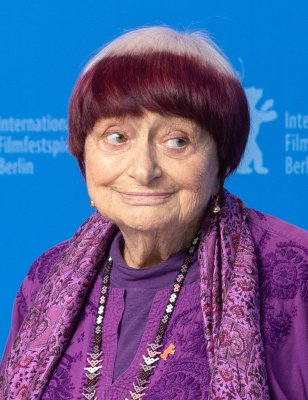
Did I have a dream job? I’m not sure. I remember making a little, two-page magazine like kids do, but I never intended to do that as a job, I just thought it was a way having a parallel life to school, doing something different. But I never had that in mind.
Managed profile
Not claimed by Agnès Varda
Agnès Varda has not joined FLAPSS and has not endorsed it. This page is a reference record assembled from published interviews and public remarks. Every answer below is a direct quotation with the source and date shown next to it.
Agnès Varda
Film director, photographer and installation artist
Belgium / France
Arts and letters
15 answers
While I was editing, sometimes I would have these free associations, so maybe I would not have had that shot of the naked people if I had not found the files. I allowed myself that things would happen in the film, even though I had organized my trip in the boat and to rebuild the courtyard, and all this.
I remember meeting the photographer Brassaï. I was a young photographer. He said, “Take your time, look at things. Look carefully.” I liked the idea that it’s not the act; it’s what you have in mind before you take a picture.
I would like to be remembered as a film-maker [who] enjoyed life, including pain. This is such a terrible world, but I keep the idea that every day should be interesting. What happens in my days – working, meeting people, listening – convinces me that it’s worth being alive.
I’m curious. Period. I find everything interesting. Real life. Fake life. Objects. Flowers. Cats. But mostly people. If you keep your eyes open and your mind open, everything can be interesting. The secret is that there is no secret.
What I notice or discover has to grow in my mind. I always wait until the ideas and impulses are so strong that they invade my mind and I have to pursue them.
Like everybody, I wanted to meet Andy Warhol. I was impressed by his work and how daring he was. I think he changed the cinema completely, simply by opening his camera and letting it go. He dealt differently with time and duration, and he didn’t care about how people would perceive it. It changed the cinema for me.
Since 1973, I had written a few screenplays on feminist subjects, but nobody wanted them.
I was curious. Curiosity is a good thing. And I was curious about different people. And, as I said, I waited until something was strong enough to disturb me or inspire me to make a film.
And with that film, I was proud because I decided the woman should not say what she feels but documentary images would speak for her.
How people need the possibility of sharing, of not being alone. It’s bad to be poor, but it’s difficult to be alone.
I come from the generation who were taught never to throw things out. I like the idea of hanging on to things and repairing items rather than discarding them. It’s not a question of money, more to do with guarding resources and not being wasteful. My children laugh at me when I sit darning a pair of socks.
I have never made any money from my films but I have won prizes and recognition. I have been on the margins forever. They all came to see me receive the award - there was Tom Hanks, Steven Spielberg and Richard Gere and so on. I was imagining what they would all be worth in money terms. You see I was never bankable, I could not bring any money ever to the table. I like the friendships and, yes, the admiration but I don’t want to make a big fuss about it. I will go on working as long as I am able!
Poverty in the world. Injustice.
Well, I don’t agree with Sartre. I like others.
Every quotation above is reproduced from the source shown beside it and has not been edited. Agnès Varda did not write these answers for FLAPSS. Request a correction or removal.