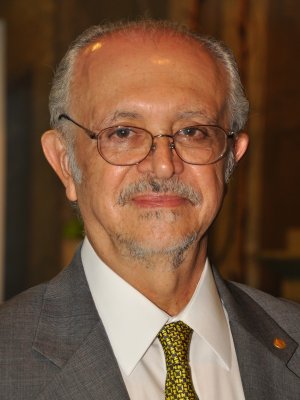
Managed profile Not claimed by Mario Molina

Mario Molina has not joined FLAPSS and has not endorsed it. This page is a reference record assembled from published interviews and public remarks. Every answer below is a direct quotation with the source and date shown next to it.

Is this you, or is something wrong?

Mario Molina

Atmospheric chemist; Nobel laureate in Chemistry, 1995

Mexico · 1943–2020

Science and medicine

About

Atmospheric chemist who, with F. Sherwood Rowland, showed in 1974 that chlorofluorocarbons deplete stratospheric ozone. Shared the 1995 Nobel Prize in Chemistry with Rowland and Paul Crutzen, becoming the first Mexican-born scientist to receive a Nobel in a scientific category. He later worked on urban air quality in Mexico City.

19 answers

Question What is the worst advice you received that you followed anyway? Failure & regret read 6 other answers →
I did. As a kid, I liked music. I still like it a lot of course. I used to play the violin. I did contemplate, well, maybe that’s an option. I could become a musician. Somehow my parents got some advice that unless I was willing to spend eight or 10 hours a day just playing the violin that I should just give it up. To me, that was very bad advice because you could of course, get very involved in music without being a musician. Fortunately, even though I gave up eventually playing the violin myself, I never gave up my fondness for music. But if I had a chance again, I would not give it up. I would just do it as a hobby. I think that was just because I did not get the correct advice.
Recorded Adam Smith, Nobel Prize Talks, recorded April 2014; re-released as Nobel Prize Conversations, Nobel Prize Outreach, 11 April 2014 source ↗
Question How has a failure, or apparent failure, set you up for later success? Do you have a favourite failure? Failure & regret read 81 other answers →
At first the research did not seem to be particularly interesting – I carried out a systematic search for processes that might destroy the CFCs in the lower atmosphere, but nothing appeared to affect them. We knew, however, that they would eventually drift to sufficiently high altitudes to be destroyed by solar radiation. The question was not only what destroys them, but more importantly, what the consequences are.
Recorded Laureate-written autobiography, provided by the laureate in November 2007, Nobel Prize Outreach, 1 November 2007 source ↗

Every quotation above is reproduced from the source shown beside it and has not been edited. Mario Molina did not write these answers for FLAPSS. Request a correction or removal.