The extraordinary delegation of authority now existing at Berkshire is the ideal antidote to bureaucracy. In an operating sense, Berkshire is not a giant company but rather a collection of large companies. At headquarters, we have never had a committee nor have we ever required our subsidiaries to submit budgets (though many use them as an important internal tool). We don't have a legal office nor departments that other companies take for granted: human relations, public relations, investor relations, strategy, acquisitions, you name it. We do, of course, have an active audit function; no sense being a damned fool.
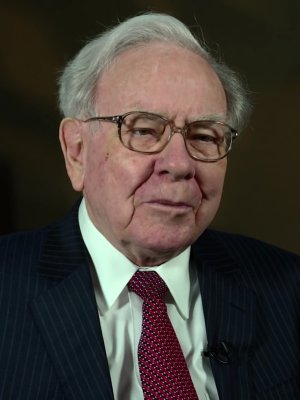
Warren Buffett has not joined FLAPSS and has not endorsed it. This page is a reference record assembled from published interviews and public remarks. Every answer below is a direct quotation with the source and date shown next to it.
Warren Buffett
Chairman and chief executive of Berkshire Hathaway, 1970–2025
United States · b. 1930
Business and finance
About
Ran Berkshire Hathaway, a diversified holding company, from 1965 until stepping down as chief executive at the end of 2025. He studied under Benjamin Graham at Columbia Business School and has written an annual letter to Berkshire shareholders since the 1970s.
21 answers
Most investors, of course, have not made the study of business prospects a priority in their lives. If wise, they will conclude that they do not know enough about specific businesses to predict their future earning power. I have good news for these non-professionals: The typical investor doesn't need this skill. ... The goal of the non-professional should not be to pick winners – neither he nor his "helpers" can do that – but should rather be to own a cross-section of businesses that in aggregate are bound to do well. A low-cost S&P 500 index fund will achieve this goal.
Ironically, though, this is also the purchase in which I made my biggest mistake - of a kind, however, never recognized on financial statements. We paid $600 million in 1989 for Gillette preferred shares that were convertible into 48 million (split-adjusted) common shares. Taking an alternative route with the $600 million, I probably could have purchased 60 million shares of common from the company. The market on the common was then about $10.50, and given that this would have been a huge private placement carrying important restrictions, I probably could have bought the stock at a discount of at least 5%. I can't be sure about this, but it's likely that Gillette's management would have been just as happy to have Berkshire opt for common. But I was far too clever to do that.
We have two pieces of regrettable news this year. First, Gladys Kaiser, my friend and assistant for twenty-five years, will give up the latter post after the 1993 annual meeting, though she will certainly remain my friend forever. Gladys and I have been a team, and though I knew her retirement was coming, it is still a jolt.
Every quotation above is reproduced from the source shown beside it and has not been edited. Warren Buffett did not write these answers for FLAPSS. Request a correction or removal.