Skip to content

The question

Which thinking habit do you wish you could break?

Originally asked

Vox, to writers and thinkers, 9 Questions, 2017

Vox's fixed 9 Questions format asks this verbatim across respondents.

You answer as yourself. Nobody on FLAPSS answers as anybody else.

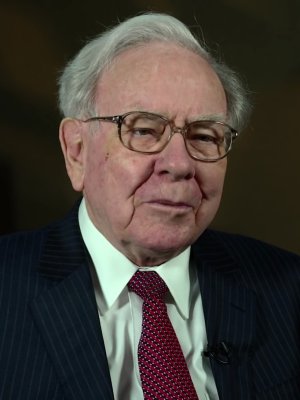
Warren Buffett

Chairman and chief executive of Berkshire Hathaway, 1970–2025

Recorded said elsewhere, not written here
Ironically, though, this is also the purchase in which I made my biggest mistake - of a kind, however, never recognized on financial statements. We paid $600 million in 1989 for Gillette preferred shares that were convertible into 48 million (split-adjusted) common shares. Taking an alternative route with the $600 million, I probably could have purchased 60 million shares of common from the company. The market on the common was then about $10.50, and given that this would have been a huge private placement carrying important restrictions, I probably could have bought the stock at a discount of at least 5%. I can't be sure about this, but it's likely that Gillette's management would have been just as happy to have Berkshire opt for common. But I was far too clever to do that.

His letter to Berkshire Hathaway shareholders in the 1995 annual report, Berkshire Hathaway Inc., February 1996 source ↗

Others on this question

View all 21 →
Mark Cuban Entrepreneur and investor; owner of the Dallas Mavericks
I’ll get half way through a book and then jump to another.
Recorded Sean Illing, Vox, “9 questions” series, 13 May 2017 source ↗
Celeste Ng Novelist
I don’t believe anything is black and white, so I’m always searching for nuance. On the whole I think this is a positive thing, but it also means I almost never give an unqualified answer.
Recorded Sean Illing, Vox, “9 questions” series, 5 August 2017 source ↗
Courtney Maum Novelist and essayist
I’m too quick to jump to a negative conclusion. For example, if I’ve had a book come out recently and I’m with a friend who doesn’t mention it, instead of thinking, “This person hasn’t mentioned my book because they’re busy and haven’t had time to purchase it, much less read it, and that doesn’t mean that they don’t like me,” I will go to, “This person doesn’t care about me,” which is such a terrible, self-centered way to think. People really are busy and their world doesn’t stop just because I’ve published a novel.
Recorded Sean Illing, Vox, “9 questions” series, 15 July 2017 source ↗
Winston Churchill Prime Minister of the United Kingdom, 1940–1945 and 1951–1955; Member of Parliament 1900–1964
They had large resources of compulsion at their disposal, but I was stubborn. Where my reason, imagination or interest were not engaged, I would not or I could not learn. In all the twelve years I was at school no one ever succeeded in making me write a Latin verse or learn any Greek except the alphabet. I do not at all excuse myself for this foolish neglect of opportunities procured at so much expense by my parents and brought so forcibly to my attention by my Preceptors.
Recorded Chapter of his autobiography, written at Chartwell in 1930, Winston S. Churchill, My Early Life (Thornton Butterworth, 1930), Project Gutenberg Canada, October 1930 source ↗

More from Warren Buffett

View profile →
Question In the last five years, what have you become better at saying no to? Daily life
Yeah and we get calls all the time, and there's so many calls, but the like I said, it takes me five seconds to say no. It takes, Greg's a little more polite than I am, but I just as soon get the calls just to see what people are doing. But they aren't offering anything that's at an attractive price, and what they want is a trade.
Recorded Becky Quick, CNBC “Squawk Box”, recorded in Omaha; CNBC's own transcript of its own broadcast, 31 March 2026 source ↗
Question What part of your job would surprise outsiders because it takes up so much of your time? Craft & work
The extraordinary delegation of authority now existing at Berkshire is the ideal antidote to bureaucracy. In an operating sense, Berkshire is not a giant company but rather a collection of large companies. At headquarters, we have never had a committee nor have we ever required our subsidiaries to submit budgets (though many use them as an important internal tool). We don't have a legal office nor departments that other companies take for granted: human relations, public relations, investor relations, strategy, acquisitions, you name it. We do, of course, have an active audit function; no sense being a damned fool.
Recorded Berkshire Hathaway annual shareholder letter, Berkshire Hathaway Inc., 27 February 2015 source ↗
Question What does everyone in your world seem to agree on that you think is wrong? Values & belief
The strategy we've adopted precludes our following standard diversification dogma. Many pundits would therefore say the strategy must be riskier than that employed by more conventional investors. We disagree. We believe that a policy of portfolio concentration may well decrease risk if it raises, as it should, both the intensity with which an investor thinks about a business and the comfort-level he must feel with its economic characteristics before buying into it.
Recorded His letter to Berkshire Hathaway shareholders in the 1993 annual report, Berkshire Hathaway Inc., February 1994 source ↗
Question What worries you about getting older? Time & hindsight
I go in every day to the office. I don't accomplish hardly anything. I mean, in terms of – it just takes me way longer to do things. And Greg is so good. It was kind of embarrassing how good he is, because he has covered – you know, we've got about 200 businesses within Berkshire, you know, that came about, and I can't name the manager's names or their wives names, or – and I haven't seen them, you know, in a long time. It's easier just to write the letter once a year and kind of do my own thing. Greg covers more ground in a day than I would in a week, even when I was at my peak, let alone my present condition.
Recorded Becky Quick, CNBC “Squawk Box”, recorded in Omaha; CNBC's own transcript of its own broadcast, 31 March 2026 source ↗
Question What is one of the best investments you have made — of money, time, or energy? Money & investment
We've just passed a milestone: Twenty years ago, on January 3, 1972, Blue Chip Stamps (then an affiliate of Berkshire and later merged into it) bought control of See's Candy Shops, a West Coast manufacturer and retailer of boxed-chocolates. The nominal price that the sellers were asking - calculated on the 100% ownership we ultimately attained - was $40 million. But the company had $10 million of excess cash, and therefore the true offering price was $30 million. Charlie and I, not yet fully appreciative of the value of an economic franchise, looked at the company's mere $7 million of tangible net worth and said $25 million was as high as we would go (and we meant it). Fortunately, the sellers accepted our offer. The sales of trading stamps by Blue Chip thereafter declined from $102.5 million in 1972 to $1.2 million in 1991. But See's candy sales in the same period increased from $29 million to $196 million. Moreover, profits at See's grew even faster than sales, from $4.2 million pre-tax in 1972 to $42.4 million last year.
Recorded His letter to Berkshire Hathaway shareholders in the 1991 annual report, Berkshire Hathaway Inc., February 1992 source ↗

More on craft & work

Also answered this

Charlie Munger, Tim Harford, Mark Cuban, Eddie Glaude Jr., Sarah Perry, Winston Churchill

Search the directory for somebody in particular.

Explore further

Report this answer