Skip to content

The question

What worries you about getting older?

Originally asked

The Guardian, to a different person each week, The Q&A

A newer fixed question in The Guardian's rotating Q&A pool.

You answer as yourself. Nobody on FLAPSS answers as anybody else.

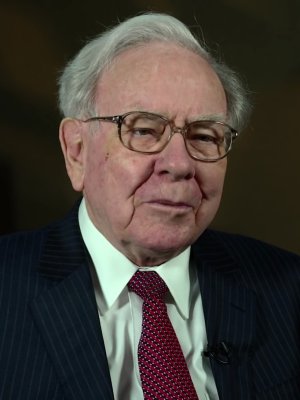
Warren Buffett

Chairman and chief executive of Berkshire Hathaway, 1970–2025

Recorded said elsewhere, not written here
I go in every day to the office. I don't accomplish hardly anything. I mean, in terms of – it just takes me way longer to do things. And Greg is so good. It was kind of embarrassing how good he is, because he has covered – you know, we've got about 200 businesses within Berkshire, you know, that came about, and I can't name the manager's names or their wives names, or – and I haven't seen them, you know, in a long time. It's easier just to write the letter once a year and kind of do my own thing. Greg covers more ground in a day than I would in a week, even when I was at my peak, let alone my present condition.

Becky Quick, CNBC “Squawk Box”, recorded in Omaha; CNBC's own transcript of its own broadcast, 31 March 2026 source ↗

Others on this question

View all 61 →
George H. W. Bush 41st President of the United States, 1989–1993
I don't want to be called a senior citizen, I feel like a spring colt. I don't want to be called a has-been, because there's things I want to do in life. But, I've been there and I'd say, "Don't let the bastards get you down." And they don't anymore, I don't talk to them anymore, so they don't get me down. I've got my family, and I've got so many blessings that I don't think I've earned, that I'm a very happy man.
Recorded Academy of Achievement interview, Williamsburg, Virginia, 2 June 1995 source ↗

More from Warren Buffett

View profile →
Question Which thinking habit do you wish you could break? Craft & work
Ironically, though, this is also the purchase in which I made my biggest mistake - of a kind, however, never recognized on financial statements. We paid $600 million in 1989 for Gillette preferred shares that were convertible into 48 million (split-adjusted) common shares. Taking an alternative route with the $600 million, I probably could have purchased 60 million shares of common from the company. The market on the common was then about $10.50, and given that this would have been a huge private placement carrying important restrictions, I probably could have bought the stock at a discount of at least 5%. I can't be sure about this, but it's likely that Gillette's management would have been just as happy to have Berkshire opt for common. But I was far too clever to do that.
Recorded His letter to Berkshire Hathaway shareholders in the 1995 annual report, Berkshire Hathaway Inc., February 1996 source ↗
Question What has life taught you about being human? Values & belief
Well, I won't say what I thought about them, particularly related to Bill Gates, but I would say it's astounding to me how human people are. I mean, it, here you had a guy that was a convicted guy, a sensational con man, and the percentage of people that he knocked off. I mean, whether it was, he found their weakness, it might have been sex. It might be power, it might be, whatever it might be.
Recorded Becky Quick, CNBC “Squawk Box”, recorded in Omaha; CNBC's own transcript of its own broadcast, 31 March 2026 source ↗
Question Who deserves an apology from you, and for what? Failure & regret
I've mentioned that we strongly prefer to use cash rather than Berkshire stock in acquisitions. A study of the record will tell you why: If you aggregate all of our stock-only mergers (excluding those we did with two affiliated companies, Diversified Retailing and Blue Chip Stamps), you will find that our shareholders are slightly worse off than they would have been had I not done the transactions. Though it hurts me to say it, when I've issued stock, I've cost you money.
Recorded His letter to Berkshire Hathaway shareholders in the 1997 annual report, Berkshire Hathaway Inc., February 1998 source ↗
Question How has a setback or failure set you up for later success? Failure & regret
My first mistake, of course, was in buying control of Berkshire. Though I knew its business - textile manufacturing - to be unpromising, I was enticed to buy because the price looked cheap. Stock purchases of that kind had proved reasonably rewarding in my early years, though by the time Berkshire came along in 1965 I was becoming aware that the strategy was not ideal. If you buy a stock at a sufficiently low price, there will usually be some hiccup in the fortunes of the business that gives you a chance to unload at a decent profit, even though the long-term performance of the business may be terrible. I call this the "cigar butt" approach to investing. A cigar butt found on the street that has only one puff left in it may not offer much of a smoke, but the "bargain purchase" will make that puff all profit. Unless you are a liquidator, that kind of approach to buying businesses is foolish.
Recorded Berkshire Hathaway annual shareholder letter, Berkshire Hathaway Inc., 2 March 1990 source ↗
Question What bad recommendations do people in your field repeat too often? Craft & work
Most investors, of course, have not made the study of business prospects a priority in their lives. If wise, they will conclude that they do not know enough about specific businesses to predict their future earning power. I have good news for these non-professionals: The typical investor doesn't need this skill. ... The goal of the non-professional should not be to pick winners – neither he nor his "helpers" can do that – but should rather be to own a cross-section of businesses that in aggregate are bound to do well. A low-cost S&P 500 index fund will achieve this goal.
Recorded Berkshire Hathaway annual shareholder letter, Berkshire Hathaway Inc., 28 February 2014 source ↗

More on time & hindsight

Also answered this

Ben Okri, Steve Jobs, Dervla Kirwan, Sarah Perry, Tony Christie, Neil Gaiman

Search the directory for somebody in particular.

Explore further

Report this answer