Skip to content

The question

How does a new piece of work usually begin for you?

Originally asked

The Paris Review, to novelists and poets, The Art of Fiction

A recurrent craft question in The Paris Review's Art of Fiction interviews; wording varies between character, theme, first sentence, image, and idea.

You answer as yourself. Nobody on FLAPSS answers as anybody else.

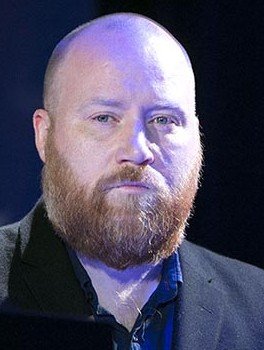
Jóhann Jóhannsson

Icelandic musician and composer

Recorded said elsewhere, not written here
It’s different every time. The physical or mental acts of composing are always kind of the same. It really involves, for me, turning off the more critical faculties of the brain and reaching a state where things just flow. It takes many days to get into that because normally you’re in this critical mode, this analytical mode where you’re structuring things and putting things in order. To create the material, to create the building blocks, you have to go into another state, which is much more receptive and much more intuitive.

The Talks interview, 21 October 2015 source ↗

Others on this question

View all 60 →
Duncan Hannah American visual artist and author
You would think my work would be like Warhol’s and others since I have spent so much time in and around that crowd. Well, I’m not a very good modern artist in the sense that my life is not part of my art. I think that Warhol was idea-driven. He was always looking for good ideas. I’m more intuitive; I respond to what I love. I see something beautiful, and I want to paint it. That’s how I work.
Recorded Frank Pizzoli, The Brooklyn Rail, In Conversation, 1 May 2018 source ↗
Norman Mailer American writer
No doubt. I’ve written at times about the spooky element in writing. You go in each morning, and there’s a blank page. Maybe it takes five minutes, maybe it takes an hour. Sooner or later you start writing, and then the words begin to flow. Where does that come from? You can’t pinpoint it. You always wonder, “Will it all stop tomorrow?” In that sense it’s spooky. In other words, you’re relying on a phenomenon that’s not necessarily dependable. That’s a particular kind of fear but there are other fears in writing of an altogether different sort.
Recorded Academy of Achievement interview, 2004 source ↗
Tavares Strachan Bahamian conceptual artist
Yeah, I think it’s a combination of all those things, really. I think narrative is significant and important to me. And I think most of the narratives that really struck me were about history or were narratives that I received in ways that were abstract, so they were kind of nonlinear narratives that I pulled from, for example, music. You know, music was a huge inspiration to me growing up, I grew up listening to a lot of reggae music, a lot of dancehall, dub. If you listen to that music, I think one of the things you realize is that those particular artists, those legendary artists who were making that music in the ’70s and ’80s, and even to some degree in the ’60s, were really good at provoking you to go on your own journey with the information that they were giving you in the music. For me, one of the things about artistic practice is not about providing some solution, but instead provoking curiosity about some things that you should find on your own and not be led to.
Recorded Amanda Gluibizzi, The Brooklyn Rail, In Conversation, 1 June 2022 source ↗
Theresa Chromati American painter
The starting process has changed over time. I go back and forth from knowing exactly where I want to place the central figure and doing that first and committing to her and then building the world around her. But more recently, between the body of work I did last year and what I’m working on now, I’ve started to commit to building up the background layers slowly. Putting a wash down and building up a lot of different transparent layers that have their own energies, and then starting to rip that energy apart to then create a new form or a new structure. That language, in general, is also what this is about. Ripping and expanding, shedding and rebuilding, that push and pull of building the surface so that she has this foundation and that it feels like a more consonant structure. I’m liking that relationship to the work.
Recorded Annie Bielski, The Creative Independent interview source ↗

More on craft & work

Also answered this

Buck Meek, Jason Williamson, Thomas Mars, Ernest Greene, Danny Elfman, Haley Blais

Search the directory for somebody in particular.

Explore further

Report this answer