Skip to content
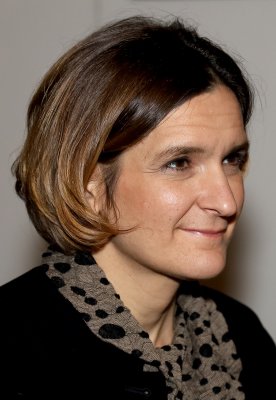
Esther Duflo

Development economist; laureate of the Sveriges Riksbank Prize in Economic Sciences, 2019

Recorded said elsewhere, not written here
I think it's … the profession is starting to realise that in part it's the general climate, and the way we treat each other is not conducive for having more women in the profession. It's not just about promotion but it's about the general environment and how people talk to each other and address each other in seminars and things like that, that we need to work on a culture that is more respectful and that will be more acceptable for many women who think that they don't want to play the games of shouting at each other.

Adam Smith, Telephone interview recorded shortly after the prize announcement, Nobel Prize Outreach, 14 October 2019 source ↗

Others on this question

View all 80 →
Mikhail Gorbachev General Secretary of the Communist Party of the Soviet Union 1985–1991; President of the Soviet Union 1990–1991
I have been suspected of utopian thinking more than once, and particularly when five years ago I proposed the elimination of nuclear weapons by the year 2000 and joint efforts to create a system of international security. It may well be that by that date it will not have happened. But look, merely five years have passed and have we not actually and noticeably moved in that direction?
Recorded Oslo City Hall, The Nobel Foundation, 5 June 1991 source ↗
Geoff Dyer Essayist and novelist
Don’t write in public places. In the early 1990s I went to live in Paris. The usual writerly reasons: back then, if you were caught writing in a pub in England, you could get your head kicked in, whereas in Paris, dans les cafés . . . Since then I’ve developed an aversion to writing in public. I now think it should be done only in private, like any other lavatorial activity.
Recorded The Guardian Review, 20 February 2010 source ↗
Mario Molina Atmospheric chemist; Nobel laureate in Chemistry, 1995
As I was starting my academic career, it was almost considered to be a negative signal to your career to get involved in politics ... But to me that was a sign you were doing something useful.
Recorded C&EN profile interview after the Presidential Medal of Freedom, vol. 91 no. 49, Chemical & Engineering News, 9 December 2013 source ↗
Andre Geim Condensed matter physicist; Nobel laureate in Physics, 2010
Instant information about everything and everyone often allows an individual opinion to compete with consensus and paranoia with evidence. It is a time when one blunt honest statement can finish a life-long political career, and one opinionated journalist can bully a government or a royal family. Science is not immune from such pressures. For example, how many Nobel prize-winning experiments – you think – would have been stopped, if ethics or health-and-safety regulations at that time were as zealous as they are today? I can think of more than a few.
Recorded Nobel Banquet, Stockholm City Hall, Nobel Prize Outreach, 10 December 2010 source ↗

More on values & belief

Also answered this

Jocelyn Bell Burnell, Maryam Mirzakhani, Lee Berger, John Hopfield, Roger Penrose, Richard Hamming

Search the directory for somebody in particular.

Explore further

Report this answer