Skip to content

The question

How much should instinct count in big decisions?

Originally asked

The American Academy of Achievement, to its honourees, its oral-history interviews

Near-verbatim recurring Academy prompt about judgment under pressure.

You answer as yourself. Nobody on FLAPSS answers as anybody else.

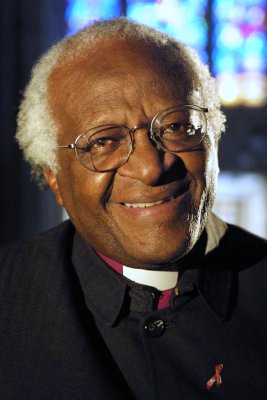
Desmond Tutu

Anglican Archbishop of Cape Town; chair of South Africa’s Truth and Reconciliation Commission; Nobel Peace Prize, 1984

Recorded said elsewhere, not written here
But the thing I think that thrust me possibly into the public consciousness, I had just been elected Bishop of Lesotho. I had gone there to become bishop and I went for a retreat. I don’t know — I mean, I don’t know what happened but it just seemed like God was saying to me, “You’ve got to write a letter to the Prime Minister.” And the letter wrote itself.

Academy of Achievement interview source ↗

Others on this question

View all 4 →
Aung San Suu Kyi Leader of the National League for Democracy; Nobel Peace Prize laureate; State Counsellor of Myanmar, 2016–2021
It takes courage to feel the truth, to feel one's conscience because once you do, you must engage your fundamental purpose for being alive. You can't just expect to sit idly by and have freedom handed to you.
Recorded Kirsty Young, Desert Island Discs, BBC Radio 4, 27 January 2013 source ↗
Edmund Hillary Mountaineer and explorer; first ascent of Everest, 1953
I think it was a combination of feeling and judgment. I happened to be that sort of person that enjoyed making out plans, but I also enjoy changing plans. On an expedition, although I may start out with a detailed plan, I’m prepared to change it at any moment and completely redo it. So our expeditions turned out to be very adaptable ones. We achieved the final objectives just the same as many other expeditions, but maybe we had more fun in the process because it seemed something we could vary. We still carried on to achieve our major objectives.
Recorded Academy of Achievement interview source ↗
Steve Jobs Co-founder and chief executive of Apple; co-founder of NeXT; chief executive of Pixar
I've participated in the hiring of maybe 5,000-plus people in my life. So I take it very seriously. You can't know enough in a one-hour interview. So, in the end, it's ultimately based on your gut.
Recorded Betsy Morris, Fortune interview, Kona, Hawaii, March 2008 source ↗

More from Desmond Tutu

View profile →
Question What has life taught you about being human? Values & belief
I have come to realize the extraordinary capacity for evil that all of us have because we have now heard the Truth and Reconciliation Commission, and there have been revelations of horrendous atrocities that people have committed. Any and every one of us could have perpetrated those atrocities. The people who were perpetrators of the most gruesome things didn’t have horns, didn’t have tails. They were ordinary human beings like you and me. That’s the one thing. Devastating! But the other, more exhilarating than anything that I have ever experienced — and something I hadn’t expected — to discover that we have an extraordinary capacity for good. People who suffered untold misery, people who should have been riddled with bitterness, resentment and anger come to the Commission and exhibit an extraordinary magnanimity and nobility of spirit in their willingness to forgive, and to say, “Hah! Human beings actually are fundamentally good.” Human beings are fundamentally good. The aberration, in fact, is the evil one, for God created us ultimately for God, for goodness, for laughter, for joy, for compassion, for caring.
Recorded Academy of Achievement interview source ↗
Question When did you last change your mind about something important? Change of mind
I used to be “Mister Disinvestment.” Now I would like to be Mister Investment and say, “Come! Come and be part of an exciting, exhilarating process. Come in! Come in on the ground floor and see a people do something that’s probably never happened before, people seeking to become something radically different from what their antecedents would have made us believe they were likely to become.
Recorded Academy of Achievement interview source ↗
Question What made you stop something you were known for, and how did you know it was time? Time & hindsight
I stopped being a teacher when the South African Government introduced a deliberately inferior education for blacks called Bantu education, and I felt I wasn’t ready to collaborate with this apology for an educational system. Our children, the 1976 kids who revolted against apartheid in Soweto, called it “gutter education,” and it was gutter education. I left teaching. Of course, I didn’t have too many option, and mercifully, the Bishop of Johannesburg at that time accepted me for training for the priesthood. So I came to the priesthood, as it were, by default.
Recorded Academy of Achievement recorded interview, American Academy of Achievement, 12 June 2004 source ↗
Question What part of your job would surprise outsiders because it takes up so much of your time? Craft & work
What is rewarding about the priesthood is, one, that you have an incredible privilege of being privy to some of the most extraordinary things about people. I mean, as their parish priest, you visit people who are sick, say, on their death bed and they tell you things that they probably have not shared with any other person. You are privileged to bring the Holy Sacrament to people at a time when they are probably at their lowest. But you also have the privilege of meeting up with people at their moment of great joy, when they are getting married, or when they have a child baptized.
Recorded Academy of Achievement recorded interview, American Academy of Achievement, 12 June 2004 source ↗
Question Which teacher, parent, coach, or friend most made you who you are, and what did you learn from them? Relationships
I recall when I was about nine picking up a tattered copy of Ebony magazine and I think — I mean, maybe journalists ought to know just how much power they actually have because here I was 10,000 miles away from America with this copy of Ebony magazine and it was describing the exploits of Jackie Robinson and how he broke into major league baseball. Now I didn’t know baseball from ping pong but what was so important for me, what made me grow inches was to know that a black guy had triumphed over all of the obstacles that were placed in his way and there he was now playing for something called Brooklyn Dodgers. Now I didn’t know Brooklyn Dodgers. I didn’t know Jackie, but it helped to exorcise what is the most awful consequence of racial injustice and it is the sense — this demon of self-hate when you have a very low self-esteem.
Recorded Academy of Achievement interview source ↗

More on craft & work

Also answered this

Edmund Hillary, Aung San Suu Kyi, Steve Jobs

Search the directory for somebody in particular.

Explore further

Report this answer