Skip to content

The question

What has life taught you about being human?

Originally asked

Krista Tippett, to her guests, On Being

Krista Tippett uses this as a recurring, sometimes-closing On Being question; the wording is intentionally adapted to each guest.

You answer as yourself. Nobody on FLAPSS answers as anybody else.

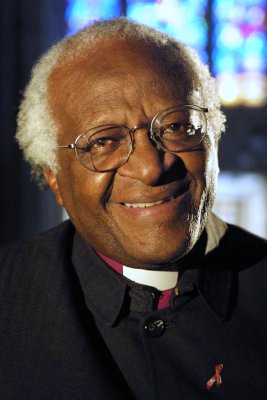
Desmond Tutu

Anglican Archbishop of Cape Town; chair of South Africa’s Truth and Reconciliation Commission; Nobel Peace Prize, 1984

Recorded said elsewhere, not written here
I have come to realize the extraordinary capacity for evil that all of us have because we have now heard the Truth and Reconciliation Commission, and there have been revelations of horrendous atrocities that people have committed. Any and every one of us could have perpetrated those atrocities. The people who were perpetrators of the most gruesome things didn’t have horns, didn’t have tails. They were ordinary human beings like you and me. That’s the one thing. Devastating! But the other, more exhilarating than anything that I have ever experienced — and something I hadn’t expected — to discover that we have an extraordinary capacity for good. People who suffered untold misery, people who should have been riddled with bitterness, resentment and anger come to the Commission and exhibit an extraordinary magnanimity and nobility of spirit in their willingness to forgive, and to say, “Hah! Human beings actually are fundamentally good.” Human beings are fundamentally good. The aberration, in fact, is the evil one, for God created us ultimately for God, for goodness, for laughter, for joy, for compassion, for caring.

Academy of Achievement interview source ↗

Others on this question

View all 15 →
Oliver Sacks Neurologist and writer
My generation is on the way out, and each death I have felt as an abruption, a tearing away of part of myself. There will be no one like us when we are gone, but then there is no one like anyone else, ever. When people die, they cannot be replaced. They leave holes that cannot be filled, for it is the fate — the genetic and neural fate — of every human being to be a unique individual, to find his own path, to live his own life, to die his own death.
Recorded The New York Times, Op-Ed, 19 February 2015 source ↗
Kate Bowler Historian of American Christianity; professor at Duke Divinity School
The movement has perfected a rarefied form of America’s addiction to self-rule, which denies much of our humanity: our fragile bodies, our finitude, our need to stare down our deaths (at least once in a while) and be filled with dread and wonder. At some point, we must say to ourselves, I’m going to need to let go.
Recorded The New York Times, Sunday Review, 13 February 2016 source ↗
Ram Dass Spiritual teacher and author
The stroke cut out a lot of my external trips: my sports car and golf and my cello. This [ points to hand ] is just not much use with a cello, and I was—forced inside, and finding myself living in my inside. And that has made me be part of my soul. And that's perceiving my incarnation from here [ points to heart ], rather than from here [ points to head ]. And since this is words, I start from here, go over there.
Recorded Ross Simonini, The Believer, issue 115, by Skype from Hawaii, 20 November 2017 source ↗
Warren Buffett Chairman and chief executive of Berkshire Hathaway, 1970–2025
Well, I won't say what I thought about them, particularly related to Bill Gates, but I would say it's astounding to me how human people are. I mean, it, here you had a guy that was a convicted guy, a sensational con man, and the percentage of people that he knocked off. I mean, whether it was, he found their weakness, it might have been sex. It might be power, it might be, whatever it might be.
Recorded Becky Quick, CNBC “Squawk Box”, recorded in Omaha; CNBC's own transcript of its own broadcast, 31 March 2026 source ↗

More from Desmond Tutu

View profile →
Question What lesson has mattered most in your life? Time & hindsight
It is that you know that you are standing out in this crowd because you are being carried on the shoulders of others. You know, you may have the capacity to articulate their aspirations. That is maybe something special you might have. But what is a leader without followers? I mean you would have all of these interviews and people will not — would not necessarily want to follow. No, I am a great believer in the fact that everything is corporate. Everything is corporate and you — as a leader you are one who can coax the best out of others.
Recorded Academy of Achievement interview source ↗
Question As a child, what career or life did you imagine for yourself? Identity & self
I know that for a very long time my consuming passion, which was confirmed when I contracted TB — I had TB when I was about 12 or so — was I wanted to be a physician and when I got TB I was even more determined. I want to be physician so that I can find a cure for the scourge. And, in fact, I was admitted to medical school. If we had had the funds maybe today I would have been a physician.
Recorded Academy of Achievement interview source ↗
Question What do you need to believe in order to get through an ordinary day? Values & belief
Many of us had moments when we doubted that apartheid would be defeated, certainly not in our lifetime. But, I never had that sense. I knew in a way that was unshakable, because you see, when you look at something like Good Friday, and saw God dead on the cross, nothing could have been more hopeless than Good Friday. And then, Easter happens, and whammo! Death is done to death, and Jesus breaks the shackles of death and devastation, of darkness, of evil. And, from that moment on, you see, all of us are constrained to be prisoners of hope. If God could do this with that utterly devastating thing, the desolation of a Good Friday, of the cross, well, what could stop God then from bringing good out of this great evil of apartheid? So, I never doubted that ultimately we were going to be free because ultimately, I knew there was no way in which a lie could prevail over the truth, darkness over light, death over life.
Recorded Academy of Achievement interview source ↗
Question What made you stop something you were known for, and how did you know it was time? Time & hindsight
I stopped being a teacher when the South African Government introduced a deliberately inferior education for blacks called Bantu education, and I felt I wasn’t ready to collaborate with this apology for an educational system. Our children, the 1976 kids who revolted against apartheid in Soweto, called it “gutter education,” and it was gutter education. I left teaching. Of course, I didn’t have too many option, and mercifully, the Bishop of Johannesburg at that time accepted me for training for the priesthood. So I came to the priesthood, as it were, by default.
Recorded Academy of Achievement recorded interview, American Academy of Achievement, 12 June 2004 source ↗
Question What is the harshest thing anyone has said to you? Failure & regret
There will always be so many who might say, “Ah, he’s a politician masquerading as an archbishop.” Politics is so all-pervasive, and in my theology, obviously, all of life belongs to God, and you don’t have compartments, this is your economic life, this is your political life, this is your religious life. Religion encompasses all of those. But yes, I wouldn’t myself have said I was setting out to be a political animal.
Recorded Academy of Achievement interview source ↗
Question What counsel would you give your twenty-year-old self — and what should they ignore? Time & hindsight
Dream. Dream. Dream. Be like God, dream because God believes in you young people. Most of God’s best collaborators and partners have been young people. Joseph, David, Jeremiah, St. Francis. They are young, young, young. And in many ways Jesus was young. Many of those who have been God’s best works — fellow workers have been young. And don’t allow oldies to fill you with their cynicism and disillusionment. Dream. Dream that this world can become better as you do dream, in fact. I mean, when these young people go off and work as Peace Corps and other volunteering groups in poverty stricken places where they don’t get any better headlines for dreaming the good things. Dream. Dream. Dream. Dream that this can be a world without poverty. Dream that this can be a world without war. Dream that this is a world that will recognize that every human being matters.
Recorded Academy of Achievement interview source ↗

More on values & belief

Also answered this

Bill Clinton, Barack Obama, Rosa Parks, Steve Jobs, Oliver Sacks, Kate Bowler

Search the directory for somebody in particular.

Explore further

Report this answer