Skip to content

The question

What kind of death would you consider a good one?

Originally asked

Vanity Fair, to its interview subject, The Proust Questionnaire

A fixed final question in Vanity Fair's Proust Questionnaire, repeated verbatim across respondent pages.

You answer as yourself. Nobody on FLAPSS answers as anybody else.

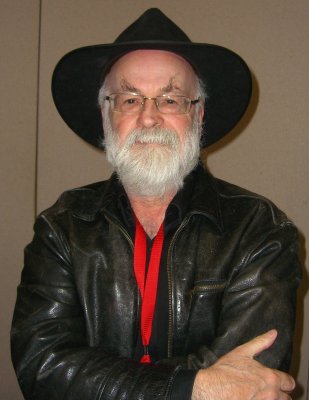
Terry Pratchett

Novelist

Recorded said elsewhere, not written here
I remember what George said and vowed that rather than let Alzheimer's take me, I would take it. I would live my life as ever to the full and die, before the disease mounted its last attack, in my own home, in a chair on the lawn, with a brandy in my hand to wash down whatever modern version of the "Brompton cocktail" some helpful medic could supply. And with Thomas Tallis on my iPod, I would shake hands with Death.

Edited extract from the Richard Dimbleby Lecture, Shaking Hands With Death, Royal College of Physicians, broadcast on BBC1 on 1 February 2010, The Guardian, 2 February 2010 source ↗

Others on this question

View all 43 →
Diana Athill Editor and memoirist
That process depends on what you are dying of. The body can fail in ways that are extremely distressing, slowly and painfully, demanding much stoicism, or it can switch off with little more than a flash of dizziness. In my family we seem to have been uncommonly lucky in that respect. There was the 82-year-old uncle who was at a meet of the Norwich Stag Hounds, enjoying a drink with friends, when crash! And he fell off his horse, dead. There was the cousin in her eighties who fell dead as she was filling a kettle to make tea, and the other cousin, 98, who slipped away so gently that the sister who was holding her hand didn’t realise that she had stopped breathing.
Recorded The Guardian, 23 September 2014 source ↗
Christopher Hitchens Essayist, critic and journalist
And even if my voice goes before I do, I shall continue to write polemics against religious delusions, at least until it’s hello darkness my old friend. In which case, why not cancer of the brain? As a terrified, half-aware imbecile, I might even scream for a priest at the close of business, though I hereby state while I am still lucid that the entity thus humiliating itself would not in fact be “me.” (Bear this in mind, in case of any later rumors or fabrications.)
Recorded Vanity Fair, 2 September 2010 source ↗
Cory Taylor Novelist and screenwriter
As far as I can tell, I’ll either succumb to some opportunistic infection, for which I’ve refused antibiotics in advance, or, having similarly declined forced feeding, I’ll starve to death. ... I don’t know how long it takes to die of starvation, or whether it hurts, but I dread it, just as I dread my sons watching me go like that. Because that is what they will remember, their mother reduced to a bag of bones.
Recorded Edited extract from Dying: A Memoir, Text Publishing, The Guardian, 17 May 2016 source ↗

More from Terry Pratchett

View profile →
Question What worries you about getting older? Time & hindsight
When my father was in his terminal year, I discussed death with him. I recall very clearly his relief that the cancer that was taking him was at least allowing him "all his marbles". Dementia in its varied forms is not like cancer. Dad saw the cancer in his pancreas as an invader. But Alzheimer's is me, unwinding, losing trust in myself, a butt of my own jokes and on bad days capable of playing hunt the slipper by myself and losing. You can't battle it, you can't be a plucky "survivor". It steals you from yourself. And I'm 60; that's supposed to be the new 40.
Recorded Written for the Alzheimer's Society in 2008; reprinted by the Observer in the week of his death, The Guardian, 2008 source ↗
Question What is the hardest thing that has happened to you, and what did you carry out of it? Failure & regret
When Milton's Satan stood in the pit of hell and raged at heaven, he was merely a trifle miffed compared to how I felt on that day. I felt totally alone, with the world receding away from me in every direction, and you could have used my anger to weld steel. Only my family and the fact I had fans in the medical profession, who were able to give me useful advice, got me through that moment.
Recorded Written for the Alzheimer's Society in 2008; reprinted by the Observer in the week of his death, The Guardian, 2008 source ↗
Question What lesson has mattered most in your life? Time & hindsight
It occurred to me that at one point it was like I had two diseases – one was Alzheimer's and the other was knowing I had Alzheimer's. There were times when I thought I'd have been much happier not knowing, just accepting that I'd lost brain cells and one day they'd probably grow back or whatever. It is better to know, though, and better for it to be known, because it has got people talking, which I rather think was what I had in mind.
Recorded Written for the Alzheimer's Society in 2008; reprinted by the Observer in the week of his death, The Guardian, 2008 source ↗
Question Has knowing you will die changed how you live? Death & what remains
Let us consider me as a test case. As I have said, I would like to die peacefully with Thomas Tallis on my iPod before the disease takes me over and I hope that will not be for quite some time to come, because if I knew that I could die at any time I wanted, then suddenly every day would be as precious as a million pounds. If I knew that I could die, I would live. My life, my death, my choice.
Recorded Edited extract from the Richard Dimbleby Lecture, Shaking Hands With Death, broadcast on BBC1 on 1 February 2010, The Guardian, 2 February 2010 source ↗
Question Does the thought of dying frighten you? Death & what remains
Did the Victorians fear death? As Death says in one of my own books, most men don't fear death, they fear those things – the knife, the shipwreck, the illness, the bomb – that proceed, by micro seconds if you're lucky and many years if you're not, the moment of death.
Recorded Edited extract from the Richard Dimbleby Lecture, Shaking Hands With Death, broadcast on BBC1 on 1 February 2010, The Guardian, 2 February 2010 source ↗

More on death & what remains

Also answered this

Zadie Smith, Danielle Steel, Elmore Leonard, Karl Ove Knausgård, George Saunders, Christopher Hitchens

Search the directory for somebody in particular.

Explore further

Report this answer