Skip to content

The question

Which writers or artists have most influenced your work?

Originally asked

The Paris Review, to novelists and poets, The Art of Fiction

A durable Art of Fiction question asked through named literary influences and artistic models.

You answer as yourself. Nobody on FLAPSS answers as anybody else.

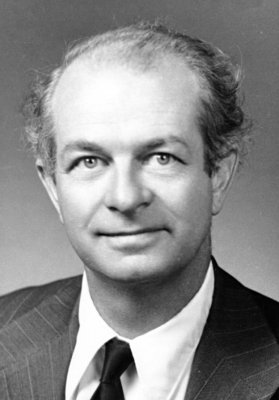
Linus C. Pauling, Ph.D.

Chemist; winner of the 1954 Nobel Prize in Chemistry and the 1962 Nobel Peace Prize

Recorded said elsewhere, not written here
One was Roscoe Gilkey Dickinson. He had got his doctorate in physical chemistry — x-ray crystallography — in 1920. He was the first person to get a Ph.D. from California Institute of Technology. And he was continuing with x-ray crystallography, determining the structure of inorganic crystals. After I had accepted appointment as a graduate student at California Institute of Technology, A.A. Noyes, the head of the division of chemistry and chemical engineering, wrote to say that he had decided I should work with Roscoe Dickinson on determining the structure of crystals. This was really extremely fortunate for me, in my opinion. I don’t think that there was any field that was more suited to my interests, and I don’t really know why Dr. Noyes selected me out of eight or ten new graduate students to do x-ray crystallography. Dickinson had a remarkable mind. He was a very careful investigator and thinker, a very logical thinker. When he was teaching me x-ray crystallography, he also taught me to ask at each stage in the argument, “What assumptions are being made? How reliable is the conclusion that you draw? What chance is there that one of the assumptions you have made is not correct?” “You should recognize,” he said to me, “that there is in almost every investigation a lack of complete rigor. You should understand just how reliable the arguments are that you are presenting.

Academy of Achievement interview, Big Sur, California, 11 November 1990 source ↗

Mentioned in this answer

Others on this question

View all 42 →
David Herbert Donald, Ph.D. Historian; twice winner of the Pulitzer Prize for Biography
Professor Randall was a great advisor and a great mentor. He taught me, I think, in the best possible way. He was not a brilliant lecturer. His courses were fairly pedestrian. I didn’t think his seminars were particularly interesting. But working with him on a one-to-one basis as his assistant, I think that’s the way one has to learn to be a historian. That is, he was writing, and if he needed some particular reference, I had to go find it and get it. If he was writing, he wanted everything checked meticulously over and over again. So I had to take the manuscript over to the library and check it all out. So that by working closely with him, I got to see, first of all, a lot of the library and its extensive holdings, but I got, even more important, to understand what a scholar is about. It is about care. It is about “pains-taking.” It is about judgment as well as it’s about very skillful writing. He was an excellent writer as well. So in that sense, Professor Randall and Mrs. Randall shaped my future career.
Recorded Academy of Achievement interview, Lincoln, Massachusetts, 19 October 2007 source ↗
Rashid Johnson Conceptual artist working in sculpture, film and installation
Growing up, it was the music, the style, it was what you saw, what you read, what you looked at, the vernacular that influenced you the most. I carried that, it was so important to me.
Recorded The Talks, published interview, 5 October 2016 source ↗
Mohamed ElBaradei Director General of the International Atomic Energy Agency, 1997-2009; Nobel Peace Prize 2005
One of my mentors, Tom Frank, a professor of law at NYU, he was really instrumental in making me understand that we need to look at the global picture, and we always need to not take anything for granted, but go very much through a process of critical thinking before we formulate our views. So he was, I think, instrumental in shaping my views as to how to pursue my career in the future.
Recorded Academy of Achievement interview, 2006 source ↗
Lynn Nottage Playwright; twice winner of the Pulitzer Prize for Drama
Well absolutely Sondheim was an influence, because he was in many ways this door into the world of theater and he is a phenomenal composer. He’s also a phenomenal mentor.
Recorded Academy of Achievement interview, New York City, 14 September 2019 source ↗

More on taste & recommendation

Also answered this

Gertrude B. Elion, Charles H. Townes, Frances Arnold, Marco Brambilla, Kazuo Ishiguro, Noah Baumbach

Search the directory for somebody in particular.

Explore further

Report this answer