The question

How does a new work begin for you?

Originally asked

The Paris Review, to novelists and poets, The Art of Fiction

A recurrent craft question in The Paris Review's Art of Fiction interviews; wording varies between character, theme, first sentence, image, and idea.

You answer as yourself. Nobody on FLAPSS answers as anybody else.

Helen Phillips

Writer

Recorded said elsewhere, not written here
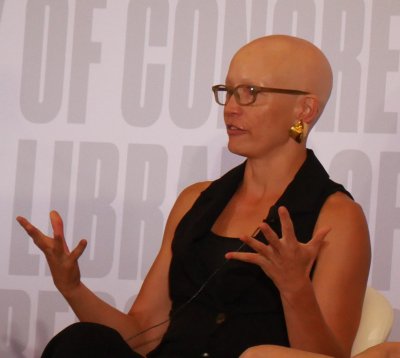
When I’m writing a book, I start gathering material for years before I start writing it. I will find newspaper clippings, overheard dialogue, images that come to my head, sort of vague scenes from a plot, and I just make a huge, messy list of those things. I’m doing that for the next book, and I’ve been doing it for a long time, and I’m still not even close to being ready to start. Maybe in the fall I’ll start it, but I’m not on the cusp of starting it really. I’m just gathering that raw material. And what deserves to go in that document? It’s hard to say, but I know that things come together. I know that this article about Chinese surveillance definitely belongs in the same place with my son telling me about this dream he had. These are somehow connected. I have no idea how, but it’s just a feeling that I have, like an instinct. The Need and The Beautiful Bureaucrat very much began that way.

Maddie Crum, The Creative Independent interview, 10 July 2019 source ↗

Others on this question

View all 86 →
Alison Goldfrapp English musician and record producer
I start out with an idea, and then you start making things and it turns into something else. You’re just finding your way.
Recorded Bradley Stern, PAPER Magazine, 12 May 2023 source ↗
Clare Sestanovich American writer
I start with the first sentence. A maddening answer, and, for my own sake, I wish I had a better one. But it’s the only way I know how: one sentence on top of the other, one foot in front of the other. In that way, writing does feel exploratory to me. I never start with a map in my head or even a destination. All I have is a sense that I’m heading in an interesting direction.
Recorded Shy Watson, The Creative Independent interview source ↗
Ursula K. Le Guin Novelist, poet and essayist
That's it. Mostly. Really, the people and the issues all come together in a sort of clump or knot, and writing the story is untying, unwinding the knot.
Recorded online Q&A, The Guardian, 9 February 2004 source ↗
Alice Sheppard Dancer, Choreographer
Obviously, it’s different for everyone. And actually there is a difference for each thing I do. But one way it happens is to just move. [ laughs ] I mean, obviously, you don’t just sort of randomly throw yourself around the room. You move with these ideas and sometimes I find that I’ve already got images in my head that I imagine my body in, or sometimes I have sequences in my head. I think a lot of time I’m listening to what comes next because sometimes the body will tell you that. Often I don’t document it too early in the process because sometimes if you forget stuff it’s worth knowing that the things that you forget maybe weren’t worth keeping. The things that have settled are the things that need to be kept because they seem most urgent. I don’t know. I mean, sometimes it’s about going to the studio and nothing happens for a long time and you just sit there and you’re not feeling it. That’s awful. It’s like when you’re writing and sometimes you go to the coffee shop and you’re like, “So, we’ll just see what happens.” And you end up on Facebook. I think the answer to this is… I really think the answer to this is I don’t know. [ laughs ]
Recorded T. Cole Rachel, The Creative Independent interview, 7 March 2018 source ↗

More on craft & work

Also answered this

Duncan Hannah, Precious Okoyomon, Ursula K. Le Guin, Claudia Dey, Adam Gopnik, Alan Cumming

Search the directory for somebody in particular.

Explore further

Report this answer